
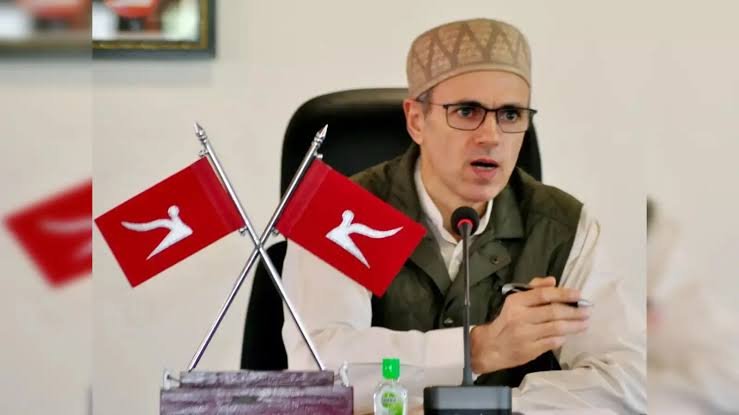
Did the Rain Save Omar Abdullah from a Delhi Protest? Or Did Duty Call Him Home?
Delhi
Divya Barti /Rafiq Bhat
The National Conference’s proposed statehood protest at Jantar Mantar on July 20 was meant to send a strong political message to New Delhi. But nature intervened before politics could take center stage.
Relentless rainfall, flash floods, and landslides across parts of Jammu, particularly in Rajouri and Poonch, forced the spotlight away from Delhi and back to the people of Jammu and Kashmir. Chief Minister Omar Abdullah cut short his stay in the national capital and returned to Jammu, saying that monitoring the crisis and ensuring public safety had become his immediate priority.
That decision has sparked an important political question.
Was the Chief Minister fully prepared for the Jantar Mantar protest, or did the worsening weather provide a reason to shift the focus away from a politically challenging demonstration?
There is no evidence to suggest that the weather was used as a political excuse. At the same time, the timing has inevitably raised questions in political circles.
Supporters of the government argue that no political programme can take precedence over protecting lives during a natural disaster. Critics, however, may ask whether the protest would have gone ahead with the same intensity had the weather remained normal.
Ultimately, the real test is no longer the protest itself.
The people of Jammu and Kashmir will judge the government by two things: how effectively it responds to the flood emergency, and whether its commitment to restoring statehood remains as strong after the crisis as it was before.