
Before You Judge, Know the Truth
An Editorial for Aalimi Nation Magazine
In today’s digital age, people are often judged within seconds. A viral post, a short video, or a few edited clips are enough for social media to declare someone a hero or a villain—without waiting for the facts.
This dangerous habit is slowly becoming a part of our society.
The recent criticism of environmental activist Sonam Wangchuk is a powerful example. After observing a 26-day hunger strike, risking his health and losing nearly 11 kilograms of body weight, Wangchuk decided to end his fast following written assurances from the government on several key issues.
Instead of appreciating his sacrifice, many people rushed to question his intentions.
Soon after, Wangchuk himself released a video expressing his disappointment. He asked an emotional question:
“For whom did I make this sacrifice? For whom did I risk my health?”
His wife, Gitanjali Angmo, also appealed to the public not to judge him without understanding the full story. She reminded everyone that her husband spent nearly a month without food for a cause larger than himself and deserved compassion rather than harsh criticism.
Her words should make all of us pause.
A Society That Judges Too Quickly
Unfortunately, many of us have developed the habit of passing judgments before verifying facts.
We rarely ask:
- What really happened?
- Why was the decision taken?
- What sacrifices has this person already made?
Instead, we react instantly.
Character assassination has become easier than understanding the truth.
Respect Sacrifice, Even If You Disagree
It is perfectly acceptable to disagree with a public figure or question a decision.
However, disagreement should never turn into hatred or personal attacks.
When someone spends weeks risking their health for a public cause, the least society can do is show basic respect—even if people hold different opinions about the outcome.
Criticism should be based on facts, not emotions.
Protest Is a Right, But Responsibility Comes With It
The examination paper leak issue has genuinely shaken the confidence of millions of students and parents across India.
Those responsible for destroying students’ futures must face strict legal action.
There should be zero tolerance for organised paper leak networks.
However, while demanding justice, society must also remember that protests should remain peaceful and respectful.
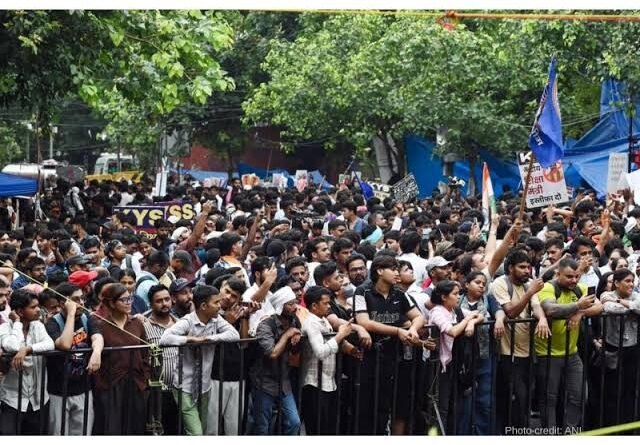
Reports and visuals from some protest sites showed instances of abusive language, attempts to intimidate media personnel, and behaviour that distracted attention from the genuine concerns of students.
It is important to make one thing equally clear:
Not every protester behaved this way.
Thousands of students protested peacefully and with dignity. Their voices deserve to be heard and respected.
But whenever a few individuals resort to aggression or indecent behaviour, they weaken the credibility of the larger movement.
Truth Must Come Before Emotion
The role of journalism is not to encourage blind support or blind opposition.
Its duty is to present facts, ask difficult questions, and encourage informed discussion.
Likewise, citizens also have a responsibility—to verify before believing, to understand before judging, and to think before reacting.
A healthy democracy cannot survive if public opinion is driven only by viral posts and emotional reactions.
The Bigger Lesson
The story of Sonam Wangchuk is not just about one activist.
It is a reminder that our society must become more patient, more responsible, and more compassionate.
Justice is important.
Accountability is necessary.
But fairness begins with giving every person the dignity of being heard before being judged.
A strong nation is not built only through laws, governments, or institutions.
It is built by citizens who value truth over rumours, respect over hatred, and dialogue over division.
Before judging anyone, let us first seek the truth.
That is the first step towards justice.