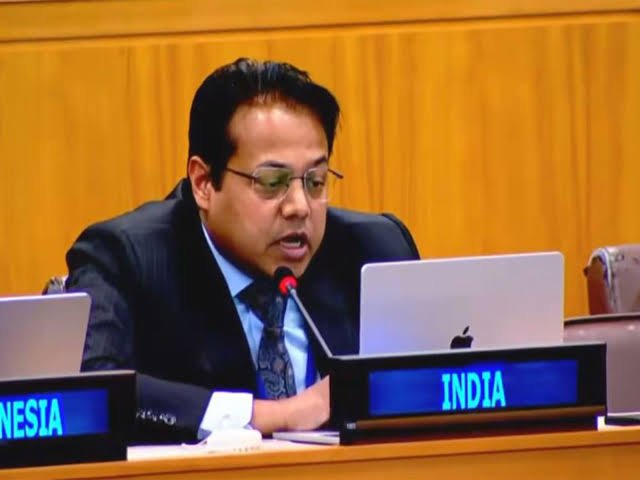
NEW YORK, October 21 (Aalimi Nation) – India has told the United Nations General Assembly that human rights should not be used as a tool of political pressure or to single out individual countries, and has objected to allegations and incomplete statistics being turned into a "negative characterisation" of the country. The statement, in which India rejects negative characterisation of its rights record, was delivered on Tuesday in the Assembly's Third Committee.
Barkha Tamrakar, a Deputy Secretary in the Ministry of External Affairs, spoke on the agenda item concerning the Working Group on Enforced Disappearances. India engages with international human rights mechanisms, she said, but such engagement should rest on dialogue, consultation and cooperation, with non-selectivity and transparency as guiding principles.
What India said
According to the statement, India objects to allegations, statistics or reports containing no country-specific observation on India being used to build an adverse picture of "the world's largest democracy". It urged delegations to cite UN reports faithfully and not to treat a humanitarian communication as a finding. The Ministry said it would clarify specific, properly documented cases through established channels.
On enforced disappearances, Tamrakar pointed to safeguards within the Indian system, including Article 21 of the Constitution, the writ of habeas corpus, the National Human Rights Commission and State Human Rights Commissions, along with independent media and civil society as avenues of redress. She noted that India has signed the international convention on enforced disappearances and said law enforcement agencies are bound by law.
The backdrop
The remarks come amid international attention on youth-led protests in New Delhi. On Tuesday, more than 20 UN human rights experts, speaking from Geneva, said they were alarmed by what they described as a repeatedly heavy-handed police response to peaceful demonstrations in the capital, and called for justice for reported rights violations.
Last week, India rejected as "hearsay" a report by a UN human rights expert that referred to a satirical political movement created by young people and alleged that they faced retaliation. New Delhi asked the expert to verify claims before raising them. The UN human rights office had earlier voiced concern over reports of mass detentions of demonstrators, protest leaders, civil society members, lawyers and journalists. India described those remarks as unwarranted and as unacceptable interference in its internal affairs.
Details not established
The available accounts of the statements do not specify the dates of the protests, the number of people detained or particular police incidents, and those figures could not be independently verified. The positions of the UN experts and of the Indian government differ, and neither has been tested in a court or an independent inquiry.
What to watch
The Third Committee, which handles human rights questions, continues its session, and India may respond to further reports presented to it. Whether the UN experts or the human rights office make further public comment on the protests, and whether New Delhi provides the documented case details it has promised through formal channels, will shape how the exchange develops.