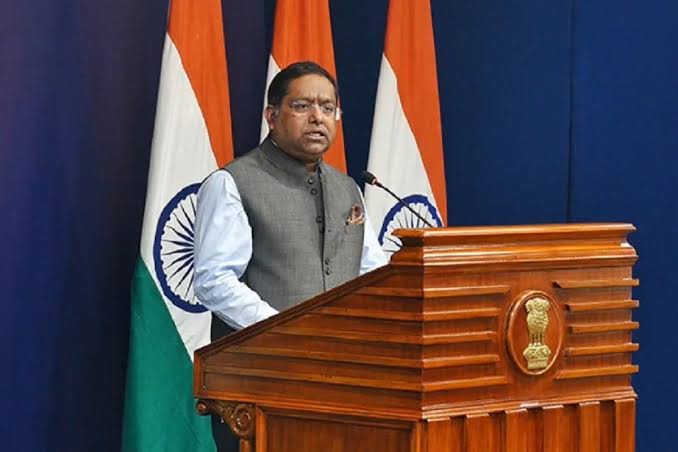
NEW DELHI, November 10 (Aalimi Nation) – India on Tuesday rejected remarks by two officials of the US Commission on International Religious Freedom (USCIRF) on attacks on Sikh gurdwaras, with the External Affairs Ministry describing the commission as "a biased and ill-informed organisation with a blatantly political agenda".
Ministry spokesperson Randhir Jaiswal was responding to statements made by two USCIRF commissioners last week. They had said gurdwaras in India were being attacked and urged the US government to press New Delhi to hold those responsible accountable.
Mr Jaiswal said it was "particularly telling" that the commission had stayed silent on attacks on places of worship in the United States, and on hate crimes and racial abuse directed at the Indian community there.
"A prejudiced entity can hardly be taken seriously," he said.
The ministry's statement addressed the commission's credibility rather than individual incidents. It did not describe any specific attack on a gurdwara or say what action, if any, had been taken in connection with such incidents.
USCIRF commissioner David Anderson wrote on social media that Sikh gurdwaras in India "have been targeted with vigilante attacks", including attempts to harm religious leaders. He said the United States should link security assistance to India's response to violence that prevents people from practising their religion.
Fellow commissioner Joe Grogan said attacks on places of worship in India, including churches, gurdwaras and mosques, undermine rights to freedom of religion or belief under international law. He said the US government should continue to press the Indian government to hold perpetrators of such violence accountable.
Mr Anderson referred only to "the last several weeks" and the statements, as reported, did not give dates or locations for the incidents they cited. The claims therefore remain unverified in the material available.
USCIRF describes itself as a bipartisan US federal body that makes policy recommendations to the President, the Secretary of State and Congress. Its views are advisory and are not binding on the US administration.
India has repeatedly rejected the commission's assessments in the past. The latest dispute follows an exchange in August, when the commission called for sanctions against the Rashtriya Swayamsevak Sangh and urged that its leaders not be extended diplomatic courtesies. New Delhi rejected those remarks as well. The government has also dismissed the commission's annual report on India in earlier years as motivated and biased, and says India's Constitution guarantees freedom of religion to all citizens.
It was not immediately clear whether the commission would respond to the ministry's statement, or whether the US administration would comment. The commission's recommendations on India are typically published in its annual report, and any decision to act on them rests with the US government.
Indian officials have said they are open to engagement on concerns about the safety of minorities when these are raised through official channels, while rejecting what they call external judgments on the country's internal affairs. Law and order, including action against attacks on places of worship, is the responsibility of state governments and police.