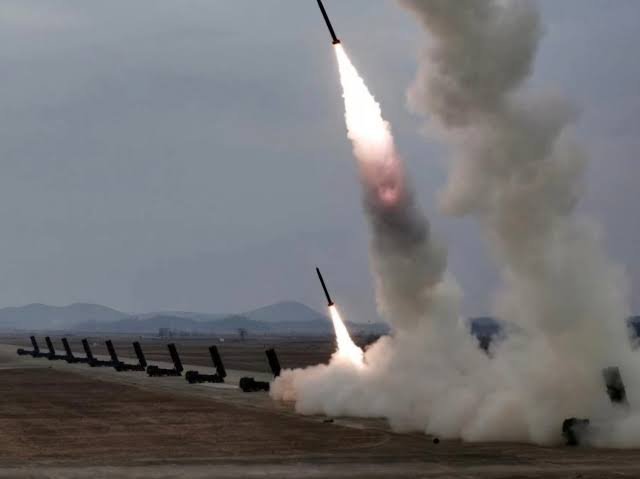
DUBAI, October 30 (Aalimi Nation) – Yemen's Houthi forces said they carried out six missile and drone attacks on airports, oil facilities and a military site in Saudi Arabia. Saudi authorities said air defences intercepted missiles fired towards the kingdom, and none of the Houthi claims about damage has been independently verified.
What the Houthis claim
Houthi military spokesman Yahya Saree announced the attacks in a statement that was also posted on social media. He said a ballistic missile was fired at the Ras Tanura refinery in Saudi Arabia's Eastern Province, and a missile at an Aramco facility in Abqaiq. A ballistic missile was said to have targeted the Rabigh refinery on the Red Sea coast.
The statement also named two airports: King Khalid International Airport in Riyadh, which it said was targeted with missiles, and King Fahd International Airport in Dammam, said to have been targeted by a drone. The sixth attack, according to Saree, hit a Saudi military headquarters in the Najran region near the Yemeni border.
Saree said the attacks were a response to recent Saudi strikes on areas of Yemen under Houthi control. There was no independent confirmation of the targets named, the damage caused or the claim of casualties among Saudi personnel.
Saudi response
The Saudi-led coalition said its air defences destroyed ballistic missiles fired by the Houthis. Coalition spokesman Turki al-Maliki said two missiles fired towards Riyadh were intercepted. A separate account of the coalition statement said three ballistic missiles were intercepted, two towards the capital and one towards the Eastern Province, so the exact number is not settled.
Saudi Civil Defence said shrapnel from an interception wounded one citizen in Riyadh and damaged a house and a vehicle. Saudi officials did not directly address the Houthi claims about the refineries or the airports.
Diplomacy under way
The claims came days after senior officials from Saudi Arabia, Türkiye and Pakistan met Iranian officials in Tehran. The meeting was hosted by Iranian security chief Mohsen Rezaei, and Saudi Defence Minister Khalid bin Salman, Pakistani army chief Asim Munir and Turkish intelligence chief Ibrahim Kalin took part. Iranian state media said participants agreed to continue discussions.
The Saudi foreign ministry stressed "the importance of opening channels of negotiation" to prevent a return to military escalation.
Separately, Yemen's internationally recognised government called on the United Nations Security Council to take "deterrent and punitive measures" over Houthi attacks on Aden International Airport.
Background
The Houthis, an Iran-aligned movement, seized the capital Sanaa and much of northern Yemen in late 2014. A Saudi-led coalition intervened the following year in support of the Yemeni government. A United Nations-brokered truce in 2022 largely halted cross-border attacks, but the two sides have exchanged strikes in recent weeks.
What happens next
It remains unclear whether any of the claimed attacks reached their targets. The Tehran discussions are meant to continue, according to Iranian state media, and the Saudi foreign ministry has stressed that negotiation channels should be opened.