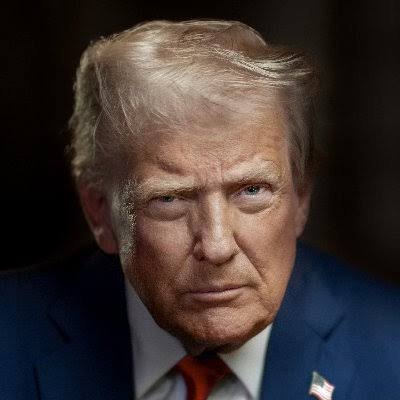
WASHINGTON, November 10 (Aalimi Nation) – US President Donald Trump said on Monday that the Iran war is "effectively over" militarily, hours after hosting Qatar's prime minister at the White House. Tehran rejected the claim, and the US naval blockade of Iranian ports remains in force.
What Trump said about the Iran war
Speaking to reporters after a closed-door meeting with Vice President JD Vance and Qatari Prime Minister Sheikh Mohammed bin Abdulrahman bin Jassim Al Thani, Trump said the United States had destroyed Iran's military. "Iran militarily is effectively over," he said. "We're just keeping it the status quo, and we're doing that really at the behest of countries that are their neighbours."
He added that US forces were "locked and loaded, ready to go for any reason that changes," and that he expected the conflict to end "fairly soon". He did not commit to a long-term ceasefire, saying he wanted a "long-term solution" rather than a short-term one.
The "status quo" Trump described includes the continuing naval blockade of Iranian ports, which he called "a continuation of the greatest naval blockade in the history of our country". It also includes a newly announced body, Task Force Iron Gate, which is meant to cut off Iranian trade by land and through the Caspian Sea.
Qatar's role and Tehran's response
The Qatari prime minister, who is also the country's foreign minister, said the talks covered "the situation in the region and ways to progress the US-Iran talks". He thanked the participants for what he called "positive discussions on reaching a deal and bringing peace to the region". He was reported to have carried an Iranian proposal for ending the war, though its contents have not been made public.
Iranian officials dismissed Trump's remarks. Mohsen Rezaei, secretary of Iran's Supreme National Security Council, said the war "has already wrecked the US government" and urged Washington to stop "manufacturing fake news about imaginary talks". Iranian President Masoud Pezeshkian said Supreme Leader Mojtaba Khamenei had called for an end to a situation that is "neither war nor peace". Iran, he said, remains open to negotiations but "will not surrender to force and bullying".
Background
The war began on February 28, 2026. Iran moved quickly to close the Strait of Hormuz, a key route for oil, gas and fertiliser, and fired missiles and drones at Gulf states including Qatar, Bahrain, Kuwait and the United Arab Emirates, many of them aimed at US military sites.
In the nearly nine months since, the US offensive has become sporadic. Recent American strikes on Qeshm Island were described as minor. Washington has said curbing Iran's nuclear programme is central to the war; Iran denies seeking nuclear weapons and says its enrichment serves civilian energy needs.
Tehran has set out seven conditions for ending the war. They include lifting US sanctions, releasing frozen Iranian funds, recognising a Hormuz shipping route agreed with Oman, and ending hostilities on all fronts, including Israel's attacks in Lebanon.
What happens next
No date has been announced for any deal. Qatar is one of several mediators, and Trump's remarks suggest the blockade and Task Force Iron Gate will continue while talks go on.