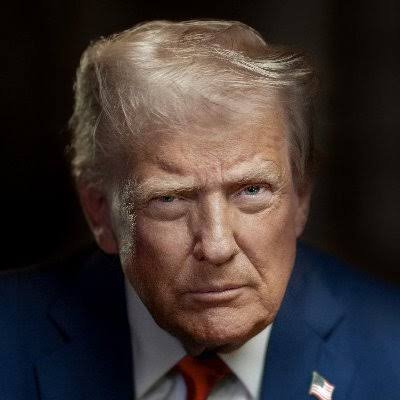
WASHINGTON, November 3 (Aalimi Nation) – US President Donald Trump said on Tuesday that Washington will stop paying Israel after the end of this year, an announcement that left the scope and legal basis of the planned change unclear and drew immediate questions about existing commitments.
Speaking in a morning television interview as voting in the US midterm elections got under way, Trump said he and Israeli Prime Minister Benjamin Netanyahu had struck an arrangement months earlier. "We've already agreed that by the end of this year we won't be paying Israel," he said. He put the current level of support at "$4 billion a year" and added that "we made a deal months ago that we're stopping."
What Trump said about US aid to Israel
Trump said Israel no longer needed the money, remarking that "they don't need it". He also left the door open to further assistance. "Now we'll help Israel if they need it," he said. He did not explain what form of assistance he was referring to, how the change would be carried out, or whether Congress would be asked to act.
The US State Department did not immediately respond to a request for comment on the remarks. There was also no immediate response from Israeli officials in the coverage available on Tuesday.
Existing commitments
The size and structure of US assistance to Israel are set largely by a ten-year memorandum of understanding that provides about $3.8 billion a year in military aid. The pact runs until September 2028, and most of the funds under it must be spent on US-made weapons. The figure Trump cited is therefore slightly higher than the amount set out in that agreement, and it was not clear whether he was describing military aid alone or a wider package.
Netanyahu has previously spoken publicly about ending reliance on American military aid. He has described that as a gradual process spread over roughly a decade, rather than an abrupt halt at the end of a single year.
Political backdrop
The timing of the remarks, on the morning of the midterm elections, drew attention in Washington. Aid to Israel has become a contested issue in both major US parties this year. In July, the House of Representatives voted 314 to 104 to reject an amendment that would have cut off aid to Israel. The amendment was offered by Republican Representative Thomas Massie of Kentucky, who is leaving Congress, and almost half of Democrats supported it.
What happens next
Any lasting change to the level or form of US assistance would normally involve Congress, which appropriates the funds, and the terms of the existing memorandum of understanding. Neither the White House nor the State Department had published details of a revised arrangement by Tuesday evening, and it remained unclear what had actually been agreed between Trump and Netanyahu.
Observers will be watching for a formal statement from Washington or Jerusalem, for any response from lawmakers after the midterm results, and for clarification on whether the announcement refers to the annual military assistance, to separate funding streams, or to a future renegotiation of the memorandum.