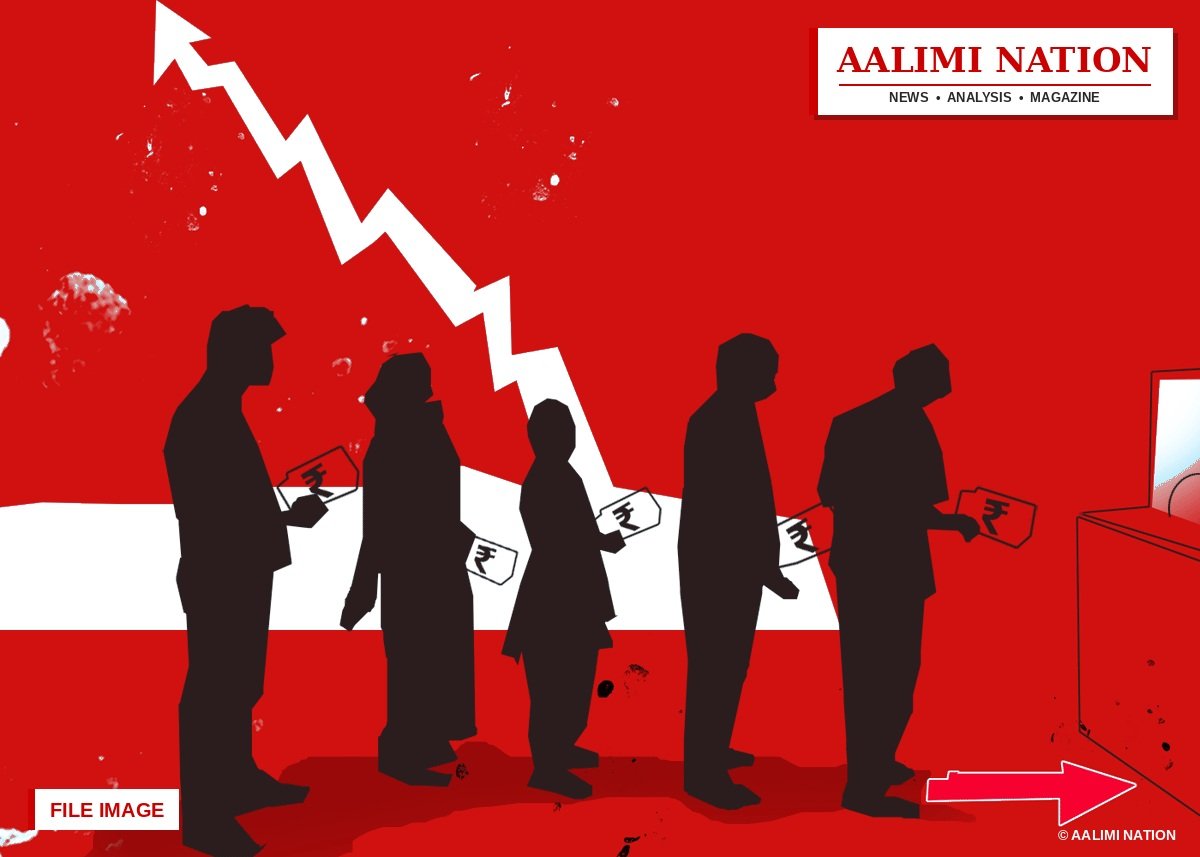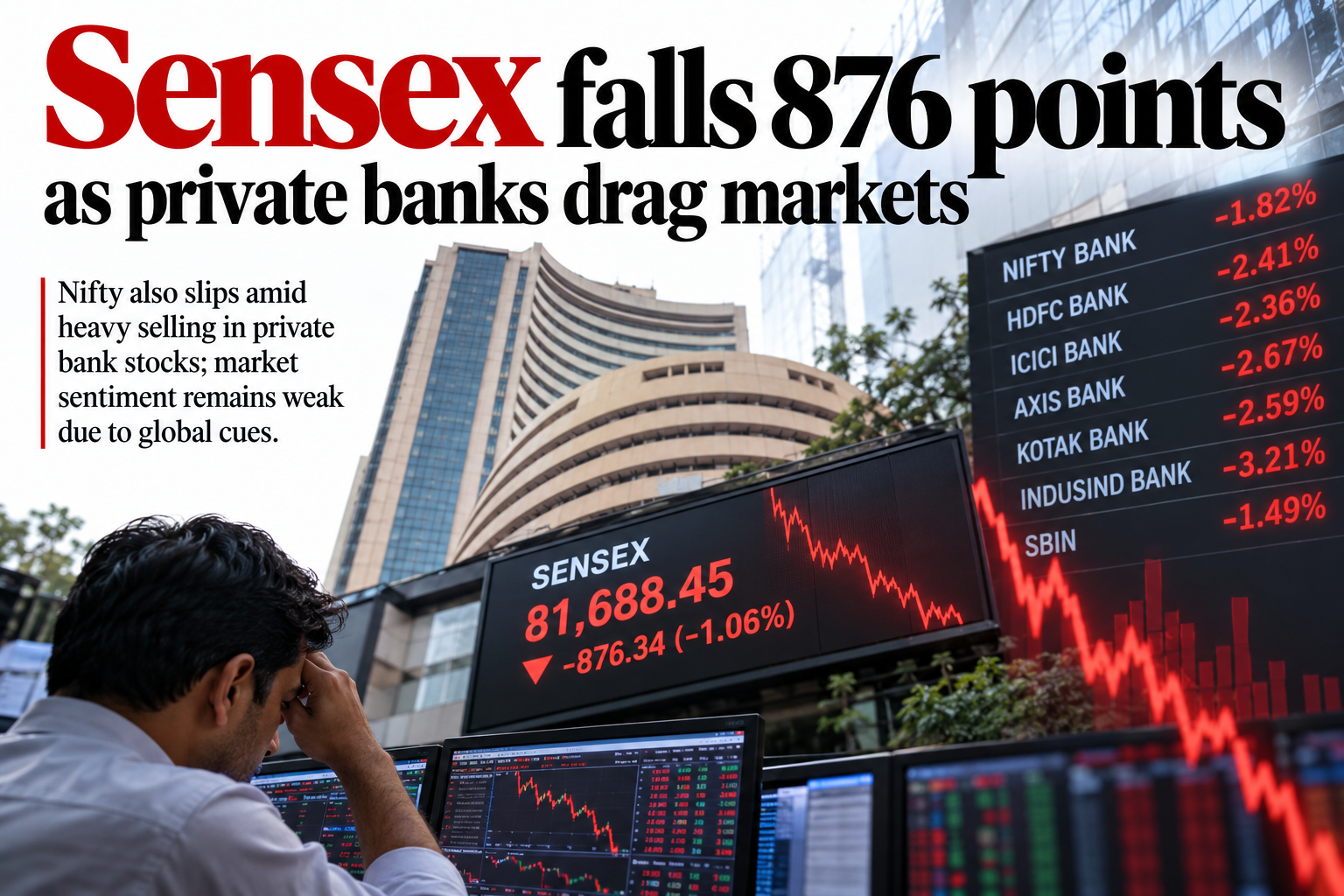

Rising Treasury yields dragged Wall Street through a losing week and sent money into gold and bitcoin. Washington's attempt to steady its own debt market has not yet worked — and the consequences reach well beyond New York.
Aalimi Nation · International Desk
Wall Street closed higher on Friday, and it did not matter much.
The S&P 500 rose 0.43% to 7,674.37 and the Nasdaq Composite gained the same to 26,180.45, while the Dow Jones Industrial Average added 517.80 points, or 0.98%, to 53,277.01, lifted by healthcare names including Merck and Johnson & Johnson. But the broad index still finished the week down about 1.4%, its direction set not by earnings or by the Federal Reserve but by the market for United States government debt.
Treasury yields resumed climbing this week, and equities went with them. Information technology, the sector that has carried this market for two years, shed more than 3% across five sessions. Meta Platforms fell almost 7% over the same period. Amkor Technology and Credo Technology dropped roughly 15% and 11%. Utilities and industrials also fell.
When the price of borrowing rises, every asset valued on future earnings is worth less today. That is the whole mechanism, and it is now the dominant force in global markets.
Washington is intervening in its own debt market
The more consequential development is what the US Treasury is doing about it.
Secretary Scott Bessent has moved to steady the bond market directly, an effort that has drawn unusually blunt commentary from Wall Street. One JPMorgan strategist compared US bond intervention to paying a mortgage with a credit card — servicing an obligation by taking on another one. The intervention has not yet delivered: yields resumed their march higher this week regardless.
Bessent has also signalled optimism elsewhere, saying there is a very good chance the US budget deficit has peaked under this administration, and separately indicating that Washington is unlikely to restart large-scale combat operations against Iran as it steps up economic pressure instead.
Running alongside this is a quieter institutional story. The Treasury's expanding footprint in the bond market is being read as encroachment on the central bank's territory, leaving Fed Chair Kevin Warsh facing a test of the Fed's independence at the same moment he faces a difficult call on rates. Markets currently price only about a one-in-three chance of a cut at the September meeting; pricing further out points to a hike in December.
Where the money went instead
Investors drew the obvious conclusion.
Bitcoin ended the week up 22%, dragging crypto-linked equities with it — Robinhood rose almost 14% on Friday, Coinbase 8%. Gold has been climbing on the same logic. Bloomberg has described the driver plainly: talk of currency debasement is picking up.
That is what a bond market in trouble looks like from the outside. When investors doubt the value of the paper a government issues, they buy things a government cannot print.
Why this matters from Srinagar
For readers in India, the transmission runs through three channels, and none of them is abstract.
Higher US yields pull capital towards dollar assets, which pressures the rupee and forces the Reserve Bank into a choice between defending the currency and supporting growth. Higher global borrowing costs raise the price of external commercial borrowing for Indian companies, which shows up eventually in project finance and hiring. And the same uncertainty that lifts gold raises the import bill of a country that buys a great deal of it — with a wedding season ahead.
Oil sits underneath all of it. The International Energy Agency now expects world oil demand to fall by 1.6 million barrels a day this year, a downgrade of 510,000 barrels from its July estimate, as the effect of the Strait of Hormuz closure deepens. Demand destruction of that scale is not a sign of a healthy world economy; it is a sign of one adjusting to prices it cannot afford.
The week's corporate signals
Beneath the macro picture, individual results told a consistent story about the consumer and the AI build-out.
Walmart fell more than 5% in pre-market trading after US comparable sales rose 2.6% against expectations of 3.5%, with third-quarter earnings guidance also short of forecasts. Deere gained about 6% after stronger-than-expected results and a raised profit floor, posting $1.38 billion for the quarter to 2 August against $1.29 billion a year earlier. Alibaba's US-listed shares fell nearly 3% after profits dropped 75% in the June quarter, the company pointing to its own spending on artificial intelligence.
That last figure deserves attention. A 75% profit decline caused by capital expenditure is either the cost of building the next decade's infrastructure or the beginning of a very expensive correction. Nobody yet knows which, and the bond market's verdict on it is the reason this week ended where it did.
What to watch
The Fed has no policy meeting in August, which leaves the September decision as the next fixed point. Between now and then, the questions are whether Treasury yields stabilise without further intervention, whether the Treasury and the Fed clarify their respective roles, and whether the flight into gold and crypto proves a hedge or a stampede.
For most of the past two years, the market's central question was what artificial intelligence would earn. This week it was something older and less exciting: what it costs to borrow, and whether the world's largest borrower still sets that price.