A devastating fire aboard a passenger ferry in the Philippines has killed at least 35 people, after rescuers recovered 30 bodies from the burned-out vessel near the popular tourist destination of Coron in Palawan.
The fire broke out on Wednesday night as the MV June Aster was nearing the end of its more than 20-hour journey from Manila to Coron. The vessel was carrying 134 people, including 117 passengers and 17 crew members, according to the passenger manifest.
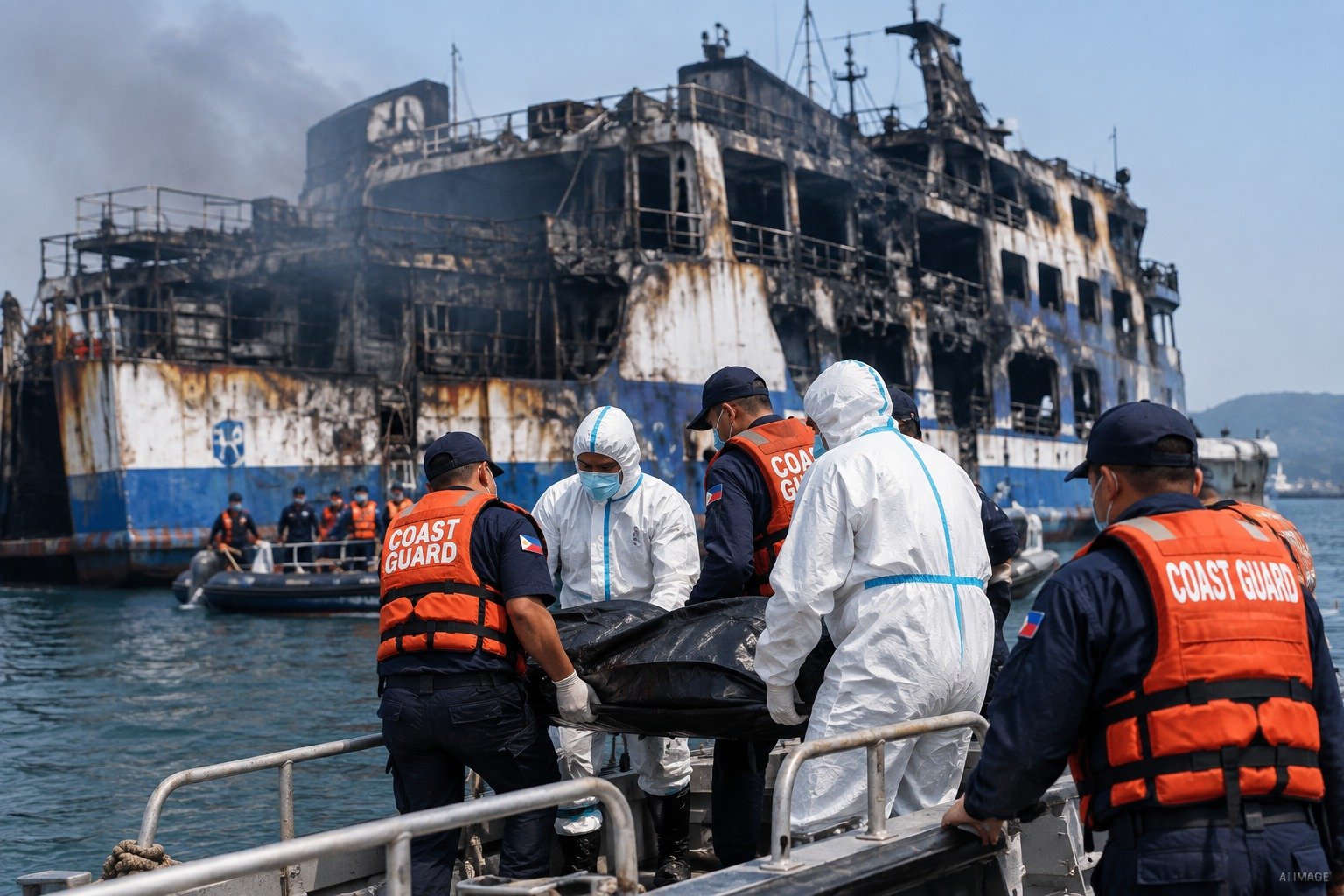
Rescuers were initially unable to enter the ferry because of intense heat and thick smoke. They gained access to the vessel on Friday and discovered the remains in the ship's economy accommodation area.
The Philippine Coast Guard said 43 people had survived, while the number of people still unaccounted for stood at 54 after authorities determined that two people listed on the original passenger manifest had not boarded the ferry.
Images released by the Coast Guard showed extensive destruction inside the vessel, with passenger berths reduced to twisted metal, ash and debris. Investigators also photographed what appeared to be human remains and a burned vehicle.
“We recognize the grief of the families affected by this tragic incident. Rest assured that operations are carried out with utmost respect for the deceased and their bereaved families,” Coast Guard spokesperson Commodore Noemi Cayabyab said.
Survivors Describe Rapidly Spreading Fire
Survivors described scenes of panic after the fire erupted.
One survivor, Richard Marceliano, told local media that he initially saw only a small amount of smoke before the flames rapidly spread through the vessel. He said he and other passengers spent nearly two hours in the sea before being rescued.
Another survivor described passengers scrambling to escape as the fire spread through the ferry.
Authorities have not yet established the definitive cause of the blaze. The Maritime Industry Authority said survivor accounts indicated that two successive explosions were heard from inside the vessel before the fire spread.
The Coast Guard said the ferry was also carrying several vehicles and other cargo, including motorcycles, an electric vehicle, a forklift and a pickup truck.
Families Wait for News
As the search continued, relatives gathered at ports and rescue centres seeking information about missing family members.
Jonnsban Tibay, 60, said he feared his wife, Eden, was among those trapped aboard the ferry. The couple were on a video call when the fire broke out.
“She said, ‘We’re leaving now,’” Tibay recalled. He said the call suddenly ended as the emergency unfolded.
Tibay said he believed his wife had been unable to escape because she was diabetic and physically weak.
“It hurts so much,” he said, adding that their two children had been unable to stop crying.
At the port in Coron, Myra Bilan, 47, also waited for news of her missing sister and brother-in-law, who had been travelling to Palawan on business.
“I hope our government takes action. So many people have died,” Bilan said.
Relatives also gathered outside the Manila office of Atienza Interisland Ferries Inc., the company that operates the vessel, seeking information about their loved ones.
The company has said it is cooperating with the government's investigation.
Maritime Safety Concerns
The tragedy has renewed concerns over maritime safety in the Philippines, an archipelago of more than 7,600 islands where ferries and smaller vessels are essential for travel between provinces.
The country has experienced a number of deadly maritime accidents over the years.
In 1987, the MV Doña Paz collided with an oil tanker in one of the world's deadliest peacetime maritime disasters, killing more than 4,300 people.
The latest disaster is expected to face close scrutiny as authorities investigate the cause of the fire, the vessel's safety procedures and the circumstances surrounding the rapid spread of the flames.
For now, search and recovery operations continue, with authorities working to recover and identify the remains while accounting for those still missing.