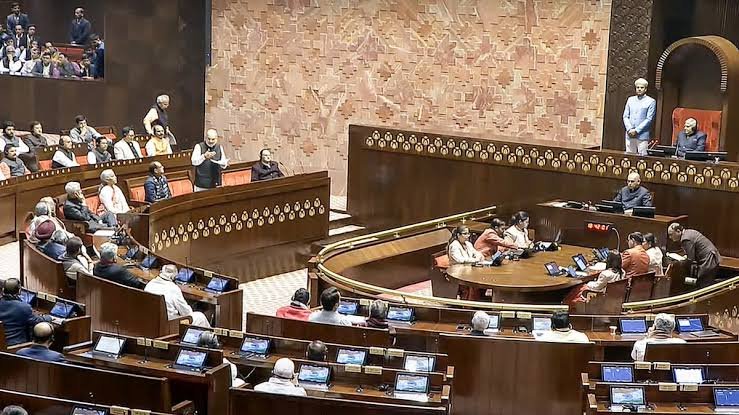
GANDHINAGAR, November 21 (Aalimi Nation) – Union Labour and Employment Minister Mansukh Mandaviya on Saturday opened a two-day national Chintan Shivir of labour and employment ministers of states and Union Territories at Mahatma Mandir in Gujarat, with the Centre and states reviewing how the four Labour Codes are being put into practice.
Review marks one year of the Labour Codes
The meeting, organised by the Ministry of Labour and Employment, runs on November 21 and 22. It coincides with the first anniversary of the Labour Codes coming into force on November 21, 2025. The inaugural session was chaired by Mr Mandaviya and Gujarat Chief Minister Bhupendra Patel. Union Minister of State Shobha Karandlaje, Union Labour Secretary Chandra Bhushan Kumar, state ministers and senior officials from across the country are attending.
The stated purpose is to improve coordination between the Central and state governments so that labour reforms can be carried out more evenly across the country.
What ministers said
Mr Mandaviya described workers' welfare and industrial growth as the two main drivers of national progress and called for a balance between the two as India works towards its goal of becoming a developed nation by 2047. He urged states to work together, and said social security coverage had risen from 25 crore people in 2014 to 101 crore in 2026. He also named overseas employment and cross-border labour mobility as areas of focus.
Mr Patel said workers' dignity, welfare and empowerment are central to nation-building. He described the gathering as a chance for states to exchange successful practices and arrive at a common approach to labour welfare and industrial development.
Mr Kumar asked states to share their experiences, point out practical difficulties and present initiatives that other states could adopt, calling for a change in the administrative approach.
Agenda for the two days
The first day includes four thematic plenary sessions. They cover the status and future of Labour Code implementation, employment initiatives and reforms at the Employees' Provident Fund Organisation, reforms at the Employees' State Insurance Corporation, and social security for workers in the unorganised sector along with labour statistics. Parallel sessions for field officials are examining implementation strategies, engagement with micro, small and medium enterprises, field-level initiatives and trust-based electronic compliance systems.
The V. V. Giri National Labour Institute and Gujarat National Law University are involved as knowledge partners, officials said.
Why it matters
Labour is on the Concurrent List of the Constitution, which means both the Centre and the states make rules and run enforcement. The Labour Codes, which bring together a large body of earlier labour laws, deal with matters such as minimum wages, wider social security coverage and fixed-term employment, and are intended to simplify compliance for businesses. Because states frame their own rules and run inspections under the codes, the pace of implementation can differ from one state to another, which is why the Centre has called the states together.
What happens next
The meeting continues on Sunday. No outcomes or resolutions have been announced so far, and officials have not said whether a joint statement or a timeline for implementation will be issued at its close.