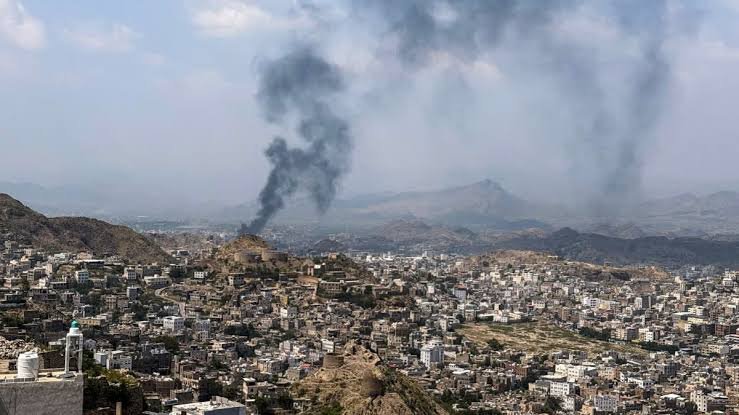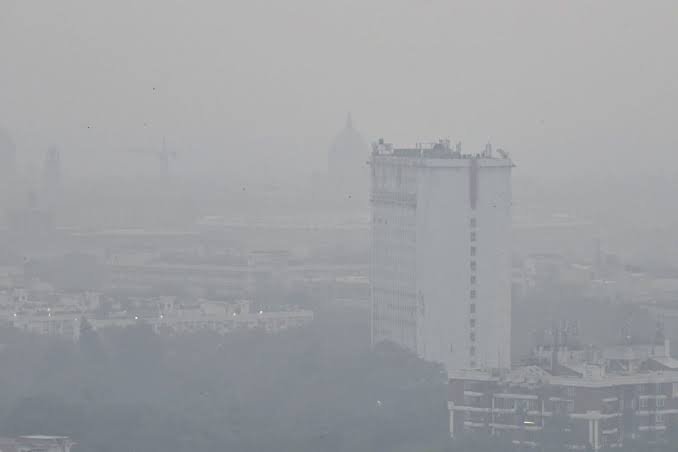
NEW DELHI, November 9 (Aalimi Nation) – Delhi's air quality touched the 400 mark on Monday morning, the day after Diwali, bringing the capital to the edge of the "severe" category as thick smog cut visibility in several areas, according to Central Pollution Control Board (CPCB) data.
The CPCB recorded the highest Air Quality Index (AQI) of 441 at Burari Crossing, followed by 437 at Vivek Vihar and 434 at the Delhi Technological University. North Campus and Jahangirpuri both logged 433, Rohini 430, Ghazipur 418, Mundka 417 and Punjabi Bagh 409. Akshardham, at 337, and Anand Vihar, at 335, remained in the "very poor" band, while Sri Aurobindo Marg, at 267, was among the lowest. Data was unavailable for IIT Delhi and Dwarka Sector 8.
Under the CPCB scale, readings of 301 to 400 are "very poor" and 401 to 500 are "severe".
The CPCB's bulletin for Diwali day, based on a 24-hour average until 4 pm, put Delhi at 376 and Ghaziabad at 344, both "very poor". Noida stood at 318 and Ballabgarh in Faridabad district at 398, the highest in that bulletin. Gurugram recorded 288 and Faridabad 291, both "poor".
On Monday between 7 and 8 am, a global air-quality tracker ranked Gurugram second among major Indian cities with an AQI of about 307, behind Prayagraj at about 325. Delhi and Noida were around 250 on the same ranking. The Haryana State Pollution Control Board's Vikas Sadan station showed PM2.5 at 105.9 micrograms per cubic metre at 7.30 am, equivalent to an AQI of about 252. These figures come from different monitoring systems and are not directly comparable.
Outside the capital region, Mumbai's Kherwadi-Bandra East station recorded 264 and Sewri 226, while Lucknow also reported a dense layer of smog.
On Friday, the Commission for Air Quality Management (CAQM) invoked Stage III of the Graded Response Action Plan across Delhi-NCR. The stage brings tighter vehicle restrictions, a halt to construction activity and hybrid classes for primary students.
Several Delhi University colleges moved classes online. Delhi College of Arts and Commerce said its online classes on November 7 and 10 followed directions from the CAQM and the Delhi government, and kept the campus closed on November 9. Its notice said the "health and well-being of students and staff remain our highest priority." Shaheed Bhagat Singh College shifted classes online on November 6, 7 and 10 and declared holidays on November 9 and 11. Bhagini Nivedita College moved classes online on November 7 and 10, and the Institute of Home Economics closed on November 9.
The CPCB says "poor" air can cause breathing discomfort to most people on prolonged exposure, with people who have asthma, lung or heart conditions at greater risk. Residents are generally advised to limit outdoor exertion on days when readings are in the "very poor" or "severe" bands.
Officials have not announced whether Stage III will be tightened or relaxed. Air quality in the region typically depends on wind speed, temperature and the extent of crop-residue burning in neighbouring states, and further readings from the CPCB will show whether the post-Diwali spike eases over the coming days.