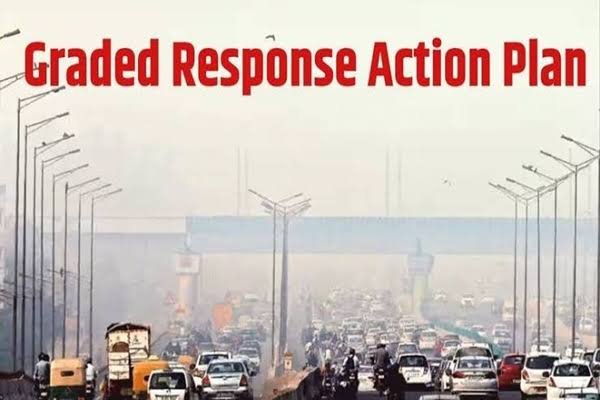
NEW DELHI, October 22 (Aalimi Nation) – The Commission for Air Quality Management (CAQM) has invoked Stage I of the Graded Response Action Plan across Delhi and the National Capital Region after the capital's air quality slipped into the "poor" category. The GRAP Stage I order took effect immediately on Wednesday and covers the entire region.
Delhi's Air Quality Index (AQI) stood at 179, in the "moderate" band, on Tuesday. By 2 pm on Wednesday it had climbed to 244, and Central Pollution Control Board data showed a reading of 238 at 10 am the same day. Stage I applies when the AQI falls in the 201–300 range. It is the first time this season that the plan has been invoked. Last year, Stage I came into force on October 14.
The India Meteorological Department and the Indian Institute of Tropical Meteorology have forecast that air quality is likely to remain in the "poor" category over the coming days.
What GRAP Stage I requires
The first stage is built around dust and local emissions. Authorities are expected to step up mechanised road sweeping and water sprinkling, enforce dust-control rules at construction and demolition sites, and tighten checks on polluting vehicles. Traffic-management measures are meant to reduce congestion at known choke points.
Industrial emissions are to be curbed, and action is to be taken against waste burning. Coal and firewood are not permitted as fuel in tandoors at hotels, restaurants and open eateries. Diesel generator sets may be used only in emergency or essential situations. Residents are also asked to follow the GRAP citizen charter.
The stage structure was revised in November 2025, when several measures that had earlier sat in Stage II were moved into Stage I.
Delhi Metro steps up
The Delhi Metro Rail Corporation (DMRC) said it will run 20 additional train trips on weekdays, beginning on the day of the announcement. The corporation said the extra services are meant to encourage more commuters to choose public transport over personal vehicles.
DMRC also said it is intensifying anti-pollution work at its construction sites and in surrounding areas. More than 250 anti-smog guns and mist guns have been installed at construction sites, stations and office buildings to suppress dust, and its Environment Department carries out daily inspections to check compliance with environmental norms.
How the plan escalates
GRAP works in four stages tied to the AQI. Stage II is applied when the index reaches the 301–400 range, and and higher stages follow as readings worsen. The CAQM's sub-committee on GRAP has said it will keep reviewing the situation and can step measures up or relax them depending on the AQI and the forecast.
What to watch next
The next few days will show whether the current spell of "poor" air persists or worsens. For now, the commission's emphasis is on dust suppression and local enforcement by the agencies responsible for carrying out the Stage I measures across the NCR.