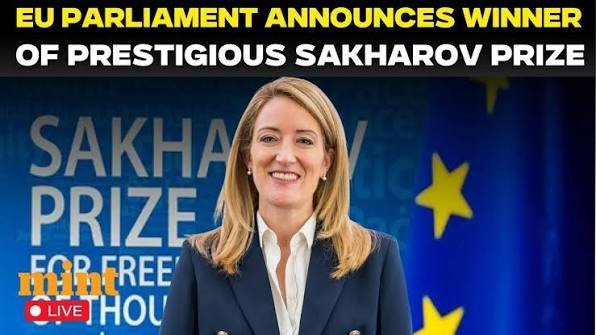
STRASBOURG, October 23 (Aalimi Nation) – The European Parliament has awarded its 2026 Sakharov Prize for Freedom of Thought to the International Criminal Court, a decision that comes less than two weeks after the United States imposed sanctions on the court as an institution.
Parliament President Roberta Metsola announced the choice on Thursday in Strasbourg. She said the prize recognises the work of those who bring justice to victims, and added that "the European Union is built on respect for multilateralism and international institutions." The award carries €50,000, and the court and its officials are due to collect it in Strasbourg on December 16, at the final plenary session of the year.
How the Sakharov Prize decision was made
The decision was taken by the Conference of Presidents, which brings together Metsola and the leaders of the political groups. According to parliamentary sources, the Socialists and Democrats group nominated the court, with backing from Renew Europe, the Greens and The Left. French lawmaker Chloé Ridel, who initiated the nomination, called the result "historic."
The other finalists were Tanzanian opposition leader Tundu Lissu and the Iranian twin sisters Taraneh and Romina Rahimi, both of whom have been sentenced in Iran. No vote figures were made public.
Sanctions and the court's response
On October 9, Washington sanctioned the court itself, hours after former ICC judge Navi Pillay was announced as a Nobel Peace Prize winner. US Secretary of State Marco Rubio said the United States would "ban transactions with this rogue court" once a six-month grace period ends. Earlier measures targeted individual judges and prosecutors, among them court president Tomoko Akane, who was listed in August.
The US administration's campaign against the court intensified after the court issued arrest warrants in 2024 for Israeli Prime Minister Benjamin Netanyahu and former Defence Minister Yoav Gallant.
The court thanked the European Parliament for the honour "at a time when the Court and its officials face unprecedented challenges." Akane said the prize reaffirms "the importance of independent judicial institutions and of those who work to uphold international law."
EU position on the Sakharov Prize winner
European Commission President Ursula von der Leyen said the court "must be free to pursue its mission, independently, and without pressure or intimidation." The European Union has said it is "ready to take any necessary measures" to keep the court functioning.
Pressure on the bloc to act has been growing. Days before the prize decision, members of the European Parliament from several groups urged von der Leyen to shield the court, including through the EU blocking statute. EU officials are considering the option, but the statute has not been invoked.
EU High Representative for Foreign Affairs Kaja Kallas is expected in The Hague on Friday to restate the bloc's support for the court, according to European sources. The sanctions on the institution are due to take effect in six months, leaving a window for diplomacy before the court loses access to US financial and technology services.