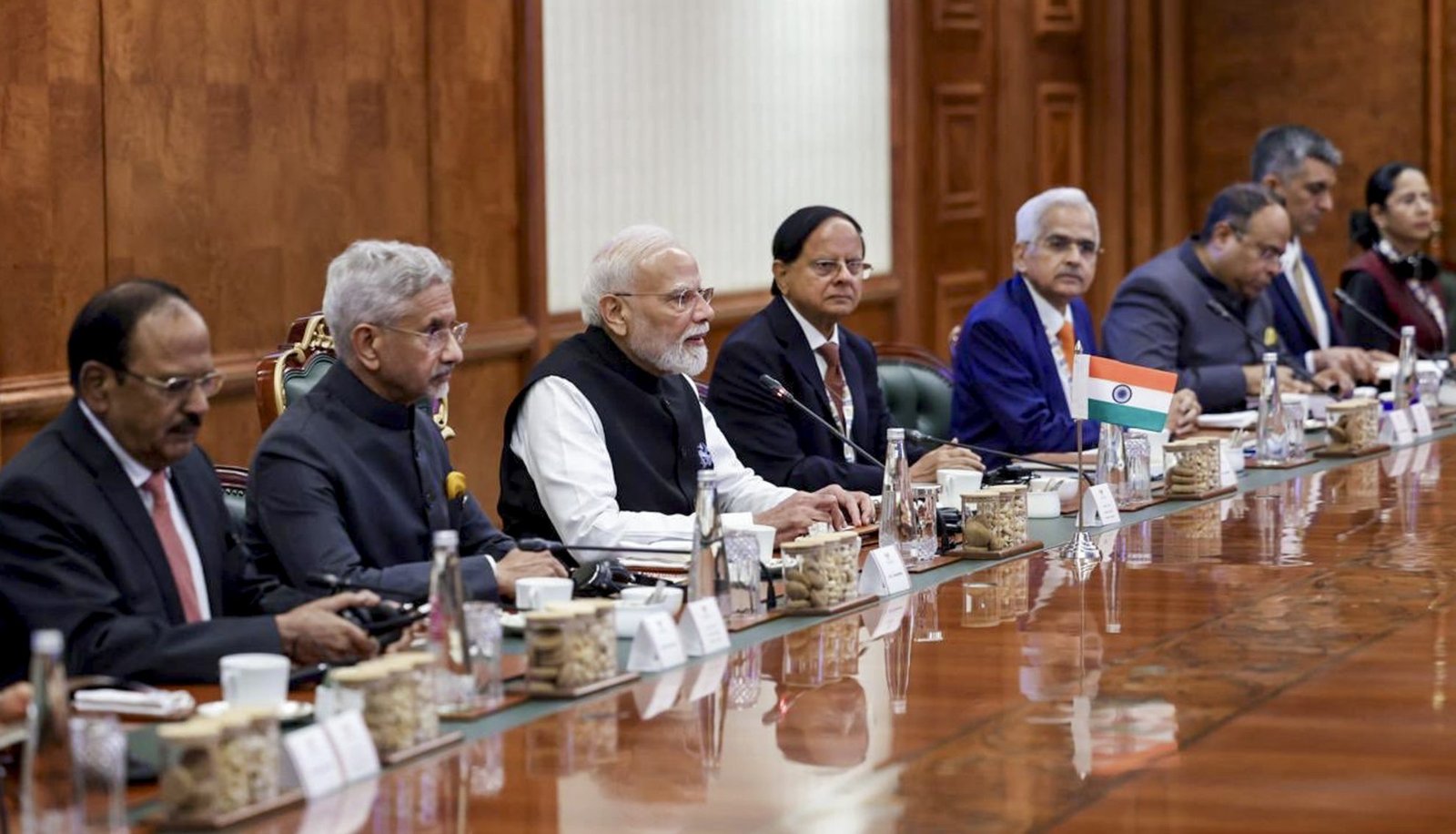
Ten nations call illicit drug production and trafficking a threat to public security, health and sustainable development, and endorse the real-time intelligence-sharing framework India pushed for in Assam in July.
By Aalimi Nation World Desk | New Delhi | 13 September 2026
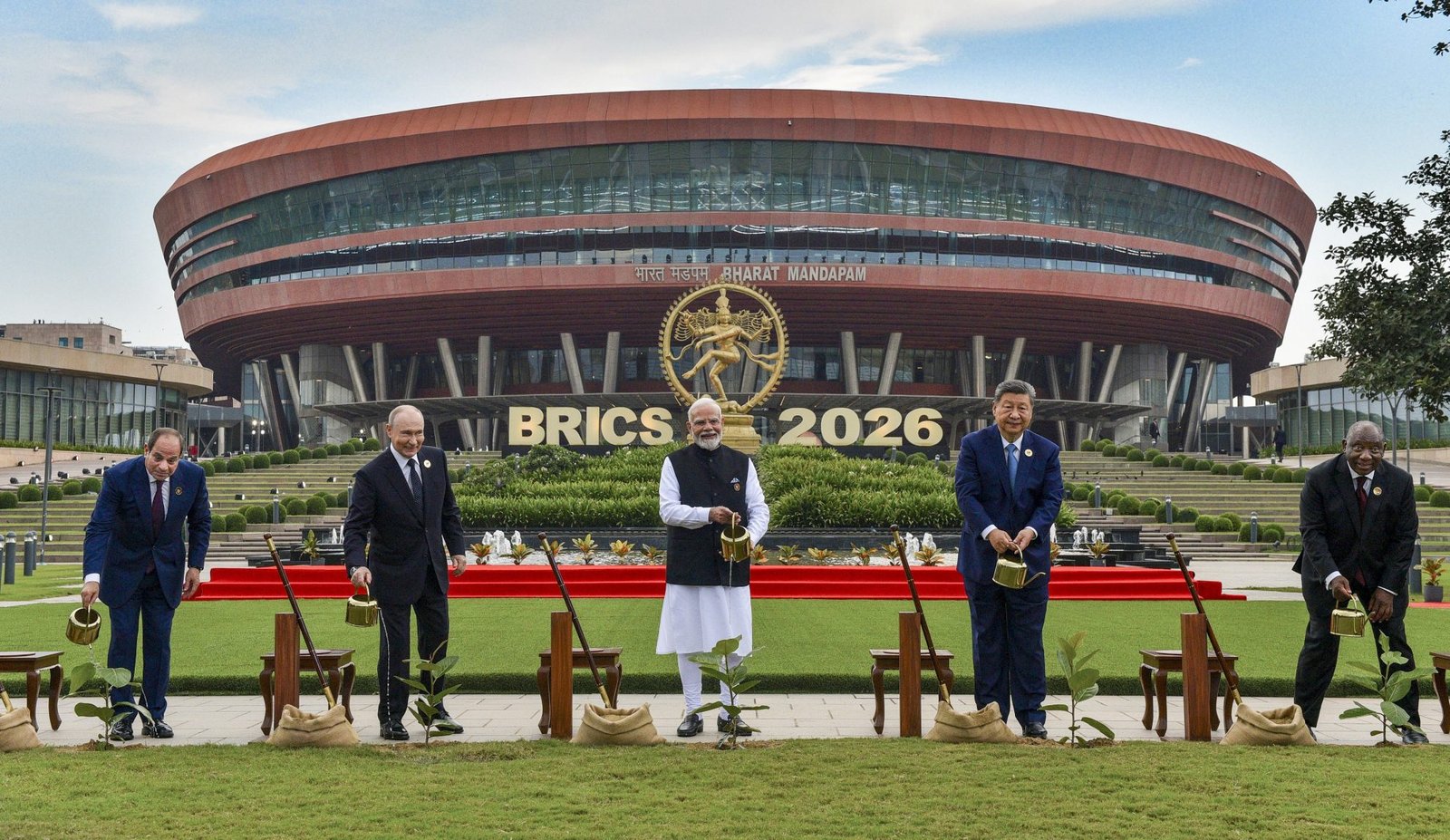
NEW DELHI — The BRICS grouping has written the narcotics trade into the centre of its security agenda. In the New Delhi Declaration adopted on Saturday at the close of the 18th BRICS Summit, member states said they "express concern over the situation with illicit drug production, trafficking and abuse worldwide" and recognised that it "seriously threatens public security, health, safety and well-being of humankind and undermines the sustainable development of States."
The 45-page declaration went a step further than a statement of concern. It formally welcomed the Guwahati Declaration issued in July by the heads of the grouping's anti-drug agencies, describing it as an instrument that "would facilitate operational and technical cooperation among BRICS Anti-Drug Agencies."
That single line converts a working-level agreement between enforcement chiefs into a leaders-endorsed mandate. For India, which holds the BRICS chairship in 2026 under the theme "Building for Resilience, Innovation, Cooperation and Sustainability," it is the clearest policy win of the summit's security track.
What Guwahati actually agreed
The two-day BRICS Heads of Anti-Drug Agencies meeting concluded in Guwahati, Assam, in early July with a joint declaration built around one idea: speed. Member agencies committed to enhancing the timely exchange of information, intelligence and best practices, consistent with national laws and international obligations — the legal caveat that lets agencies act on a tip-off without waiting on a formal mutual-legal-assistance request.
The declaration also pushed members toward innovative technologies, digital tools and data-driven approaches to strengthen law enforcement and regulatory work against trafficking. In practice that means shared analytics on shipment patterns, dark-web marketplaces and precursor chemical flows rather than paper-based case files.
Leading the Indian delegation in Guwahati, Narcotics Control Bureau Director General Anurag Garg pressed the grouping's enforcement agencies to build a partnership founded on speed, mutual trust and seamless real-time intelligence sharing that transcends borders and enables decisive action against transnational drug syndicates. He described 21st-century trafficking as hyper-connected and jurisdiction-less, and proposed two concrete mechanisms: a BRICS Virtual Working Group, and expanded cross-border training programmes for member agencies.
"National anti-drug agencies have to make a network to break these transnational drug trafficking networks," Garg said.
India's own doctrine, exported
The framework India took to Guwahati mirrors the one it is applying at home. Garg set out a zero-tolerance policy against drugs and a three-year roadmap for 2026–2029 built on a network-centric approach — dismantling entire criminal networks rather than arresting individual couriers, paired with mass awareness campaigns and expanded treatment, de-addiction and rehabilitation capacity.
The sequencing matters. A network-centric doctrine only works if the network being mapped extends past the border, which is why intelligence-sharing language, not seizure targets, became the substance of the Guwahati text. Garg closed the Assam meeting by asking members to carry forward its spirit toward the shared objective of a drug-free world and a safer, healthier global community.
Why a ten-nation bloc changes the arithmetic
BRICS is no longer the five-country grouping that first used the acronym. The Guwahati meeting brought together Brazil, China, Ethiopia, India, Indonesia, Iran, Russia and the United Arab Emirates, and the New Delhi Summit was attended by ten member states including Egypt and South Africa. Between them the members hold some of the world's longest coastlines, largest container ports and biggest chemical manufacturing bases — the three assets transnational syndicates need most.
That is also the weakness the declaration is trying to close. Members sit astride several of the principal trafficking corridors feeding both Asian and Atlantic markets, and an enforcement gap in any one of them is usable by every syndicate operating in the rest. Bringing precursor-chemical regulators and port authorities into the same information loop as narcotics police is the harder, slower half of what the leaders signed.
The declaration was adopted at Bharat Mandapam on 12 September, at a summit hosted from 12 to 13 September, after a chairship year in which India convened more than four hundred BRICS meetings and engagements across thirty cities.
What to watch next
Three tests will show whether the language holds. Whether the BRICS Virtual Working Group is actually constituted and staffed; whether member agencies agree a standing channel for real-time alerts rather than periodic bulletins; and whether the anti-corruption commitments elsewhere in the declaration — including asset tracing and recovery cooperation under the UN Convention against Corruption — are applied to narcotics proceeds. Drug networks are financial networks, and a seizure without a forfeiture leaves the syndicate solvent.
On the evidence of Guwahati and New Delhi, the intent is on record. The institutional plumbing is the work of the next chairship year.