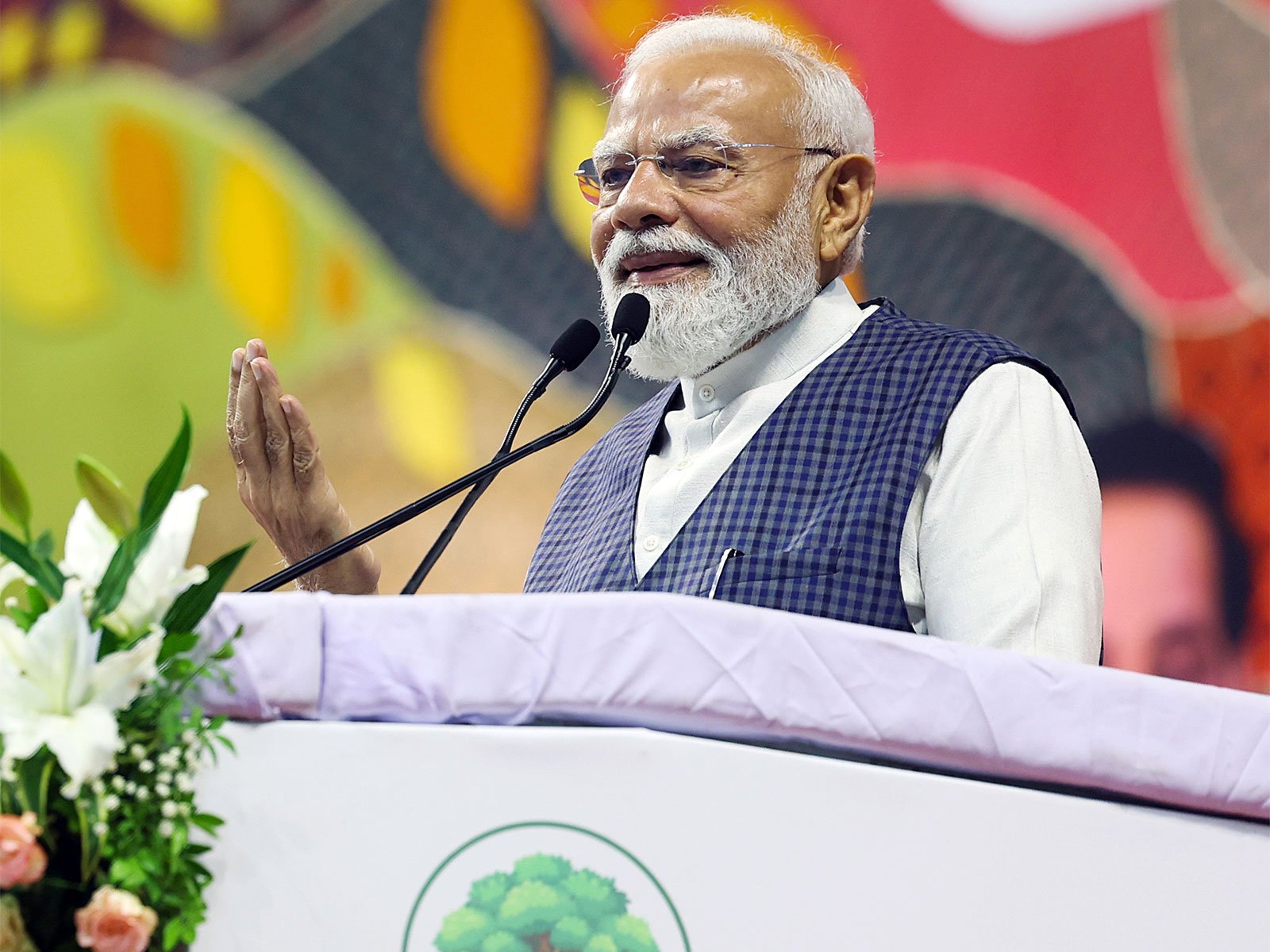
NEW DELHI, October 28 (Aalimi Nation) – Prime Minister Narendra Modi on Tuesday called on India to move beyond adopting technologies developed elsewhere and to lead the world in creating them, in his address at the Emerging Science, Technology and Innovation Conclave in the national capital.
The three-day event brings together scientists, researchers, policymakers, industry leaders, startups and international experts. Its programme covers 12 thematic areas, including artificial intelligence, biotechnology, advanced materials, manufacturing, healthcare, energy, climate and ocean sciences, and an exhibition with about 150 deep-technology startup stalls.
"India must embrace the technologies of the future, innovate boldly and lead the world in creating them," Modi said. He contrasted the past, when India mostly adopted or modified foreign innovations years after they appeared, with the present aim of building original technologies and setting their direction.
He said science "truly succeeds" when it moves out of the laboratory and improves citizens' lives, and that a technology should be judged by the scale of the problems it solves and the number of lives it improves. He named healthcare, agriculture, education, employment and disaster management as priority areas.
The Prime Minister said the government had committed nearly Rs 12,000 crore over the past year to technologies ready to move from laboratories to the market, and that private investors had matched the amount, bringing the new commitment to nearly Rs 24,000 crore. He said annual patent applications had risen from fewer than 50,000 a decade ago to nearly 1.5 lakh last year.
Modi also pointed to the 500-megawatt Prototype Fast Breeder Reactor, which he said achieved first criticality a few months ago. He described it as a major step towards strengthening India's long-term nuclear capabilities, adding that reliance on imported nuclear fuel poses a challenge to energy security. Other achievements he cited included the launch of an Indian artificial intelligence model, the first shipments of domestically manufactured semiconductor chips to global markets, and efforts to build battery storage from domestic raw materials.
On artificial intelligence, Modi said the technology can speed up routine research and raise productivity, but scientists must verify its outputs independently. He said scientific judgement grows through experimentation, questioning established patterns and learning from failure, and that AI should help researchers take on harder problems rather than limit independent thinking.
He called for greater attention to safety and security in AI, synthetic biology and autonomous systems. He warned of cybersecurity threats to financial networks and national security in the AI era and urged work on AI-based and quantum security solutions.
The Prime Minister asked researchers, industry leaders, startup founders and students attending the conclave to set concrete targets for technologies, prototypes, pilots or products over the next three years. He wanted measurable outcomes, not only an exchange of ideas.
Minister of State for Science and Technology Jitendra Singh said India had strengthened its standing in science and innovation, and that thousands of experts and delegates were attending the conclave.
"Our goal is to develop such technologies which empower India and also contribute to solving the problems of humanity," Modi said.