British flag remains at East Jerusalem consulate as diplomatic tensions deepen; mission to continue with sharply reduced staff under a new arrangement
JERUSALEM/LONDON: Britain has removed the signboards identifying its consulate in East Jerusalem following an Israeli order to close the mission in its previous form, marking a further escalation in diplomatic tensions between the two countries.
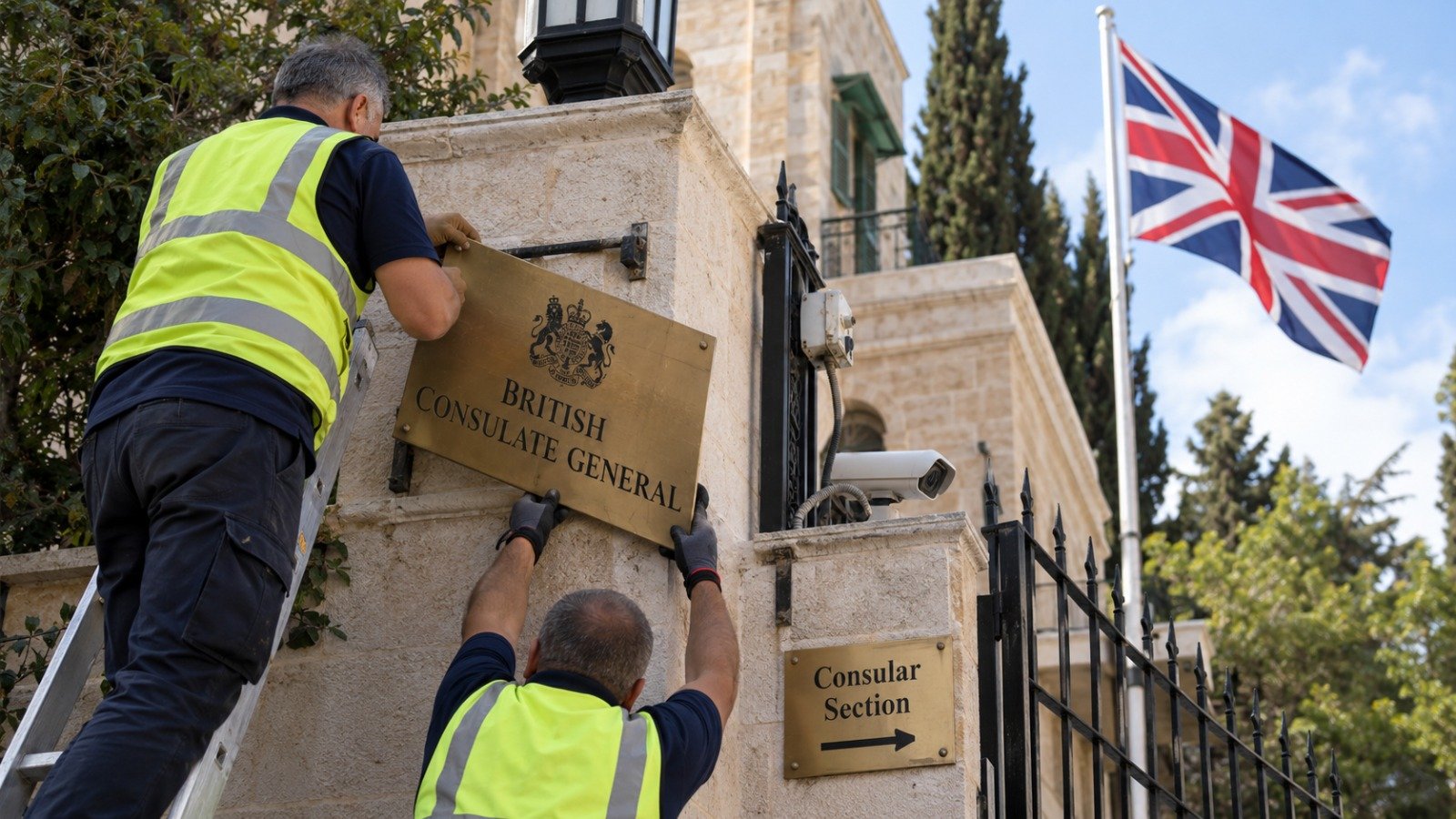
Reuters journalists observed workers removing a sign reading “British Consulate General” as well as another sign identifying the consular section. The British flag, however, remained flying over the building.
The British consulate did not immediately comment on the removal of the signs. It also remained unclear whether the move represented the formal end of all consular activities at the site.
Consulate to Continue on a Limited Basis
Israel had given Britain 30 days to close its consulate in occupied East Jerusalem and withdraw its diplomats from the city following London's decision to impose measures targeting Israeli settlements in the occupied West Bank.
British measures include trade restrictions on products manufactured in Israeli settlements.
The United Nations and most countries consider Israeli settlements in the occupied Palestinian territories illegal under international law, while Israel rejects that position.
Israeli Foreign Minister Gideon Sa'ar said on Thursday that the British consulate would cease operating in its existing form after the deadline expired.
According to Israel's Foreign Ministry, Britain's consul general and around 20 diplomats will leave Jerusalem under a new administrative arrangement agreed between the two sides.
However, the ministry said the British mission would be permitted to continue operating on a limited basis, with its staff reduced to seven people.
Israel also said that under the agreement, no further action would be taken against the consulate.
The arrangement means the mission will not disappear completely, but its operations will be substantially reduced. It remains unclear which services the seven remaining staff members will provide.
Nearly Two Centuries of British Presence
Britain's consular presence in Jerusalem dates back nearly two centuries and predates the establishment of Israel in 1948.
The consulate is located in the Sheikh Jarrah area of East Jerusalem and has traditionally handled Britain's relations with Palestinians in Jerusalem, the West Bank and Gaza, as well as providing consular services.
The Israeli decision does not affect Britain's embassy in Tel Aviv, which is responsible for diplomatic relations with the Israeli government.
Britain had sought to keep the Jerusalem consulate operating, with a British national security adviser visiting Israel last week for talks. However, those efforts did not prevent the new arrangement.
Reuters, citing sources, reported that the original closure decision could affect around 30 British diplomats and their families.
The British Foreign Office declined on Wednesday to say whether the consulate was still operating in its previous form or whether any diplomats had already returned to Britain.
London Considers Possible Retaliatory Measures
The diplomatic dispute could escalate further.
Reuters reported earlier this week that Britain was considering expelling Israeli diplomats from the Israeli embassy in London in response to Israel's decision concerning the British consulate in Jerusalem.
Any reciprocal expulsion of diplomats would represent a significant escalation between the two countries, which maintain longstanding economic, security and intelligence ties.
The latest dispute comes amid a broader deterioration in British-Israeli relations over the past three years, particularly because of Britain's criticism of Israel's military operations in Gaza and violence by Israeli settlers in the occupied West Bank.
The Israeli government, led by Prime Minister Benjamin Netanyahu, has in turn accused Britain's Labour government of adopting an increasingly hostile approach towards Israel.
A New Test for Bilateral Relations
The removal of the consulate's identifying signs is a highly visible symbol of the diplomatic dispute, even though the mission is expected to continue in a reduced form.
Attention will now turn to London's response and whether the disagreement remains confined to consular arrangements or develops into reciprocal diplomatic expulsions.
For now, the British presence in East Jerusalem continues—but on a significantly smaller scale and under an arrangement reflecting the growing strain in relations between London and Tel Aviv.