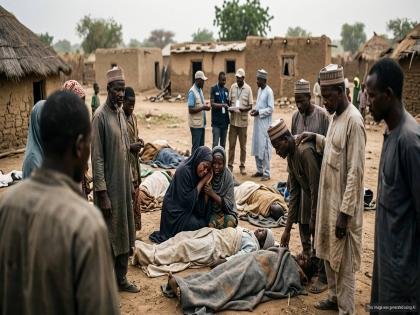
KINSHASA, October 31 (Aalimi Nation) – The death toll from the Ebola outbreak in the Democratic Republic of the Congo has passed 5,000, according to government data announced on Friday, making it the deadliest outbreak the country has recorded.
More than 10,000 people have been infected since the outbreak was declared in May. Authorities are struggling to bring it under control because it is caused by the rare Bundibugyo strain of the virus, for which no approved vaccine or treatment exists.
Spread across provinces and borders
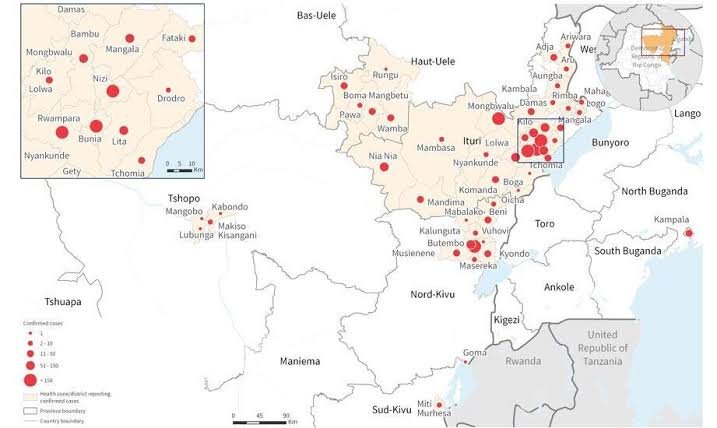
The Congolese Ministry of Health reported 10,141 cases and nearly 5,000 deaths as of Monday, October 26, and the World Health Organization (WHO) said more than 2,600 people have recovered. Cases have been recorded in eight of the country's 26 provinces, including areas that are hard to reach.
Health officials say delayed detection, armed conflict, hunger, displacement and strained health services have helped the virus spread faster than in earlier outbreaks. The outbreak began in eastern Congo and is the 17th Ebola outbreak in the country's history.
It is also the second-largest Ebola outbreak ever recorded. Only the 2014–2016 epidemic in West Africa was bigger, with more than 28,600 infections and more than 11,000 deaths in Guinea, Liberia and Sierra Leone.
Cases have also been reported outside Congo. Kenya and Uganda have confirmed infections, and Nigeria became the fourth African country to report a case last week, extending the outbreak to West Africa. Kenya has recorded nine cases and two deaths, all linked to a first patient who flew to Nairobi via Uganda on October 3 and died two days later. More than 130 contacts were identified and quarantined, and 20 of them were released after a mandatory 21-day monitoring period.
Vaccine trials and travel limits
The WHO has said that "sustained efforts are essential to end the outbreak" and has called for a continued scale-up of control measures and better access to affected areas. It said progress is being made, citing expanded testing and treatment capacity.
A set of vaccine trials, named TUMAINI, which means "hope" in Swahili, has begun. The trials will initially test whether a vaccine used against the Zaire strain of Ebola can protect people in the current outbreak, using ring vaccination, which targets close contacts of confirmed patients. WHO's technical lead for vaccine trials, Dr Meg Moherty, attended the launch in Bunia. She noted that the same approach was used in Guinea during the West Africa epidemic and said scientists are building on that experience to seek answers about Bundibugyo. The WHO has also convened expert groups to assess two other vaccine candidates designed specifically for the strain.
Governments are tightening travel rules. Some have restricted travel to affected countries or quarantined recent arrivals, and Uganda has ordered a 21-day quarantine for citizens returning from Congo. On Friday, Saudi authorities suspended travel to and entry from Kenya, including visa issuance and transit passengers who spent the previous 21 days in Kenya or other affected countries.
Officials have not said when the outbreak could peak, and no timeline has been given for the results of the vaccine trials.