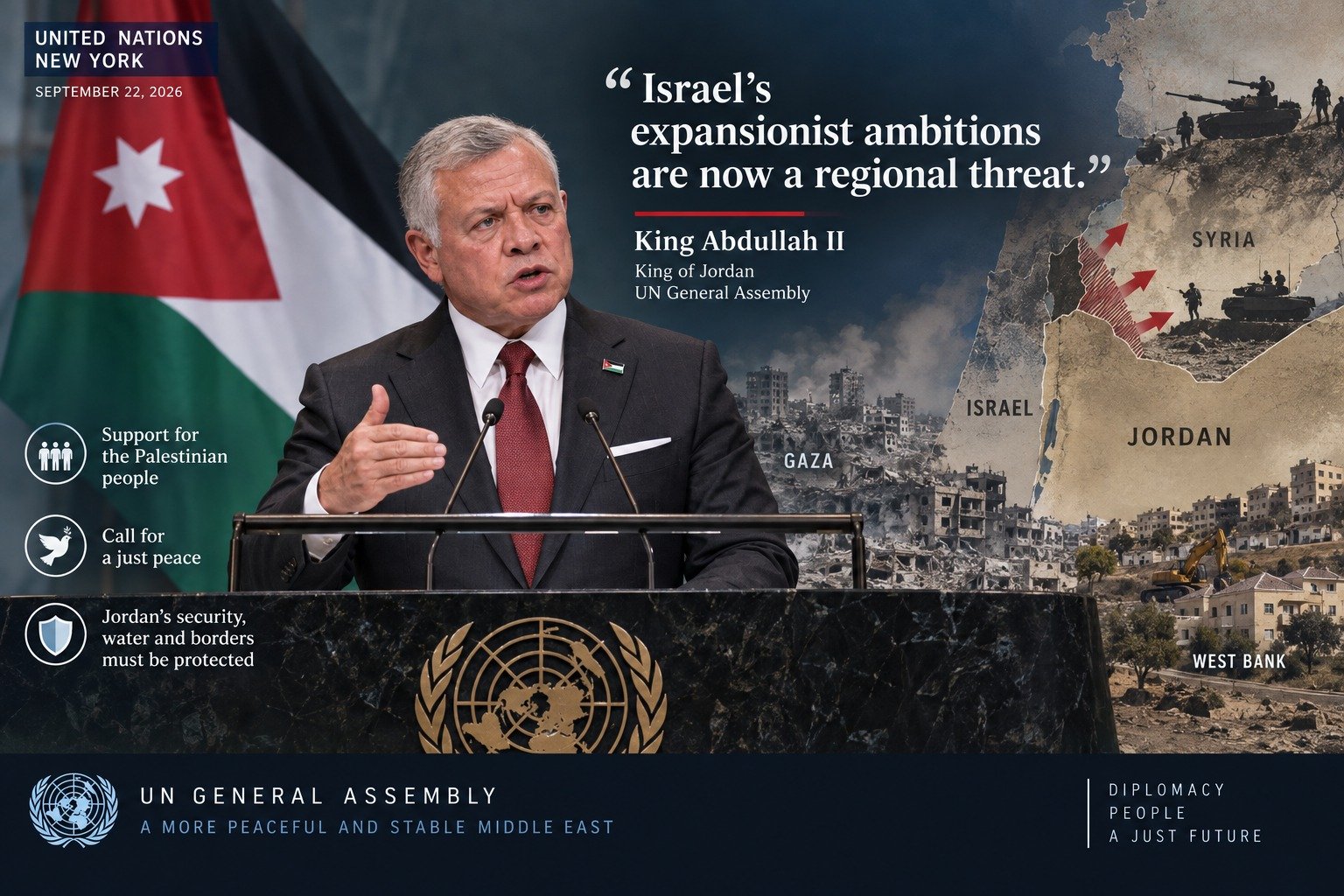
Jordan’s King Abdullah II has warned that what he described as the “expansionist ambitions” of Israel’s current government have become a regional threat, pointing particularly to Israeli military activity and territorial developments in southern Syria.
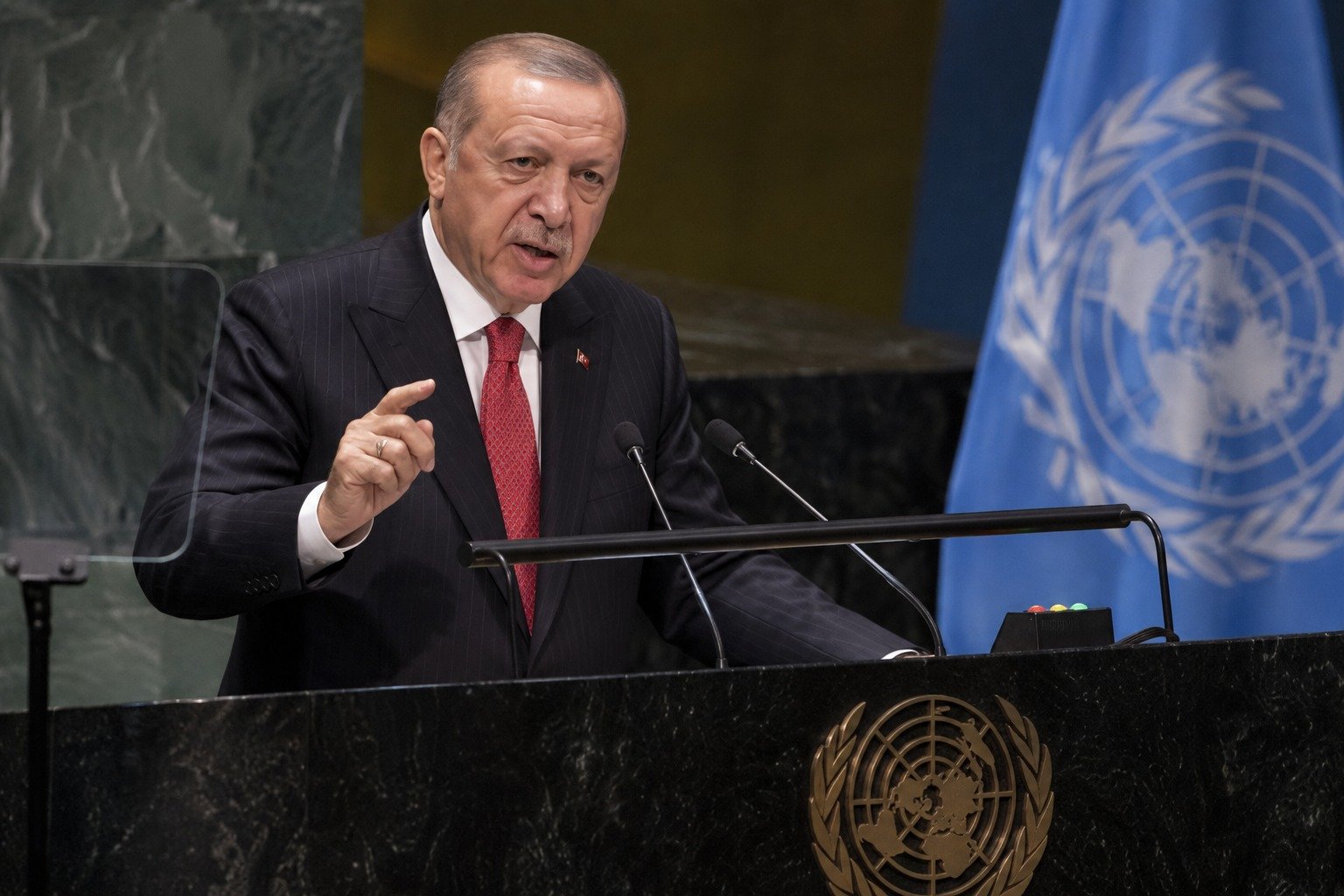
Addressing the 81st session of the United Nations General Assembly in New York, King Abdullah said the situation in Syria should serve as a warning to the international community. He referred to what he described as repeated incursions, expanding territorial control and the creation of new realities on the ground, including developments affecting vital water resources.
“This Israeli government’s expansionist appetite is now a regional threat. And today, Syria is the warning the international community is choosing not to see.”
The remarks were part of a broader address in which the Jordanian monarch called for renewed international efforts to address the Israeli-Palestinian conflict and criticised what he described as prolonged international inaction.
Gaza and West Bank cannot be viewed separately
King Abdullah argued that the situation in Gaza and the occupied West Bank should not be treated as separate developments.
He said the destruction in Gaza and developments in the West Bank were part of a broader pattern. He referred to the expansion of settler violence, land seizures, settlement activity and the displacement of Palestinians, arguing that the two territories should be viewed as interconnected parts of the Israeli-Palestinian conflict.
The Jordanian king also said the situation in Gaza could no longer be regarded simply as temporary military measures or the consequences of war.
According to reports of his speech, Abdullah described the developments in the West Bank as a fundamental transformation and said the international community must address the underlying political conflict rather than merely manage its consequences.
Jordan warns over northern border and water security
The Jordanian monarch linked the developments in southern Syria directly to Jordan’s national security.
He said any threat to Jordan’s northern border or water security would constitute a threat to the kingdom’s national security.
“Jordan will not turn a blind eye; we will protect our security, our water, and the interests of our people.”
Jordan shares a border with Syria to the north and has repeatedly raised concerns about instability and armed activity in areas close to its territory.
Abdullah questioned whether the international community would allow Israel to continue what he described as an aggressive approach in southern Syria without taking action.
Calls for international action
The Jordanian king said the international community possesses several instruments that can be used to respond to violations, including sanctions, asset freezes, embargoes and diplomatic isolation.
However, he argued that international decisions concerning Israel often remain without effective implementation.
“When it comes to Israel, the decisions remain where they began: ink on paper.”
Abdullah said continued international inaction risks creating the perception that there are few consequences for crossing geographical or legal boundaries.
Jordan reiterates support for Palestinians
The Jordanian monarch reaffirmed his country's commitment to what he described as a just peace and said Jordan would continue supporting the Palestinian people and the UN agency for Palestinian refugees, UNRWA.
He also reaffirmed Jordan’s role in protecting the historical and legal status quo of Muslim and Christian holy sites in Jerusalem.
The speech came as the UN General Assembly was dominated by discussions over the wars and political crises affecting the Middle East, including the conflict involving Israel and Palestinians and wider regional tensions.
King Abdullah also reiterated Jordan’s commitment to combating terrorism and drug trafficking, strengthening its defensive capabilities and maintaining economic, trade and technological cooperation with countries across the region.
For Amman, the developments in southern Syria, Gaza and the West Bank are increasingly being viewed through the lens of Jordan’s own border, water and national-security concerns.