Prime Minister Anwar Ibrahim extends condolences as Malaysian authorities intensify efforts to locate citizens affected by the disaster
KUALA LUMPUR: Malaysia has stepped up efforts to locate its citizens affected by the devastating flash floods along the Nepal-China border, with Prime Minister Anwar Ibrahim expressing deep concern over the disaster and confirming that 54 Malaysians remain uncontactable.
Anwar said Malaysia's Embassy in Kathmandu is working closely with Nepalese authorities and relevant agencies to determine the whereabouts and condition of Malaysian nationals affected by the disaster. Officials from Malaysia's High Commission in Dhaka, Bangladesh, are also being mobilised to strengthen coordination and support operations on the ground.
The Malaysian prime minister said he had directed the country's diplomatic mission to receive whatever resources it requires to assist affected Malaysians and their families.
“I am deeply distressed by the catastrophic flash floods that have struck the Nepal-China border region,” Anwar said in a statement on August 27.
He expressed condolences to the governments and people of Nepal and China, as well as families who have lost relatives or are still waiting for information about missing loved ones.
54 Malaysians Remain Uncontactable
Malaysia's Foreign Ministry is actively working to establish contact with 54 Malaysian nationals whose whereabouts remain unknown following the disaster.
The number is significantly higher than the initial figure of 11 Malaysians reported uncontactable shortly after the flooding began. Malaysian authorities have continued gathering information as communications and road access in the affected region remain severely disrupted.
The affected area includes Nepal's Rasuwa district, where a massive surge of water and debris swept through settlements, roads and infrastructure.
Malaysian authorities are coordinating with local officials, rescue teams and travel agencies as they attempt to establish the condition and location of those still missing.
Major Disaster Hits Nepal-China Border Region
The flash floods struck the mountainous border region on August 26, causing extensive destruction in parts of Nepal and China's Tibet Autonomous Region.
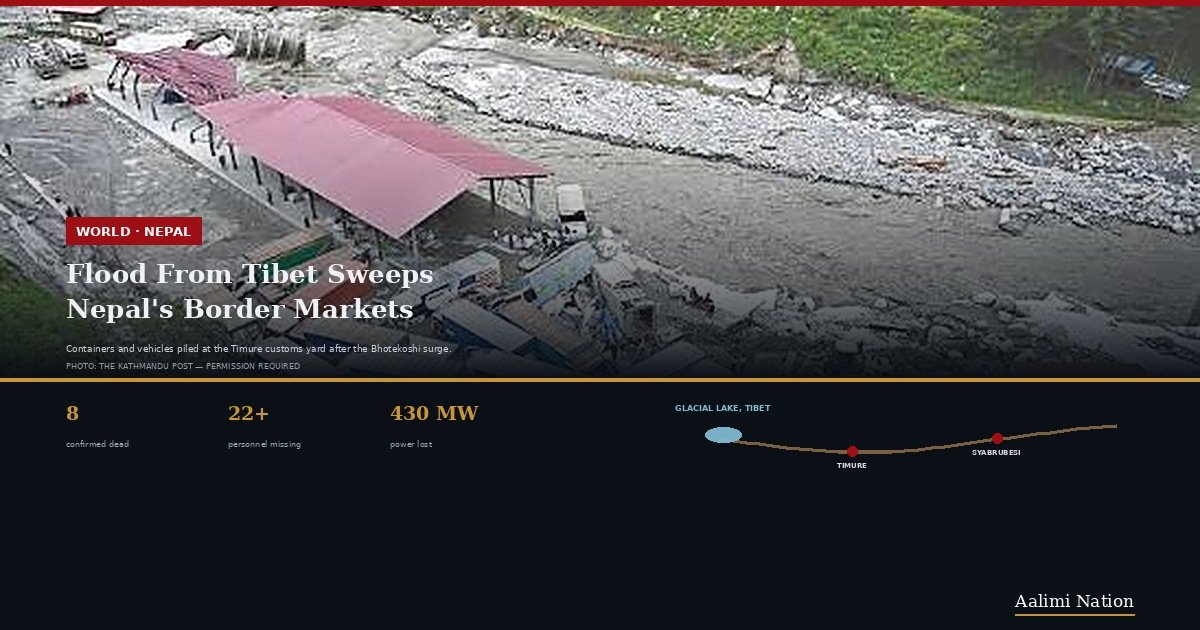
In Nepal, the Bhotekoshi River surged after an avalanche or glacial collapse blocked a tributary and released a powerful wave of water, ice, rock and debris downstream. The flooding swept away buildings, vehicles, bridges and sections of major roads.
The disaster has become one of Nepal's most serious recent natural catastrophes, with the death toll continuing to rise and hundreds of people still unaccounted for. Reports from Nepal indicate that numerous foreign tourists and pilgrims are among those missing.
On the Chinese side, severe flooding and landslides also struck the Gyirong border area in Tibet, prompting large-scale search-and-rescue operations.
Rescue Operations Continue
Nepalese authorities have deployed security personnel, helicopters and other emergency resources to search for survivors and reach isolated communities.
The scale of destruction has made rescue operations particularly difficult. Roads and bridges have been washed away in several areas, while communication networks have also been disrupted.
Authorities are continuing to warn residents and travellers to remain away from dangerous river channels and areas vulnerable to further landslides and flooding.
China has also launched rescue operations in the affected Tibetan border region, while President Xi Jinping has called for intensified efforts to locate missing people and assist those affected.
Malaysia Expands Consular Response
Malaysia's diplomatic response is focused on both locating its citizens and supporting their families.
The Malaysian Embassy in Kathmandu is maintaining contact with Nepalese authorities, while personnel from Dhaka are being deployed to reinforce the operation.
Malaysia's Foreign Ministry had earlier said the loss of contact with some Malaysians was linked to severe disruptions to communications and electricity networks caused by the flooding.
The government has also urged Malaysian citizens in Nepal to remain vigilant, follow instructions issued by local authorities and avoid affected areas.
Anwar Praises Rescue Workers
Anwar praised the search-and-rescue teams working under extremely difficult conditions and recognised their efforts to reach communities cut off by the disaster.
He said the Malaysian government would remain fully engaged until affected Malaysians are accounted for and their families receive the assistance they need.
The disaster has triggered an international response, with neighbouring countries offering assistance and governments working to establish the whereabouts of their citizens. India has offered humanitarian assistance to Nepal, while several other countries are conducting their own consular operations.
A Growing Humanitarian Emergency
The scale of the Nepal-China border disaster is becoming clearer as rescue teams reach more affected areas.
The floods have destroyed critical infrastructure and isolated communities across the mountainous region. Experts have linked the event to a glacial or ice-and-rock avalanche, highlighting the vulnerability of Himalayan communities to sudden high-impact disasters.
For Malaysia, the immediate priority remains locating the 54 citizens whose families are still waiting for information.
As rescue operations continue across the devastated border region, governments on both sides of the Himalayas face the enormous task of finding survivors, accounting for those still missing and delivering emergency assistance to communities cut off by the floods.
— AALIMI NATION | International Affairs Desk