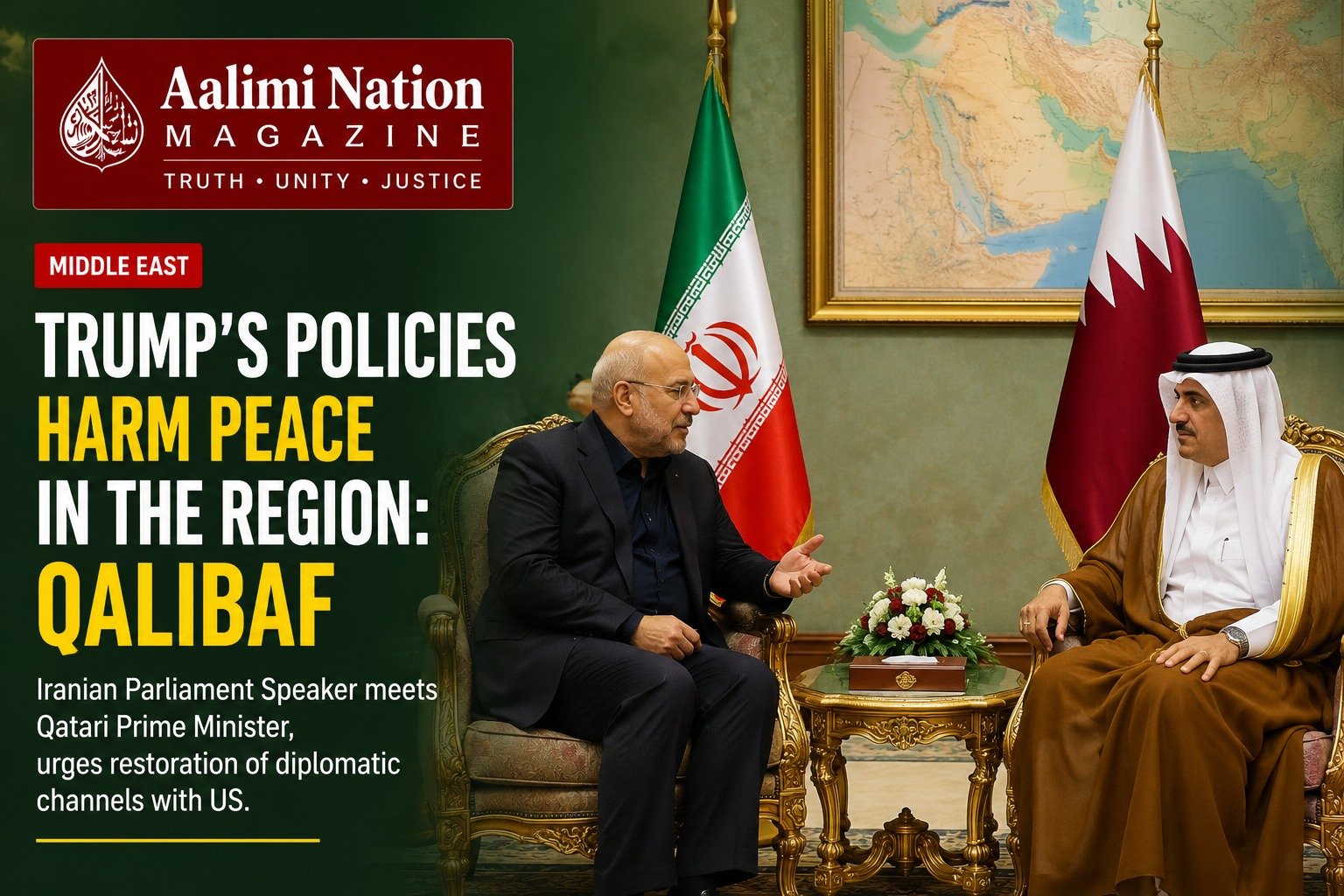
TEHRAN: Iranian Parliament Speaker Mohammad Bagher Ghalibaf has accused US President Donald Trump of undermining peace and stability in the Middle East, arguing that Washington’s policies have damaged both regional security and Iranian interests.
Ghalibaf made the remarks during a meeting with Qatar’s Prime Minister and Foreign Minister Mohammed bin Abdulrahman Al Thani in Tehran, where the two sides discussed regional developments, efforts to reduce tensions and the possibility of restoring diplomatic channels between Iran and the United States.
Ghalibaf criticised what he described as the Trump administration’s “wrong decisions and immature assessments,” saying they had resulted in the waste of US resources while creating greater instability across the region.
Qatar has stressed the importance of dialogue as a way to prevent further escalation between Iran and the United States.
During the discussions, Qatari and Iranian officials reviewed regional developments and possible steps to create conditions for renewed negotiations.
The talks also included discussion of a proposed step-by-step framework aimed at reducing tensions.
One element under consideration involves establishing a temporary maritime corridor through the Strait of Hormuz and developing a joint mechanism to address maritime security concerns, including efforts to clear potential mine threats in the strategically important waterway.
Strait of Hormuz Remains Critical
The discussions come as tensions surrounding the Strait of Hormuz remain a major concern for global energy markets.
The waterway is one of the world's most important routes for oil and gas shipments, connecting the Persian Gulf with international markets. Any prolonged disruption could have consequences for energy prices and global trade.
The possibility of establishing a temporary maritime corridor could therefore have wider implications beyond Iran and the Gulf region.
The diplomatic discussions in Tehran come as the White House maintains that formal negotiations between Washington and Tehran are currently not taking place.
US officials have continued to pursue economic pressure against Iran, including sanctions and restrictions aimed at limiting the country's ability to generate revenue through international trade.
US Treasury Secretary Scott Bessent has also criticised Iran's leadership, arguing that resources should be directed toward the Iranian population rather than groups and activities supported abroad.
Iranian President Masoud Pezeshkian has maintained that economic pressure alone will not force Tehran to accept Washington's demands.
Iranian officials have repeatedly argued that the country can withstand sanctions and external economic pressure while continuing to defend its national interests.
The latest statements from Tehran indicate that Iran remains opposed to what it considers excessive US demands, while neighbouring countries continue diplomatic efforts aimed at reducing tensions.
Pakistan, Oman and Qatar Pursue Diplomacy
Qatar is not the only regional country attempting to facilitate dialogue.
Pakistan and Oman have also been involved in diplomatic efforts aimed at reducing tensions between Iran and the United States.
Pakistan has said it is following efforts by friendly countries to facilitate communication between Washington and Tehran.
Omani Foreign Minister Badr Albusaidi has also travelled to Tehran for discussions focused on regional tensions and the situation surrounding the Strait of Hormuz.
These efforts suggest that regional governments are increasingly concerned about the consequences of prolonged confrontation between Iran and the United States.
A Narrow Diplomatic Window
The latest meetings highlight a difficult diplomatic landscape.
Washington continues to rely heavily on sanctions and economic pressure, while Tehran insists that pressure will not force it to surrender its core positions.
At the same time, Qatar, Oman and Pakistan are seeking ways to reopen communication and prevent further escalation.
The Strait of Hormuz, Iran's economic situation and the wider security environment in the Middle East are likely to remain central to any future diplomatic process.
For now, the gap between Washington and Tehran remains wide, but continued regional mediation could provide a limited pathway toward dialogue and a reduction in tensions.
— AALIMI NATION | International Affairs Desk