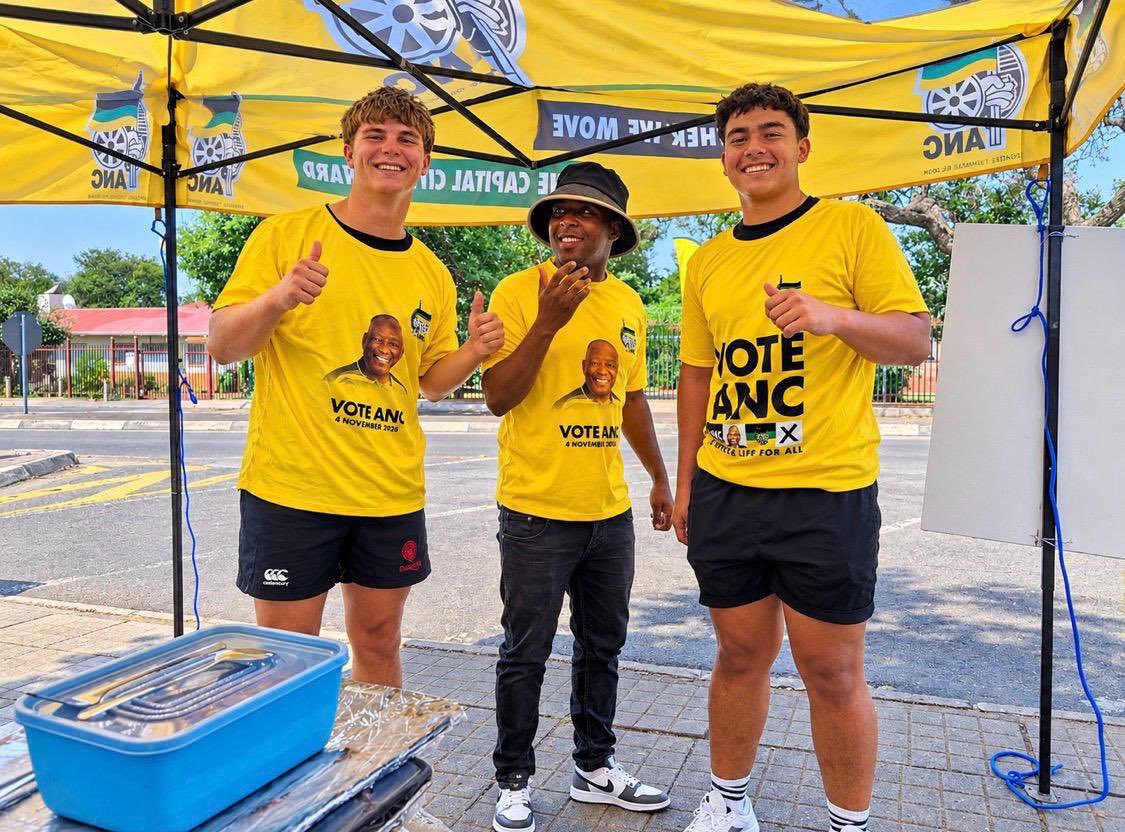
JOHANNESBURG, November 4 (Aalimi Nation) – South Africans voted on Wednesday in local government elections widely seen as a test of the governing African National Congress, whose support has fallen steadily over the past decade. Final results are expected on Sunday.
South Africa local elections: what is at stake
Polling stations opened at 7 am and were due to close at 9 pm. The Electoral Commission said a record 29.2 million people were registered to vote at 23,696 voting stations, and more than 1.4 million special votes had already been cast on Monday and Tuesday. Voters are choosing councils for eight metropolitan municipalities, 44 district councils and 205 local councils, and those councils will then elect mayors. Voters mark two ballots, one for a ward councillor and one for a party.
The ANC won less than 50 per cent of the vote in the 2021 municipal elections for the first time since apartheid ended in 1994, and it lost its parliamentary majority in the 2024 national election. It now leads a government of national unity with the Democratic Alliance and other parties. Pre-election polling suggested its support could fall below 40 per cent this time, and one polling firm put the possible figure as low as 30 per cent.
Johannesburg, Durban and the coalition question
Johannesburg, the country's largest city and economic hub, is the biggest prize. It has had five mayors in four years and is run by a fragile ANC-led coalition. The Democratic Alliance has nominated Helen Zille, 75, a former national leader, as its mayoral candidate. One opinion poll put her support at 36 per cent, which would leave her needing coalition partners, including possibly the ANC. Zille said the ANC was "in free fall."
In Durban and the wider KwaZulu-Natal province, the uMkhonto weSizwe party led by former president Jacob Zuma is contesting its first local election after becoming the third-largest party in Parliament in 2024. Zuma told supporters: "We are going to start by taking back our country here." The province has 165 voting stations classed as high risk, the most of any province, and police recorded 21 election-related cases since Sunday.
Failing services dominate the campaign. A water advocacy group said half of the country's drinking water systems are unfit for consumption, and its executive director called it "a definite water crisis across South Africa." Crime, unemployment and immigration have also featured.
Turnout and problems on polling day
Turnout in the 2021 municipal elections was about 46 per cent of registered voters, the lowest since democracy, against about 59 per cent in the 2024 national vote. Some voters in Johannesburg's Joubert Park were turned away after waiting for hours and told to vote at another station. One voter said: "I am giving up, I am no longer voting, I will vote in 2029." The Electoral Commission is also investigating more than 700 complaints of disinformation.
Seventy-four of 257 municipalities were run by coalitions or minority administrations earlier this year, and no single party is expected to win an outright majority in the main cities. The results will also shape the race to succeed Ramaphosa as ANC leader at the party's December 2027 conference.