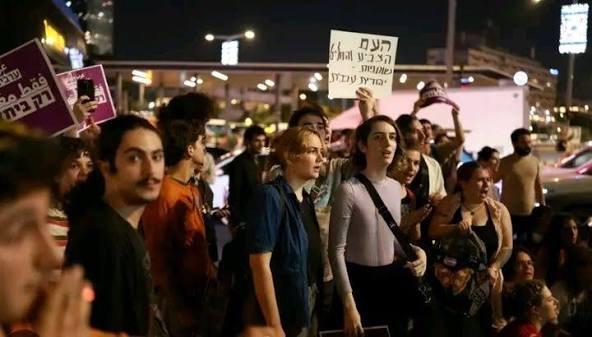
TEL AVIV, November 1 (Aalimi Nation) – Thousands of people rallied in Tel Aviv on Saturday to urge Israel's opposition to work with Arab-led parties to form a government and remove Prime Minister Benjamin Netanyahu, days after an election that left neither main bloc with a majority. A smaller group of right-wing demonstrators held a counter-rally in the city.
Counts released after the October 27 vote showed Mr. Netanyahu's bloc with 53 seats and the bloc led by former military chief Gadi Eisenkot with 48, in the 120-seat Knesset. The remaining 19 seats went to Israel's Arab-led parties, Ra'am and the Joint List, which is the highest tally they have recorded. A government needs 61 seats. The outgoing coalition held 68 seats.
Figures from the election committee showed nearly 840,000 people voted for Ra'am and the Joint List, a rise of about 64 per cent from 2022. Officials noted that ballots cast in double envelopes, including those of soldiers, were still being counted when early tallies were released, so final seat numbers could shift.
Demonstrators at the Saturday rally said the result offers an opening for change. Some protesters described the moment as perhaps the "last chance for real change" and criticised Mr. Netanyahu, who is Israel's longest-serving prime minister, as a "great manipulator."
Arithmetic is central to the argument. If Mr. Eisenkot's 48 seats were combined with the 19 held by the Arab parties, the total would be 67, above the majority threshold. Mr. Eisenkot has previously ruled out a coalition with Arab parties, however. Joint List chairman Yousef Jabareen has said his party is ready to help remove Mr. Netanyahu's government.
Mr. Eisenkot declared after the vote that "we have made history" and said the public had chosen change, calling on Mr. Netanyahu to step down. Yair Golan, leader of the Democrats, urged the formation of a government with support from Arab parties.
Mr. Netanyahu celebrated Likud's position as the largest party, which won about 26 seats, and thanked his partners in the outgoing coalition. He has also accused the Arab-led parties of "stealing" the election and of accepting funding from Qatar. Qatar rejected the allegation, calling it a disinformation campaign.
Right-wing demonstrators at the counter-rally told reporters that Israel should not have a government that includes what they called terrorists. Correspondents covering the rally noted that the heavy turnout among Arab citizens is the reason those parties now hold a pivotal position in the Knesset.
Because neither bloc has a clear majority, Israel could remain under a caretaker government during coalition talks. A caretaker government keeps its formal powers but is expected to show restraint on irreversible decisions. Under Israeli procedure, the president consults party leaders and asks the candidate with the best chance of building a coalition to try to form a government.
Some analysts doubt that a stable coalition involving the Arab parties could be assembled. Others say the Arab parties' votes could still allow the opposition to replace the Knesset Speaker and gain more influence over the legislative agenda even before any government is formed. Talks between the parties are expected to continue as the final count is completed.