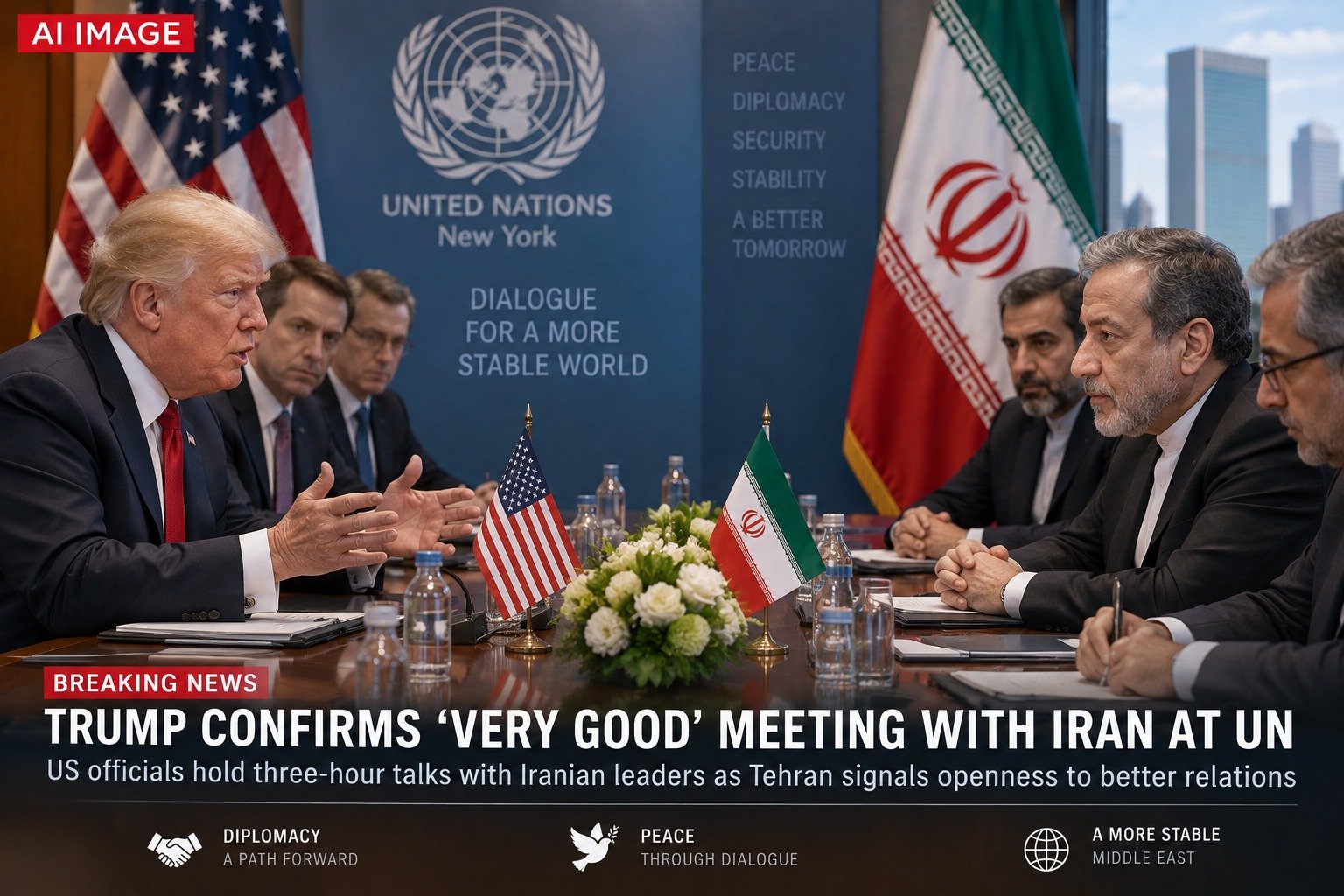
US President Donald Trump said American officials held a “very good” three-hour meeting with Iranian representatives on the sidelines of the United Nations General Assembly in New York, signalling a possible opening for renewed diplomacy between Washington and Tehran.
Trump said the discussions involved senior US officials and Iranian representatives and described the talks positively. He has also said that communication between the two sides is continuing and that he believes a settlement can eventually be reached.
The talks come amid a wider diplomatic effort to find a way to end the ongoing US-Iran conflict, with regional mediators including Qatar, Oman, Pakistan and Türkiye involved in efforts to bring the two sides back to negotiations.
Iran Signals Openness to Diplomacy
Iranian officials have also indicated that Tehran remains open to diplomacy, although Iran has linked any broader agreement to specific conditions.
Iranian officials have said the country's delegation in New York has authority to pursue diplomatic contacts with Washington. Tehran has also presented conditions concerning the US military pressure, the naval blockade around Iranian ports, frozen Iranian assets and the future of the Strait of Hormuz.
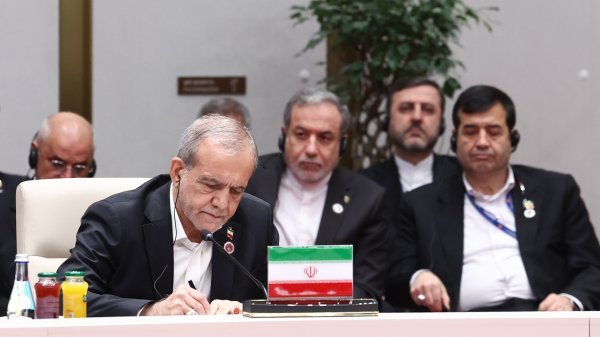
Iranian President Masoud Pezeshkian travelled to New York for the UN General Assembly, where Iranian officials have sought to defend Tehran's position while exploring diplomatic options.
In an earlier interview, Pezeshkian said Iran wanted sincere relations with neighbouring and regional countries and emphasised that Tehran's dispute was with US military presence in the region rather than with Arab states.
The latest developments suggest that Tehran is seeking a diplomatic route while maintaining its negotiating demands.
Strait of Hormuz at the Centre of Talks
The strategically important Strait of Hormuz has emerged as one of the central issues in the negotiations.
Iran has indicated that it could reopen the waterway if Washington takes steps including easing military pressure and lifting the blockade on Iranian ports. A senior Iranian official told Reuters that Tehran could reopen the strait within seven days under those conditions.
The waterway is one of the world's most important energy corridors, and disruption to shipping has affected oil and gas markets as well as global supply chains.
Trump Maintains Pressure on Tehran
Despite describing the talks positively, Trump has continued to maintain pressure on Iran.
In his UN General Assembly address, Trump warned Tehran against acquiring a nuclear weapon and said the United States could take further military action if an agreement was not reached. Reuters reported that Trump also indicated that any broader deal could come after the US midterm elections.
The contrasting messages — continued military pressure alongside direct diplomatic contacts — underline the uncertainty surrounding the negotiations.
A Possible Diplomatic Opening
For now, neither Washington nor Tehran has announced a comprehensive agreement to end the conflict.
However, the three-hour meeting and continued indirect contacts represent a significant channel for communication between the two sides.
The immediate focus remains on whether negotiators can bridge differences over military pressure, Iran's nuclear programme, sanctions, the Strait of Hormuz and the conditions for ending hostilities.
With both sides now engaged in discussions in New York, the UN General Assembly has become a key venue for testing whether the current diplomatic opening can develop into a broader agreement.