ANKARA, November 6 (Aalimi Nation) – Turkiye's parliament has ratified the Mecca Joint Defence Agreement with Saudi Arabia and Pakistan, a pact that treats an armed attack on any one signatory as an attack on all three, completing the legislative step before the treaty can enter into force.
Lawmakers approved the bill on Thursday, November 5, by 279 votes to 119 in the 600-seat assembly, according to official parliamentary figures cited in reports. The bill has three articles: one approving the 16-article agreement, one providing that it takes effect once published in the Official Gazette, and one assigning implementation to the president.
Mecca defence pact: what it provides
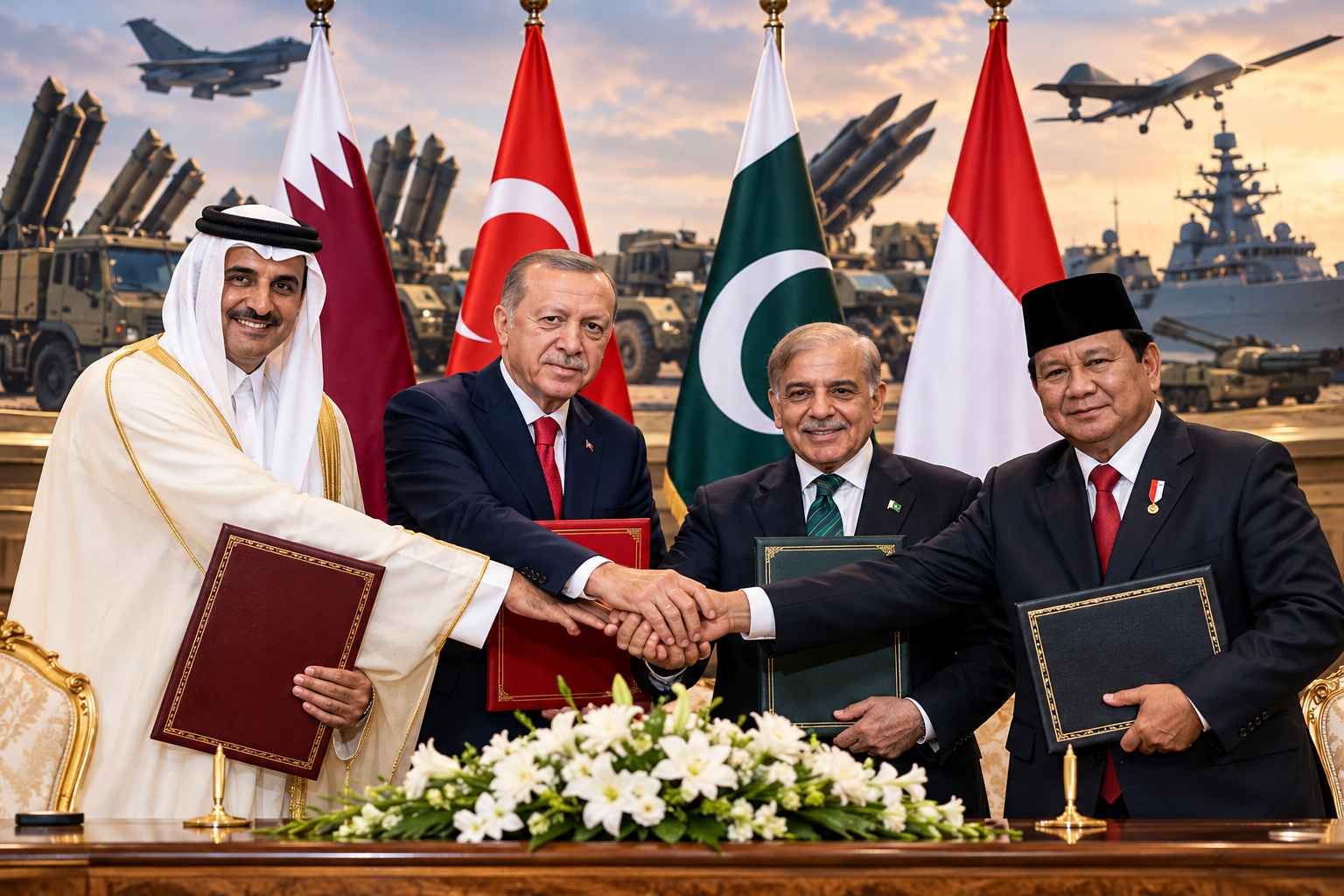
Turkish President Recep Tayyip Erdogan, Saudi Crown Prince Mohammed bin Salman and Pakistani Prime Minister Shehbaz Sharif signed the agreement in Mecca on August 7. The government sent it to parliament in October.
Under the text as described in reports, the signatories commit to use "all necessary means" to remove threats to one another's territorial integrity. A second article says that if a party is attacked, the others "shall immediately provide assistance." The wording has been compared with the collective-defence clause of NATO, of which Turkiye is the second-largest military member.
The pact also covers defence-industry cooperation, joint training, technology, logistics and intelligence sharing. Members are bound for 10 years, after which they may withdraw. Other countries may join with the approval of existing members, and Syria has expressed interest.
No automatic troop deployment
The collective-defence clause does not by itself send forces anywhere. Reports say any military assistance would be decided through consultations and each country's own legal procedures, and that sending Turkish troops abroad would need a separate parliamentary mandate. A ruling-party lawmaker said last month that such a mandate would be submitted. It is not confirmed whether it has been filed.
Defence Minister Yasar Guler said in October that the scope of support would be set after ratification. Turkish media quoted him as saying, "We absolutely do not foresee entering into any conflict with the Houthis," and that Turkish support "would be to strengthen deterrence."
Regional backdrop
The ratification comes as Saudi Arabia faces renewed attacks from Yemen's Houthi movement, including strikes on King Khalid International Airport in Riyadh. Tensions had eased after a 2022 ceasefire. Riyadh has repeatedly accused the Houthis of targeting Mecca and Medina, which the Houthis deny. On Thursday, Saudi Arabia said it had intercepted a drone near Medina. The wider region is also affected by the US-Israel war on Iran.
Opposition parties, including the pro-Kurdish DEM Party, voted against the bill, arguing that it could draw Turkiye into regional conflicts without adequate parliamentary oversight. Critics have also asked whether the pact sits comfortably with Turkiye's NATO membership. Turkish officials have dismissed those concerns as unfounded.
What happens next
The agreement enters into force once it appears in the Official Gazette, after which the president is responsible for implementing it. Sources differ on the day of the final vote, with some placing it on Wednesday; the Thursday date used here reflects the larger number of reports.