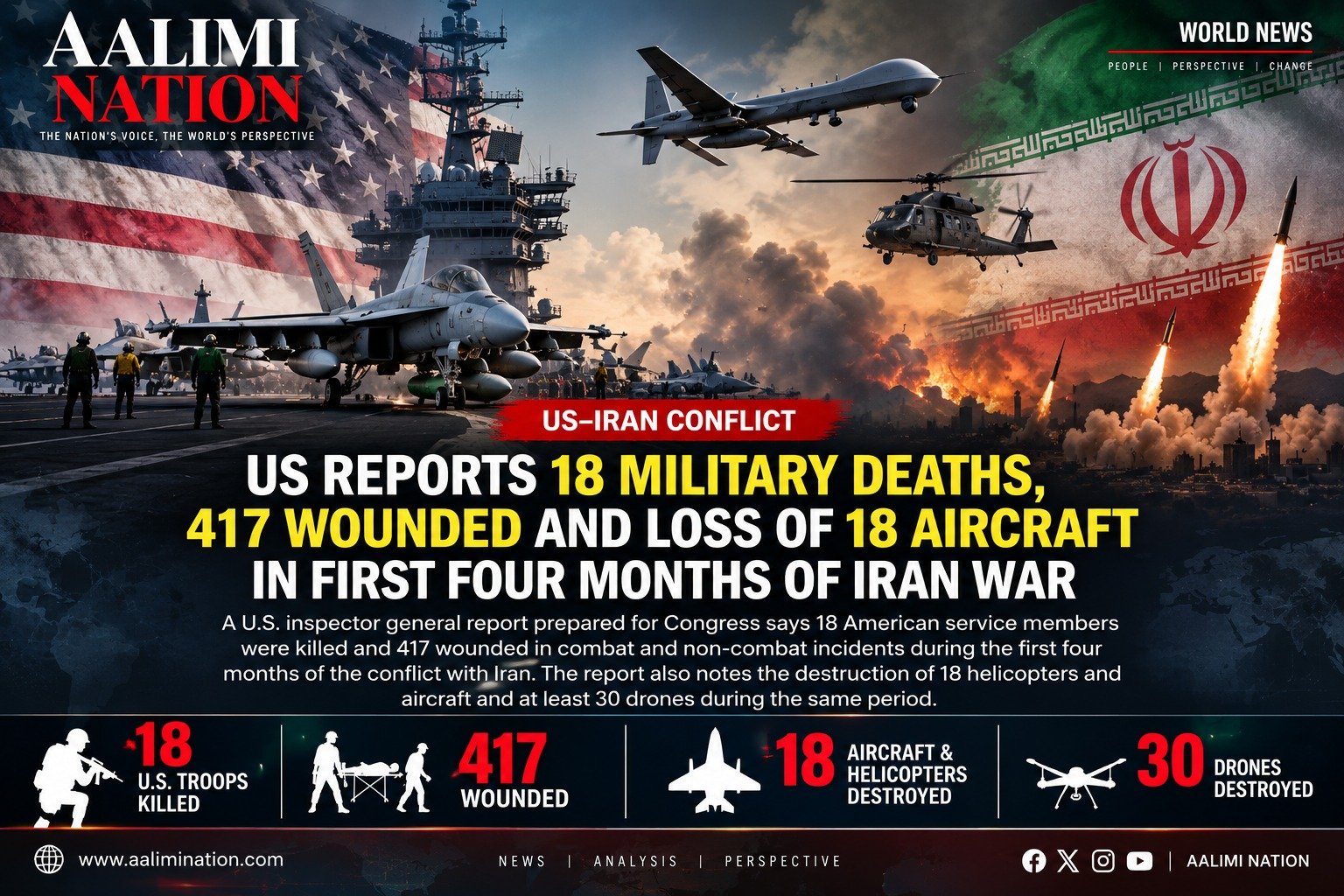
The United States has acknowledged significant military losses during the first four months of its war with Iran, with 18 American service members killed and 417 wounded in combat and non-combat incidents, according to a report prepared for Congress by the U.S. Lead Inspector General.
The report also records substantial losses of military equipment during the same period. According to the assessment, 18 helicopters and aircraft—including fighter jets, aerial refuelling aircraft and surveillance platforms—were destroyed. At least 30 drones were also reported destroyed.
The figures provide an indication of the operational costs faced by U.S. forces during the opening months of the conflict, as American military assets have been exposed to combat operations and other risks across the region.
Human and equipment losses
The reported 18 fatalities include personnel killed in both combat-related and non-combat incidents, while the 417 wounded figure covers American military personnel injured during the period examined by the inspector general.
The destruction of 18 aircraft and helicopters represents another significant cost. The affected platforms reportedly included aircraft performing a range of missions, from combat and aerial refuelling to intelligence, surveillance and reconnaissance.
The loss of at least 30 drones further highlights the challenges facing unmanned American operations during the conflict.
A significant military cost
For Washington, the figures underline the human and material price of sustaining military operations against Iran.
Aircraft and drones are central to modern U.S. military operations, providing air superiority, surveillance, intelligence and precision-strike capabilities. Losses of these systems can therefore affect not only immediate operations but also the broader cost and logistical demands of a prolonged conflict.
The inspector general's report was prepared for members of the U.S. Congress as part of official oversight of the war and American military activities.
Questions over the wider conflict
The disclosure comes amid continuing international concern over the scale and duration of the Iran conflict. Military losses, operational costs and the potential impact on American forces are likely to remain important issues for lawmakers as the war continues.
The figures also provide a rare official snapshot of U.S. military losses during the early phase of the conflict, although the report's numbers should be understood within the specific reporting period and categories used by the inspector general.
For Washington, the central challenge will be balancing military objectives with the growing human, financial and strategic costs of the campaign.