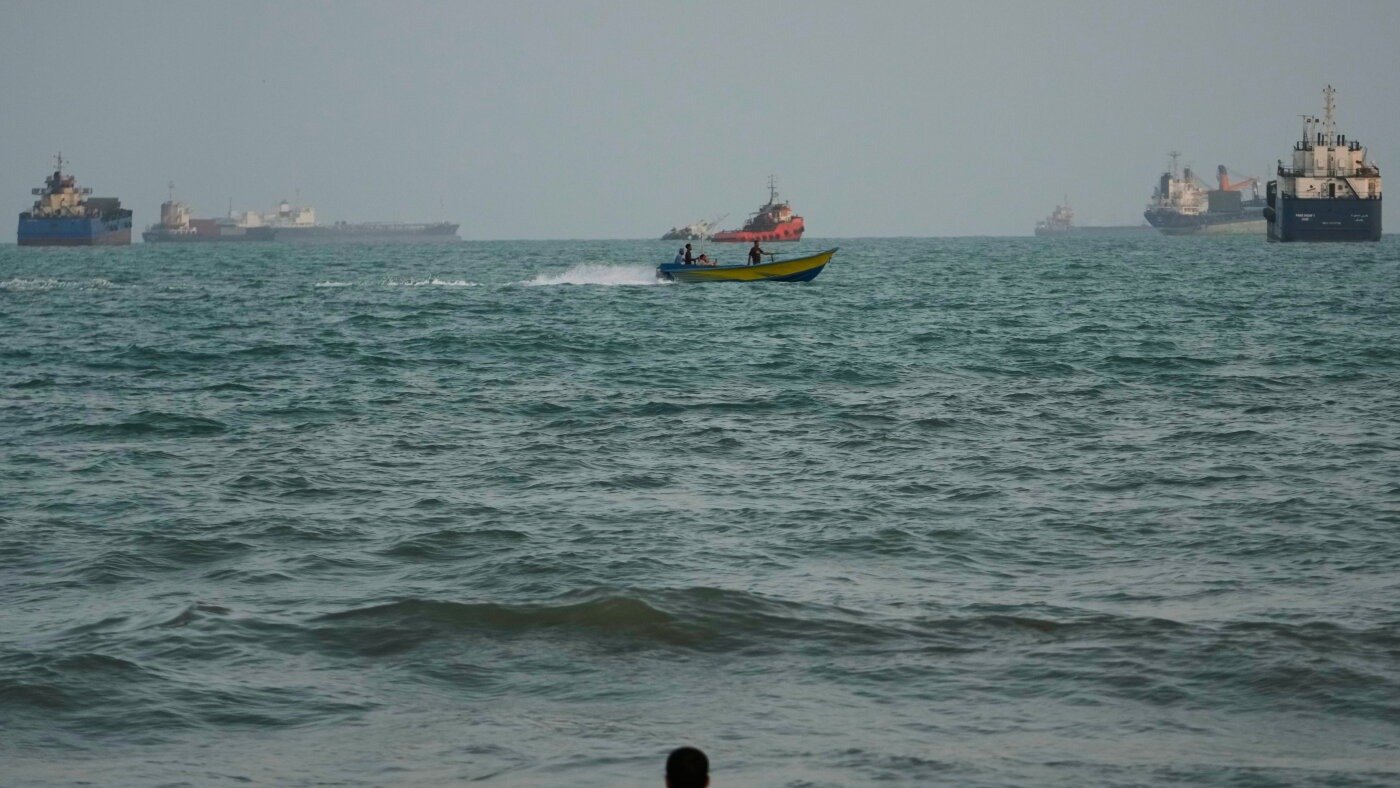
RIYADH — The United States has denied Iranian claims that an American military vessel was targeted in the Strait of Hormuz, as Washington continues to enforce a maritime blockade against Iran amid a renewed escalation between the two countries.
Iranian state media reported that a US naval vessel had attempted to enter an area designated as prohibited by Tehran in the Strait of Hormuz. However, US Central Command spokesman Tim Hawkins rejected the report, describing it as a false claim originating from Iranian state media.
The denial comes as American forces continue enforcing restrictions on maritime traffic linked to Iran following the resumption of attacks last week.
US says dozens of commercial vessels diverted
US Central Command has confirmed that the American maritime blockade remains in effect.
According to the command, by September 6 US forces had diverted the routes of 92 commercial vessels, suspended three vessels and boarded two others as part of efforts to enforce compliance with the blockade.
The measures represent a significant escalation in Washington's effort to restrict maritime activity connected to Iran and place additional pressure on Tehran's ability to move oil and other commodities through the strategically important waterway.
US Central Command has also said that an American F-35A stealth fighter was conducting patrol operations over regional waters as US forces continued enforcing the maritime restrictions.
Three Iranian oil tankers targeted
The US denial regarding the alleged attack on an American vessel came one day after Washington announced that it had targeted three Iranian oil tankers.
The American action followed what the United States described as ballistic-missile attacks by Iran's Islamic Revolutionary Guard Corps against two US Navy warships.
Iran, meanwhile, has reiterated its warning that any American attack will receive a response that is more severe than previous retaliatory actions.
Iranian Parliament Speaker Mohammad Bagher Ghalibaf said the previous concept of proportional retaliation was no longer applicable, arguing that the “rules of the game have changed.”
His remarks signal Tehran's intention to respond more forcefully to any further US military action.
Tensions return after period of relative calm
The latest confrontation follows almost a month of relative calm between Washington and Tehran.
According to the source report, attacks resumed last week, with military activity again intensifying around the Strait of Hormuz and adjacent Iranian territory.
The waterway is one of the world's most strategically important maritime routes because of its role in the transportation of oil and other energy supplies from the Persian Gulf.
Any prolonged disruption could therefore have consequences extending well beyond the immediate US-Iran confrontation.
Previous ceasefires failed
The latest escalation also follows two ceasefire agreements announced in April and June, which were intended to restore freedom of navigation through the Strait of Hormuz and create a pathway toward ending the conflict.
Both agreements, however, reportedly collapsed soon after they were announced.
Following the failure of the ceasefire arrangements, the United States reaffirmed its blockade of Iranian ports on July 13 and imposed restrictions on maritime traffic.
The stated objective was to restrict Tehran's ability to generate revenue from oil exports, which represent an important source of foreign currency for Iran.
A dangerous maritime confrontation
The latest developments demonstrate how the Strait of Hormuz has become a central pressure point in the confrontation between Washington and Tehran.
The US blockade is designed to impose economic pressure on Iran, while Tehran has repeatedly warned that attacks against its interests will provoke retaliation.
The presence of American warships and combat aircraft alongside restrictions on commercial shipping further increases the possibility of miscalculation.
Even a disputed incident involving a military vessel could potentially trigger a rapid escalation between the two sides.
For Washington, maintaining the blockade while preventing a wider regional conflict presents a difficult military and diplomatic challenge.
For Tehran, the central challenge is responding to US pressure without allowing the confrontation to develop into a broader conflict that could further damage its economy and strategic position.
With both sides maintaining increasingly hard-line positions, the Strait of Hormuz remains one of the most volatile flashpoints in the wider Middle East confrontation.