BRUSSELS — Europe’s wildfire crisis is moving steadily north, raising concerns that countries historically considered too cool or wet for major forest fires may increasingly face prolonged and dangerous wildfire seasons.
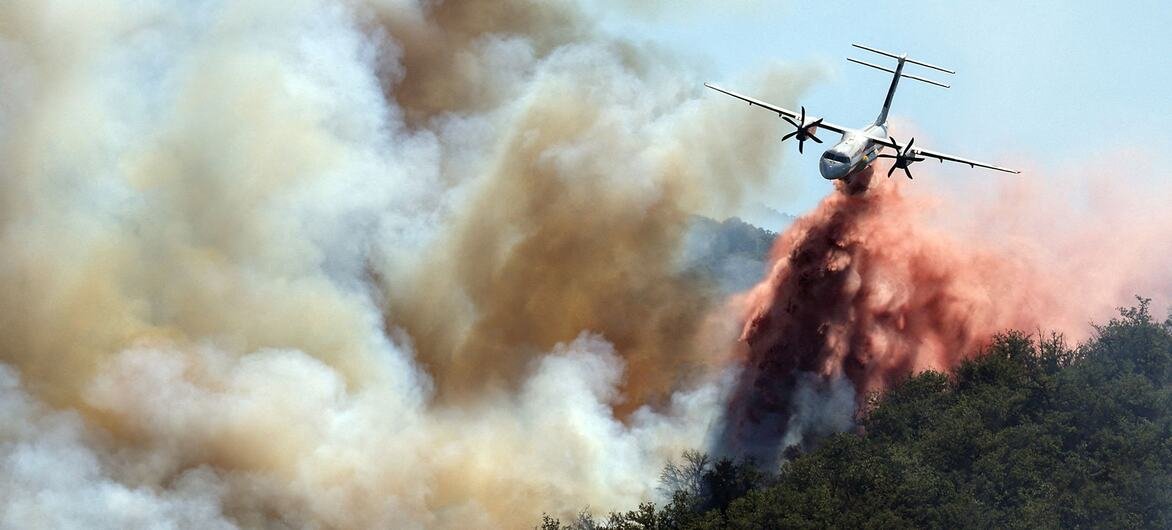
More than 600,000 hectares of land have burned across European Union countries during the first eight months of 2026, according to the European Forest Fire Information System. Although the figure remains below the same period in 2025—the EU’s worst wildfire year on record—it is more than twice the 20-year average of roughly 280,000 hectares.
The changing pattern is becoming increasingly difficult for governments to ignore.
While France, Spain and other Mediterranean countries continue to experience the largest concentration of fires, exceptionally dry conditions are exposing parts of Western and Central Europe to greater danger. Britain, Ireland and southern Scandinavia are among the areas facing growing concern.
Scientists and emergency officials say the changing wildfire geography reflects a combination of climate change, land-use patterns and human activity. People cause most wildfires, but hotter temperatures, reduced rainfall and strong winds can determine how rapidly fires spread and how difficult they become to contain.
A new challenge for northern Europe
Scotland provided a striking example this summer.
A major wildfire that began in the Cairngorms mountains in July spread through exceptionally dry terrain, with flames penetrating the underlying peat. The underground hotspots created repeated flare-ups and made the fire particularly difficult to control.
More than 500 firefighters were involved in the response, supported by aircraft and heavy machinery used to create firebreaks.
Strong winds subsequently pushed the fire towards the village of Nethy Bridge, prompting authorities to evacuate residents.
Nine days after the fire began, Police Scotland declared a major incident. Hundreds of people were forced to leave their homes as firefighters battled to prevent the blaze from reaching populated areas.
The firefighting operation ultimately continued for more than a month.
The episode demonstrated how regions traditionally associated with cool, wet weather can become vulnerable when prolonged periods of heat and drought remove the natural moisture that normally limits fire spread.
‘Wet landscapes are not immune’
Will Hayes, a researcher at the UK’s Leverhulme Centre for Wildfires, Environment and Society, said wildfire concerns were increasing across the Atlantic uplands of Ireland and Scotland and in other parts of northern and central Europe.
The changing conditions do not mean these regions are becoming Mediterranean landscapes, he said. Rather, they are experiencing more frequent periods when vegetation becomes dry enough to ignite and sustain rapidly spreading fires.
The warning has important implications for residents and visitors.
During periods of elevated fire danger, experts recommend avoiding campfires and outdoor burning and exercising particular caution with barbecues, cigarettes and other potential ignition sources.
Authorities also increasingly rely on public warnings and restrictions during periods of extreme fire danger.
From emergency response to prevention
Experts say governments cannot rely solely on firefighters and emergency services to deal with the growing threat.
Wildfire prevention increasingly requires changes to land management, climate adaptation, early-warning systems and community preparedness.
“Wildfire prevention is not just about fire services,” Hayes said, arguing that governments need to consider how landscapes are managed before fires begin.
That approach is particularly important as climate change creates conditions in which vegetation can dry out rapidly, even in areas that historically received abundant rainfall.
Wildfires are also a health emergency
The consequences extend well beyond burned forests and damaged property.
Smoke from wildfires can contain fine particulate matter and other pollutants that can travel considerable distances, creating serious risks for people with respiratory and cardiovascular conditions and placing additional pressure on health services.
The World Health Organization has therefore encouraged countries to incorporate climate-related hazards such as extreme heat and wildfires into national health-risk assessments.
Its Strategic Toolkit for Assessing Risks, known as STAR, is designed to help governments identify major threats, assess their potential consequences and determine where preparedness investments are most urgently needed.
Countries including Cyprus and Ireland have recently used the methodology in national assessment workshops to examine threats ranging from heatwaves to wildfires.
Since 2018, WHO Europe has conducted dozens of national strategic risk-assessment workshops across the region.
A warning for Europe’s future
The expansion of wildfire risk is forcing Europe to reconsider the traditional boundaries of fire-prone territory.
For decades, the Mediterranean was viewed as the region most exposed to severe wildfire seasons. Increasingly, however, prolonged heat and drought are creating conditions in which fires can become a major threat much farther north.
Climate scientists and public-health officials say preparation must therefore begin before the flames appear.
That means improving early-warning systems, strengthening emergency services, managing vegetation and forests more effectively, protecting vulnerable communities and ensuring hospitals and other health facilities can operate during prolonged heat and smoke events.
For Europe, the lesson from this year's fires is increasingly clear: wildfire preparedness is no longer simply a matter of firefighting. It is becoming a central part of climate adaptation, public health and national resilience.