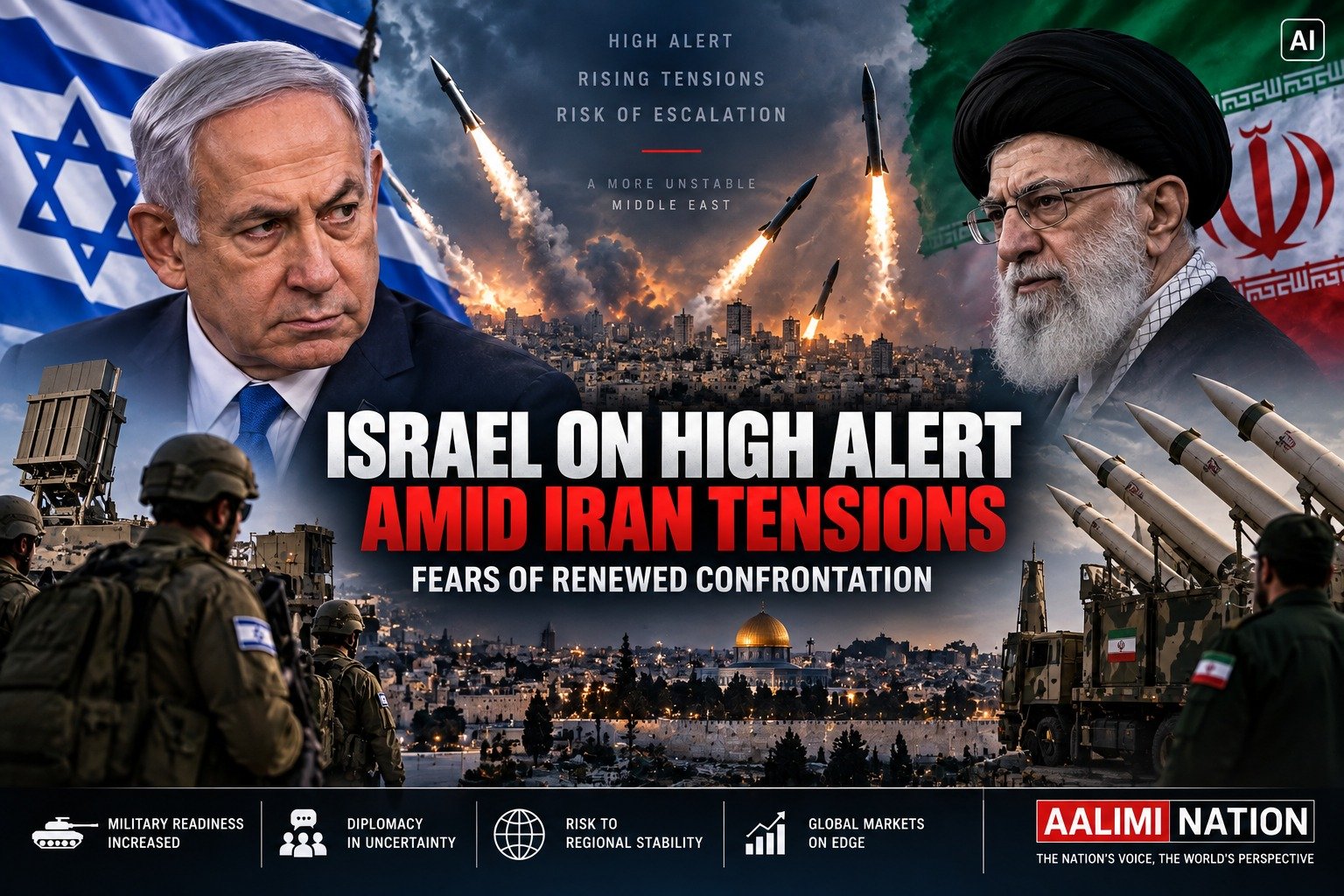
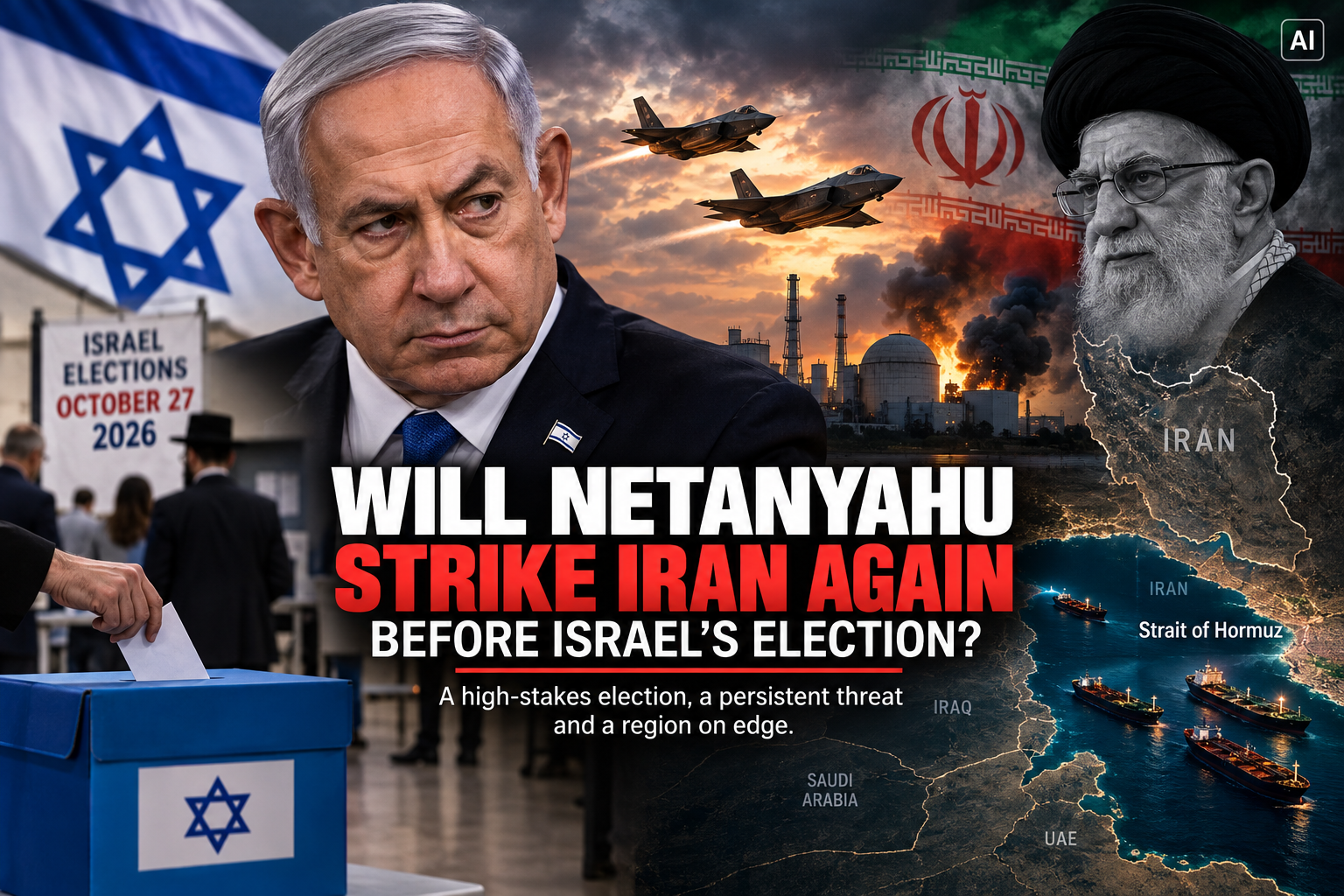
Israel is heading toward a closely watched national election on October 27, 2026, its first parliamentary election since the October 7, 2023 Hamas attack and the regional wars that followed. Recent polling does not show a clear path to a governing majority for either Netanyahu's bloc or his opponents, making the political landscape unusually uncertain.
Against this backdrop, Iran remains one of the most consequential issues in Israel's security and political debate.
The question now being asked is straightforward but difficult to answer: Could Benjamin Netanyahu order another major strike against Iran before Israelis go to the polls?
There is no public evidence at present that a new Israeli attack has been scheduled. But Netanyahu's own recent statements indicate that the confrontation with Iran remains central to his government's strategic thinking.
Netanyahu's Iran Message Has Become More Explicit
On September 3, Netanyahu told senior Israeli military commanders that bringing down Iran's regime was Israel's "central mission" and said the objective was within reach.
He argued that the Iranian government was weakened and fighting for its survival, while presenting Israel's military campaign as having significantly reduced the Iranian threat.
Three days later, Netanyahu again said Israel was determined to complete what he described as its mission of toppling the Iranian regime, warning that Iran would face a severe response if it attacked Israel.
These statements are significant because they go beyond the narrower language of containing Iran's nuclear or missile capabilities. Netanyahu is publicly describing political change in Tehran as an objective.
But rhetoric should not automatically be interpreted as evidence that another military operation has already been decided.
The Election Changes the Political Context
Netanyahu is entering the election facing a difficult political environment.
Reuters reported earlier this month that the Israeli prime minister was working to consolidate fragmented right-wing forces ahead of the election after polls indicated potential losses for his Likud party and difficulties for the broader pro-Netanyahu camp.
Reuters' September 16 polling review also found no definitive leader. While some polling averages showed anti-Netanyahu parties capable of winning a larger combined number of seats, forming an actual governing coalition would remain a separate challenge.
This makes the political implications of any new military action difficult to predict.
A military operation could strengthen perceptions of national security leadership among some voters. At the same time, prolonged conflict can create economic costs, military casualties, international pressure and public demands for accountability.
There is therefore no reliable basis for assuming that another attack on Iran would automatically benefit Netanyahu politically.
The Bigger Question: What Would Trigger Another Attack?
The more important question may be what happens on the ground.
Israel would have to assess Iran's military capabilities, intelligence indications, the threat to Israeli territory and interests, the regional security environment and the likely response from Tehran.
The United States would also be an important factor.
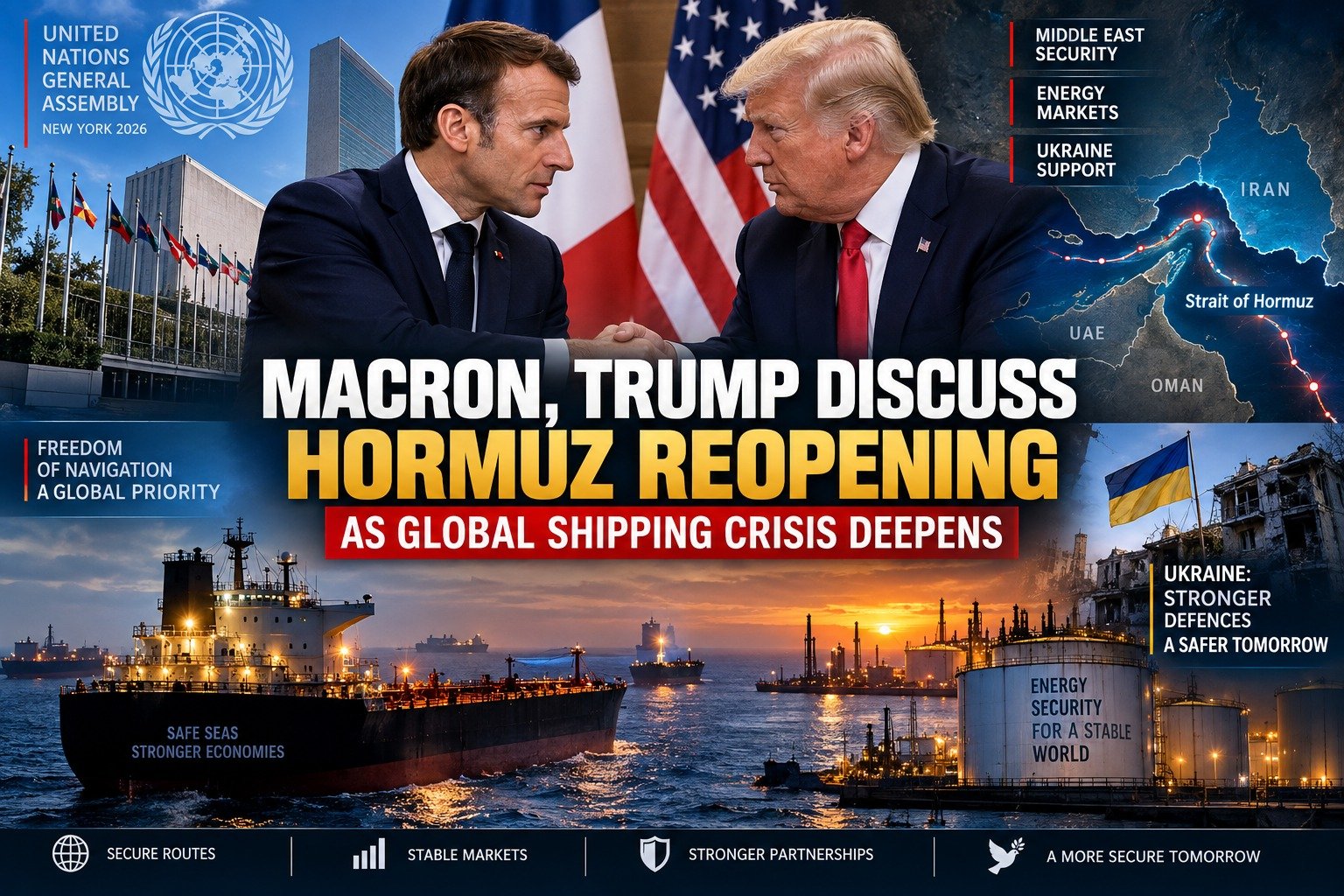
The Trump administration has been engaged in discussions concerning Iran, while the continuing attacks on shipping around the Strait of Hormuz have complicated the diplomatic picture. Reuters reported on September 22 that markets were closely watching the possibility of U.S.-Iran talks at the United Nations General Assembly, with Brent crude trading above $100 a barrel amid continued uncertainty.
Any major Israeli strike would therefore have consequences beyond Israel and Iran.
Hormuz Makes the Situation Even More Complicated
The Iranian confrontation is no longer confined to missile sites, nuclear facilities or military targets.
The Strait of Hormuz has become a major element of the wider crisis. Disruptions to commercial shipping have affected energy markets and increased international pressure for the restoration of freedom of navigation.
The G7 foreign ministers on September 21 called on Iran to stop arming and supporting the Houthis and urged the Houthis to halt attacks on civilian shipping. The G7 warned that continued attacks threatened international trade and stability.
For Israel, any new military escalation with Iran therefore carries the possibility of affecting the wider Gulf, Red Sea and global energy markets.
Could Netanyahu Use Military Pressure as an Election Strategy?
This is where analysis must be separated from speculation.
It is reasonable to examine whether security issues could influence an election campaign. It is not reasonable to conclude from the election calendar alone that Netanyahu would launch a war for electoral purposes.
Israeli politics has historically been heavily influenced by security concerns, but voters also consider the economy, the government's performance, the Gaza war, military leadership, relations with Washington, the hostage issue and domestic political disputes.
The political effect of another confrontation with Iran would therefore depend on circumstances that cannot currently be known.
If Iran launched a significant attack, for example, Israeli public opinion could react differently than it would to an Israeli-initiated operation. Similarly, the scale, duration and outcome of any Israeli operation could fundamentally change its domestic political consequences.
Netanyahu's Statements Matter — But So Does Washington
Another factor is the relationship between Netanyahu and President Donald Trump.
The United States remains central to Israel's military and diplomatic calculations. At the same time, Washington has its own interests, particularly concerning the cost of the conflict, energy prices, American forces in the region and the possibility of negotiations with Tehran.
That creates an important distinction between Israel's strategic objectives and America's preferred diplomatic timetable.
A major Israeli operation that threatened to derail U.S.-Iran diplomacy could create tensions between Washington and Jerusalem, depending on the circumstances.
For Netanyahu, therefore, the decision would not simply be about the Israeli election. It would also involve Israel's relationship with the United States and the wider regional balance.
The Risk of Escalation
Any renewed Israeli-Iranian confrontation could quickly become broader.
Iran could respond directly or through regional allies. Israel could expand its targeting. Shipping routes could face additional disruption. Oil prices could rise further, while governments across Europe and Asia would face pressure to secure energy supplies.
The economic consequences are already visible.
Reuters reported on September 22 that Brent crude rose to around $101.48 a barrel, with markets remaining highly sensitive to developments involving Iran, shipping through Hormuz and possible U.S.-Iran diplomacy.
For a country such as India, which is heavily dependent on imported crude oil, sustained disruption in the Gulf could also have implications for fuel costs, inflation and the import bill.
So, Will Netanyahu Attack Iran Again?
The most accurate answer at this stage is: the possibility cannot be ruled out, but there is no verified evidence that Netanyahu has decided to launch another major attack before the election.
What is clear is that Netanyahu continues to describe the Iranian regime as a strategic threat and has publicly placed its removal among Israel's central objectives.
What remains uncertain is whether Israel believes another military operation is necessary, whether the United States would support it, how Iran would respond and what the consequences would be for Israel's security and politics.
The October 27 election adds another layer of uncertainty, but it should not be treated as proof of an impending military decision.
The coming weeks could therefore become a critical test of whether Israel's Iran policy moves toward another military confrontation or toward diplomacy and containment.
For Netanyahu, the calculation is likely to extend well beyond the ballot box. It involves Israel's long-term security doctrine, its relationship with Washington, Iran's military posture and the rapidly changing strategic environment across the Middle East.
The election may be approaching, but the Iran question is much bigger than the election itself.