ADEN — Yemeni forces operating along the country’s western coastline have reported destroying two explosive-laden boats before they could reach their intended targets near Al Khokha and the strategic port city of Mokha, as fighting between Houthi forces and government-aligned troops intensifies across western Yemen.
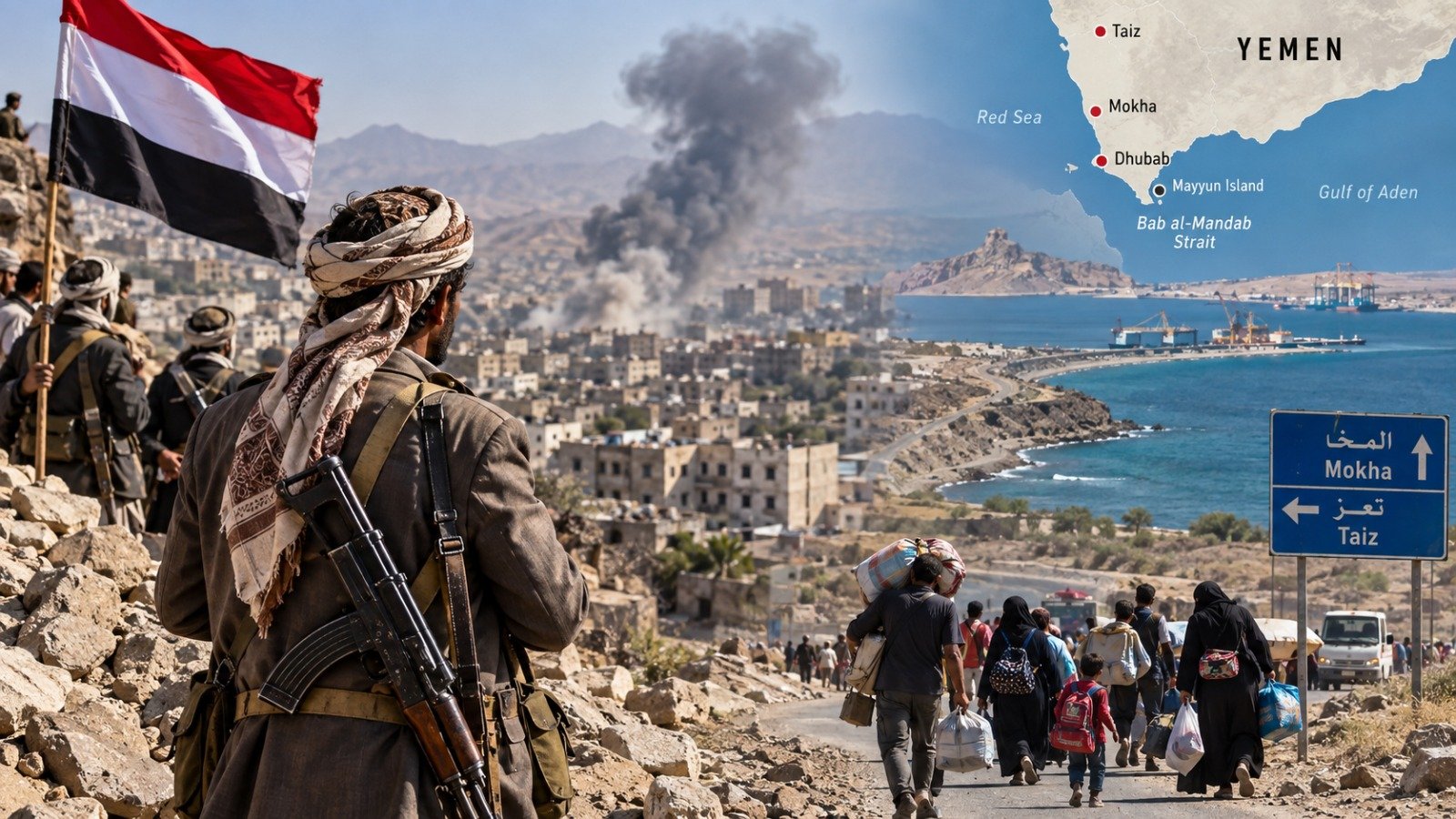
The reported maritime operation occurred amid a broader escalation involving ground offensives, drone attacks, ballistic missiles and airstrikes across parts of Taiz and Al Hudaydah provinces. The developments mark a significant expansion of military activity along Yemen’s western corridor, an area that carries particular strategic importance because of its proximity to the Red Sea and Bab al-Mandab Strait.
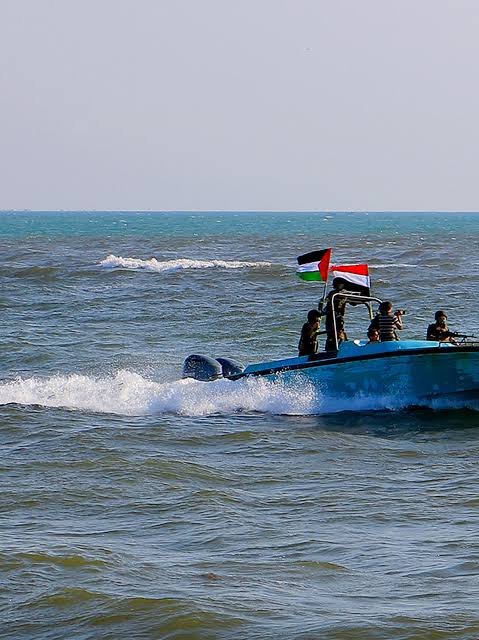
According to military sources cited by Yemen’s National Resistance forces, naval units detected two explosive boats moving toward the Al Fajrah area, south of Al Khokha, and the vicinity of Mokha Port. The vessels were destroyed offshore before reaching the coastline or their reported targets.
The military sources said the boats had been loaded with explosives and were being used as part of Houthi attempts to conduct attacks from the sea. The claims could not be independently verified.
The incident reportedly occurred only one day after another explosive boat was destroyed in the same general area, suggesting that maritime attacks may be forming part of a broader Houthi effort to combine coastal operations with attacks conducted by drones, missiles and ground forces.
Maritime threat emerges alongside ground offensive
The reported destruction of the boats is significant because it illustrates the increasingly complex character of fighting along Yemen’s western coast.
Unlike conventional ground operations, explosive boats can be launched from coastal areas and directed toward military positions, ports, naval assets or other infrastructure. Their use can also create security concerns for civilian vessels operating close to the coastline.
The latest incidents have therefore added a maritime dimension to an already volatile battlefield stretching from southern Al Hudaydah toward western Taiz and the Mokha area.
Yemeni military sources have portrayed the attacks as part of an intensified Houthi campaign aimed at pressuring government-aligned forces along the western coast. The Houthis, meanwhile, have long demonstrated the ability to employ a combination of drones, missiles, mines and maritime systems.
The reported destruction of the two vessels before they reached shore prevented the immediate attack, but the repeated appearance of explosive boats has raised questions about whether similar operations could continue.
Fighting intensifies south of Al Hudaydah
The maritime developments coincided with reports of intensified ground fighting in several areas south and west of Al Hudaydah.
According to military sources, National Resistance forces, operating alongside units of the Giants Brigades, reported making advances on the Al Jarahi front, south of Al Hudaydah.
Operations were also reported around Jabal Ras, where government-aligned forces have sought to consolidate positions and improve their control over strategically important terrain.
The area is important because control of the southern approaches to Al Hudaydah can influence military movement along the western coastal corridor.
Military sources also reported heavy fighting around Jabal Dubas in Hays, with government-aligned forces claiming that Houthi fighters suffered substantial casualties.
Those casualty figures, however, remain battlefield claims and have not been independently verified.
The fighting around Hays is particularly important because the town lies along routes connecting several strategically significant areas of southern Al Hudaydah. Any sustained change in control could affect supply lines and the movement of forces operating farther north and south.
Western Taiz becomes another major battlefield
Fighting has also intensified in western Taiz, where National Resistance forces have reported operations around Al Barh and surrounding areas.
Military sources said their forces inflicted losses on Houthi fighters and intercepted two explosive drones during the latest fighting.
Government-aligned forces also reported capturing several hills and tactical positions in western Taiz, as well as making further advances on the southern Taiz front.
The terrain around western Taiz has considerable military importance. High ground provides observation and defensive advantages, while control of roads and mountain positions can influence access between inland Taiz and the western coastal areas.
For the forces fighting the Houthis, securing these routes is also linked to the broader objective of maintaining access toward Mokha and the western coastline.
Airstrikes add another layer to the escalation
The ground fighting has reportedly been accompanied by air operations.
Yemeni military sources said government-aligned forces carried out strikes against Houthi positions in Taiz and Al Hudaydah. Al Jazeera, citing reports, said at least 15 government airstrikes were conducted on Friday against Houthi positions, gatherings and vehicles in the two provinces.
The reported air campaign represents a notable development because airstrikes, artillery and ground offensives are occurring alongside maritime attacks and drone activity.
Taken together, these operations suggest that the latest escalation is not confined to a single front. Instead, fighting is occurring across multiple domains and geographic areas simultaneously.
Houthi missile attack reported in Hays
The military escalation has also included reported missile activity.
According to the supplied military account, Houthi forces launched a ballistic missile toward the Education and Training Department office in Hays, south of Al Hudaydah.
The reported target is located in an area affected by the latest fighting, raising concerns about the potential impact of missile attacks on public infrastructure and populated areas.
Government forces have also reported intercepting Houthi drones during the fighting.
The use of ballistic missiles and drones alongside explosive boats is particularly significant because each weapon system presents a different security challenge. Drones can be used for surveillance or attacks against relatively precise targets, ballistic missiles can cover greater distances, while explosive boats can threaten targets from the maritime side.
The combination creates a more complicated battlefield for forces defending coastal positions and infrastructure.
Mokha’s strategic importance
At the center of the latest developments is the western coastal city of Mokha, whose strategic importance extends well beyond its immediate surroundings.
Mokha sits on Yemen’s Red Sea coast relatively close to the Bab al-Mandab Strait, the narrow maritime passage linking the Red Sea with the Gulf of Aden and the wider Indian Ocean.


Bab al-Mandab is one of the world's major maritime chokepoints. Commercial vessels travelling between the Indian Ocean and the Mediterranean through the Suez Canal generally pass through the Red Sea and Bab al-Mandab.
Consequently, military developments along Yemen’s western coastline can have implications beyond the immediate battlefield.
Control of coastal territory, artillery positions and elevated ground can potentially provide military forces with opportunities to observe or threaten movements along nearby maritime routes.
This is one reason why the fighting around Mokha, Al Khokha and southern Al Hudaydah is closely watched by regional and international actors.
The battle for access between Taiz and Mokha
Government-aligned forces have accused the Houthis of attempting to pressure routes connecting Taiz with Mokha.
Such routes are important for both military logistics and civilian movement. A sustained Houthi presence around key roads or elevated positions could complicate the movement of government-aligned forces and restrict access toward the coast.
For the National Resistance and allied forces, strengthening positions in western Taiz and along the southern Al Hudaydah front could therefore serve several purposes: protecting existing territorial gains, securing supply routes and preventing Houthi forces from establishing positions capable of threatening the coastal corridor.
The strategic contest is consequently not simply about individual villages or hills. It involves control over a broader network of roads, mountain positions, coastal settlements and approaches to the Red Sea.
Repeated use of explosive boats raises maritime security concerns
The reported destruction of three explosive boats over two consecutive days, if confirmed, would indicate a sustained maritime threat in the area.
Explosive boats are relatively inexpensive compared with conventional naval weapons but can pose a serious danger if successfully directed toward military or commercial targets.
Their deployment also complicates coastal security because defending forces must monitor both land-based launch areas and approaches from the sea.
For ports such as Mokha, the threat is particularly sensitive because port facilities are vulnerable to disruption even when an attacking vessel does not cause extensive physical damage. A successful attack could temporarily affect port operations, increase insurance and security costs, and discourage commercial activity.
The latest reported incidents therefore have significance beyond their immediate military outcome.
Civilian displacement increases humanitarian pressure
The escalation is also affecting civilians living close to the front lines.
Al Jazeera, citing the United Nations, reported that approximately 1,790 families had been displaced by fighting that began on September 3.
The figure highlights the speed with which renewed fighting can affect communities in western Yemen.
Families living close to active fronts may be forced to leave homes with little warning, while access to food, clean water, healthcare and education can become increasingly difficult.
The humanitarian consequences are especially serious in Yemen because years of conflict have already weakened infrastructure and left large sections of the population dependent on humanitarian assistance.
A prolonged offensive in Taiz and Al Hudaydah could therefore create additional displacement while placing greater pressure on already limited humanitarian resources.
Escalation after years of relative calm
The latest fighting is taking place against the backdrop of years of instability and a fragile reduction in large-scale fighting following the 2022 UN-brokered truce.
Although the truce did not resolve Yemen’s political conflict, it contributed to a substantial reduction in the intensity of fighting compared with earlier phases of the war.
The renewed military activity along the western coast therefore represents a significant development.
The simultaneous use of ground forces, air operations, drones, ballistic missiles and explosive boats indicates a broader military escalation rather than an isolated clash between opposing units.
However, battlefield claims from either side should be treated cautiously. Front lines in Yemen can change rapidly, while casualty and territorial-control claims are often difficult to verify independently.
Regional implications
The strategic location of the fighting gives the escalation a regional dimension.
Yemen's western coastline faces one of the world's most important maritime corridors. Instability in the area can potentially affect not only Yemeni civilians but also shipping, regional security and international trade.
The Red Sea shipping route has already experienced major security disruptions in recent years as a result of attacks and heightened military tensions involving the Houthis and international forces.
A further deterioration in the security situation around Mokha, Al Khokha and southern Al Hudaydah could increase concerns about maritime traffic and the security of vessels operating near the Yemeni coast.
It could also encourage further military deployments by regional and international actors seeking to protect shipping routes.
What comes next
The immediate military question is whether the reported escalation will remain concentrated around western Taiz and southern Al Hudaydah or spread farther along the coastline.
The destruction of the two explosive boats demonstrates that government-aligned forces remain focused on preventing maritime attacks from reaching coastal targets. At the same time, the reported ground advances suggest that both sides are attempting to improve their tactical positions.
If fighting continues simultaneously around Al Jarahi, Hays, Jabal Ras, western Taiz and the Mokha corridor, the western coast could become one of the most active fronts in Yemen.
The humanitarian situation will also require close monitoring, particularly if further displacement occurs.
For now, the reported destruction of the two explosive boats has prevented another maritime attack from reaching the Al Khokha-Mokha area. But the wider pattern is more concerning: ground offensives, airstrikes, drones, ballistic missiles and explosive boats are once again appearing together across Yemen’s western battlefield.
That combination suggests that the latest escalation could develop into a broader military confrontation, with consequences extending from local communities in Taiz and Al Hudaydah to the strategically vital waters of the Red Sea and Bab al-Mandab.