Cancer research is entering a period of rapid development, with scientists pursuing new ways to detect the disease earlier, tailor treatment to individual patients and improve survival.
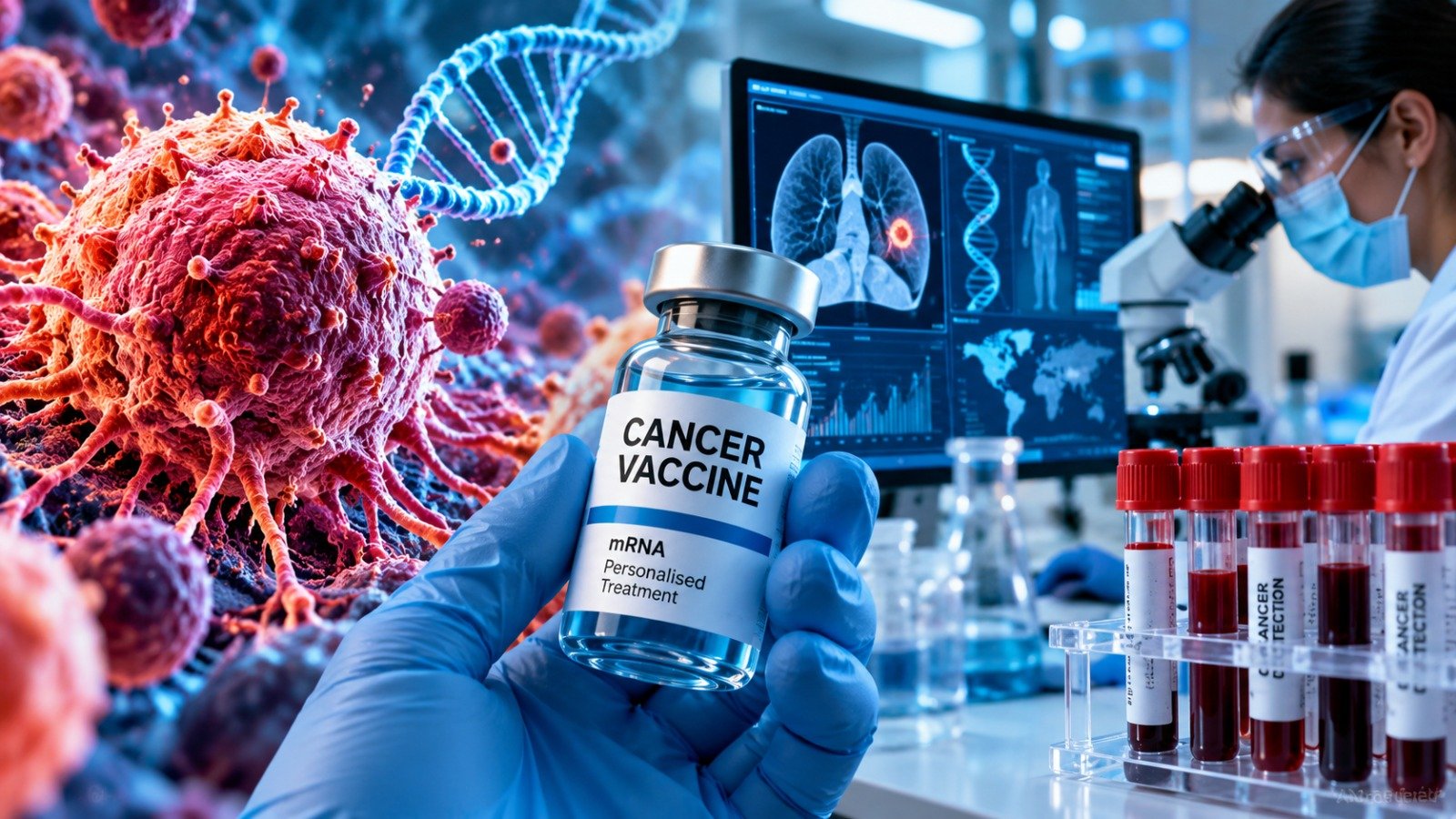
One of the most closely watched developments is the progress of personalised cancer vaccines. Researchers and pharmaceutical companies are testing vaccines designed around the genetic characteristics of an individual patient's tumour. In a major melanoma trial, a personalised mRNA vaccine developed by Moderna and Merck was reported to reduce the risk of recurrence or spread when used alongside pembrolizumab, also known as Keytruda. The approach is now being investigated in other cancers.
The concept behind these vaccines is different from conventional vaccines used to prevent infectious diseases. Instead, the treatment is designed after a tumour has been identified, with the vaccine intended to help the immune system recognise tumour-specific mutations.
Researchers are also making progress in blood-based cancer detection. A large prospective study involving 35,878 adults aged 50 and above found that a multicancer early-detection test was able to identify cancer signals across 17 broad cancer types, including ovarian, lung, breast and colorectal cancers. The technology analyses fragments of DNA released into the bloodstream.
Another study from researchers at the University of Oxford found that changes in blood DNA could contain signs associated with cancer development years before a diagnosis. The researchers examined samples collected as much as nine years before cancer was diagnosed, highlighting the potential of highly sensitive blood profiling for studying the earliest stages of the disease.
However, experts caution that emerging blood tests should not automatically be viewed as replacements for established screening programmes. One prominent multicancer test, Galleri, is currently under U.S. regulatory review. FDA staff reviewers reported no major concerns about its analytical performance, study design or primary safety analyses, but questions remain about whether the available evidence supports describing the test as an early-detection tool.
Lung cancer screening gains further evidence
Lung cancer remains the world's leading cause of cancer death, accounting for an estimated 1.9 million deaths in 2024, according to the International Agency for Research on Cancer.
In a review published in September, IARC concluded that screening people at high risk with low-dose computed tomography (LDCT) reduces lung-cancer mortality and lowers the incidence of late-stage disease.
The agency also stressed that prevention remains critical, particularly through tobacco control.
Precision oncology expands
Cancer treatment is increasingly moving towards precision oncology, where doctors use genetic and molecular information from a tumour to help determine which treatment may be appropriate.
The International Agency for Research on Cancer and international partners recently launched a new Lancet Oncology Commission on cancer genomics and precision oncology. The initiative highlights major differences in access to genomic cancer care around the world, with advanced technologies concentrated disproportionately in wealthier countries.
The challenge is therefore not only scientific discovery but also access. Researchers warn that advances in cancer genomics will have limited global impact if patients in lower-resource health systems cannot access the testing, medicines and specialist care needed to use them.
New treatments continue to emerge
The American Association for Cancer Research reported this month that the U.S. Food and Drug Administration approved 11 new cancer drugs during the 12-month period covered by its 2026 Cancer Progress Report. The organisation said continuing progress depends on sustained investment in cancer research.
Meanwhile, researchers continue to investigate new targeted treatments and immunotherapies for cancers that remain difficult to treat. At Memorial Sloan Kettering Cancer Center, scientists are studying targeted therapies against genetic mutations including KRAS, EGFR, ALK, ROS1, BRAF, RET, MET, NTRK and HER2 in lung cancer.
The global challenge
Despite scientific advances, access to cancer prevention, diagnosis and treatment remains highly unequal.
The World Health Organization estimates that around 400,000 children and adolescents develop cancer every year, with almost 90% living in low- and middle-income countries. WHO says survival can exceed 80% in many high-income countries but remains below 30% in many low- and middle-income countries.
WHO has launched a process aimed at expanding access to quality-assured and child-friendly cancer medicines, focusing on medicines where supply problems or a lack of suitable formulations remain significant barriers.
What comes next?
The latest research points towards a future in which cancer care could become increasingly personalised: detecting molecular signals earlier, identifying the specific biology of a patient's tumour and selecting treatments accordingly.
But many of these technologies remain under clinical or regulatory evaluation. A promising research result is not the same as a proven cure, and established screening and treatment recommendations remain important.
For now, the direction of cancer research is clear: earlier detection, more personalised treatment and greater use of molecular and genetic information are becoming central to modern oncology.