Sana’a: Yemen’s armed forces have accused the Houthi movement of deploying Iranian-made air-defence weapons that have been modified using advanced technology and new combat techniques, warning that the systems could pose a serious threat to international aviation and civilian aircraft.
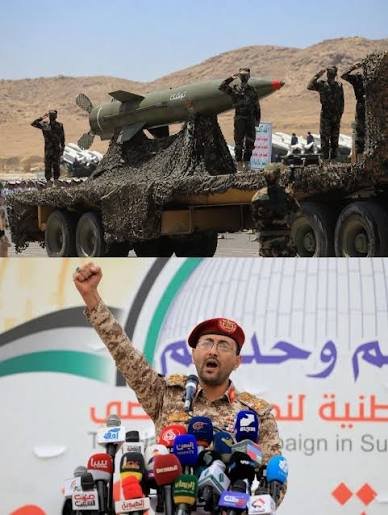
Yemeni military spokesperson Colonel Majid Abdullah Al-Nazili said the weapons had allegedly been converted into cruise missiles with assistance from experts linked to Iran’s Islamic Revolutionary Guard Corps (IRGC) operating in Yemen.
According to the spokesperson, the missiles are being launched from Hodeidah province towards the southern Red Sea, in the direction of international air corridors used by civilian aircraft.
Missiles Can Remain in the Air for 25 Minutes
Al-Nazili said the missiles can reportedly remain airborne for up to 25 minutes and use thermal guidance to pursue targets.
He warned that the system is not capable of distinguishing between military and civilian targets because it responds to heat sources.
The Yemeni military said this creates a potential danger to passenger aircraft and other civilian aviation operating in the area.
The affected air routes are also reportedly used by United Nations aircraft and planes operated by humanitarian and relief organisations working in Yemen and the wider region.
The Yemeni armed forces released video footage that it said showed Houthi forces launching Iranian-made air-defence missiles from Hodeidah towards international air routes in the southern Red Sea.
Yemen Warns of Threat to Civil Aviation
The Yemeni military described the alleged deployment as a direct threat to the safety of civilian aviation and passengers.
It called on the international community to take a firm position over what it described as the danger created by Houthi military activity near international airspace.
The military also called for action by international aviation bodies, including the International Civil Aviation Organization (ICAO) and the International Air Transport Association (IATA).
Iranian Officials Also Accused of Issuing Threats
Al-Nazili linked the latest developments to statements attributed to Iranian officials.
He said the situation had emerged amid alleged threats by Mohammad Mokhber, an adviser to Iran's Supreme Leader, and Mohsen Rezaei, secretary of Iran's Expediency Council and a former senior IRGC commander, concerning regional air services.
The Yemeni military said the threats followed restrictions imposed on Iranian airlines.
The allegations and statements could not independently establish the operational capabilities or intended targeting of the weapons described by the Yemeni military.
Airstrikes Reported in Taiz
Separately, Yemeni military aircraft carried out several airstrikes against Houthi positions, gatherings and reinforcement routes across Taiz province, according to military sources cited in the report.
One military source said an airstrike targeted a Houthi reinforcement convoy on 60th Street north of Taiz city, causing direct damage.
Other strikes reportedly targeted Houthi reinforcements in the Hannah area of Al-Wazi'iyah district, west of Taiz.
Military sources also reported attacks on Houthi positions and weapons, ammunition and missile storage facilities around Mafraq Mawiyah and Mafraq Al-Dhikr in eastern Taiz.
Further strikes were reportedly carried out against a Houthi gathering in Al-Suwaidaa, in Hayfan district in southern Taiz.
According to the military sources, several military vehicles were destroyed and dozens of Houthi fighters were reportedly killed or wounded, including field commanders.
Fighting Intensifies Across Yemen
The report comes amid renewed fighting in Yemen.
According to the Yemeni military, clashes have intensified since the beginning of September, with Houthi forces increasing military activity along parts of the western coastal areas and near the Bab al-Mandab.
Government-aligned Yemeni forces have reportedly increased their operations on fronts in Marib, Al-Jawf and Taiz.
The latest developments underline the continuing military tension around Yemen's western coastline and the strategic Red Sea corridor, one of the region's most important routes for international maritime and aviation activity.
Source: Al Arabiya, citing statements from the Yemeni armed forces and military sources. Claims regarding Iranian involvement, missile capabilities and casualties are presented as reported by the Yemeni side and have not been independently verified.