The controversy over Tanvir Sadiq’s remarks has reopened a deeper debate about Kashmir’s history, political memory and the dignity with which ordinary Kashmiris are represented.
There are some political statements that disappear from public conversation within hours. Others linger because they touch something deeper than politics.
The controversy surrounding National Conference leader Tanvir Sadiq’s remarks about the economic condition of Kashmiris is one of them.
If Sadiq’s intention was to describe the poverty and deprivation experienced by ordinary Kashmiris in an earlier period, that history deserves to be discussed. But history must be discussed with care, particularly when it concerns the lives of the people a political leader claims to represent.
There is a fundamental difference between describing poverty and defining an entire people by their poverty.
For Kashmiris, that distinction is not merely academic. It touches family memory, identity and dignity.
Kashmir Did Not Begin With the National Conference
Kashmir has a history considerably older than its modern political parties.
Long before the National Conference emerged as a major political force, Kashmir possessed its own social institutions, intellectual traditions, agricultural communities, artisans, traders, scholars, poets and educators. Its people had developed a distinctive cultural identity over centuries.
The National Conference undoubtedly occupies an important place in modern Kashmir’s political history. Sheikh Mohammad Abdullah remains one of the most consequential political figures of twentieth-century Kashmir, and the movement associated with him played a significant role in shaping the region’s political and socio-economic trajectory.
But historical importance is not the same as historical ownership.
The National Conference did not create Kashmir.
Neither did any other political party.
Kashmir’s history was being written by ordinary Kashmiris long before modern political organisations arrived—and it continued to be written by them afterwards.
Poverty Is Part of the History. It Is Not the Identity.
There is little value in pretending that Kashmir’s past was free of poverty.
It was not.
Many families lived with limited resources. Rural communities faced economic hardship. Access to education and healthcare was restricted. Generations experienced uncertainty and deprivation.
But poverty does not remove dignity.
A family with very little money could still have a powerful sense of honour.
A farmer could be poor and still command enormous respect within his community.
A mother could raise her children with very little and still give them everything she had.
An old Kashmiri family may have owned little, but that does not mean its members lacked culture, intelligence or self-respect.
This is where political language matters.
When politicians speak about the suffering of previous generations, they are speaking about someone's grandparents, parents and ancestors.
They are speaking about our families.
That demands care.
What the Old Photographs Tell Us
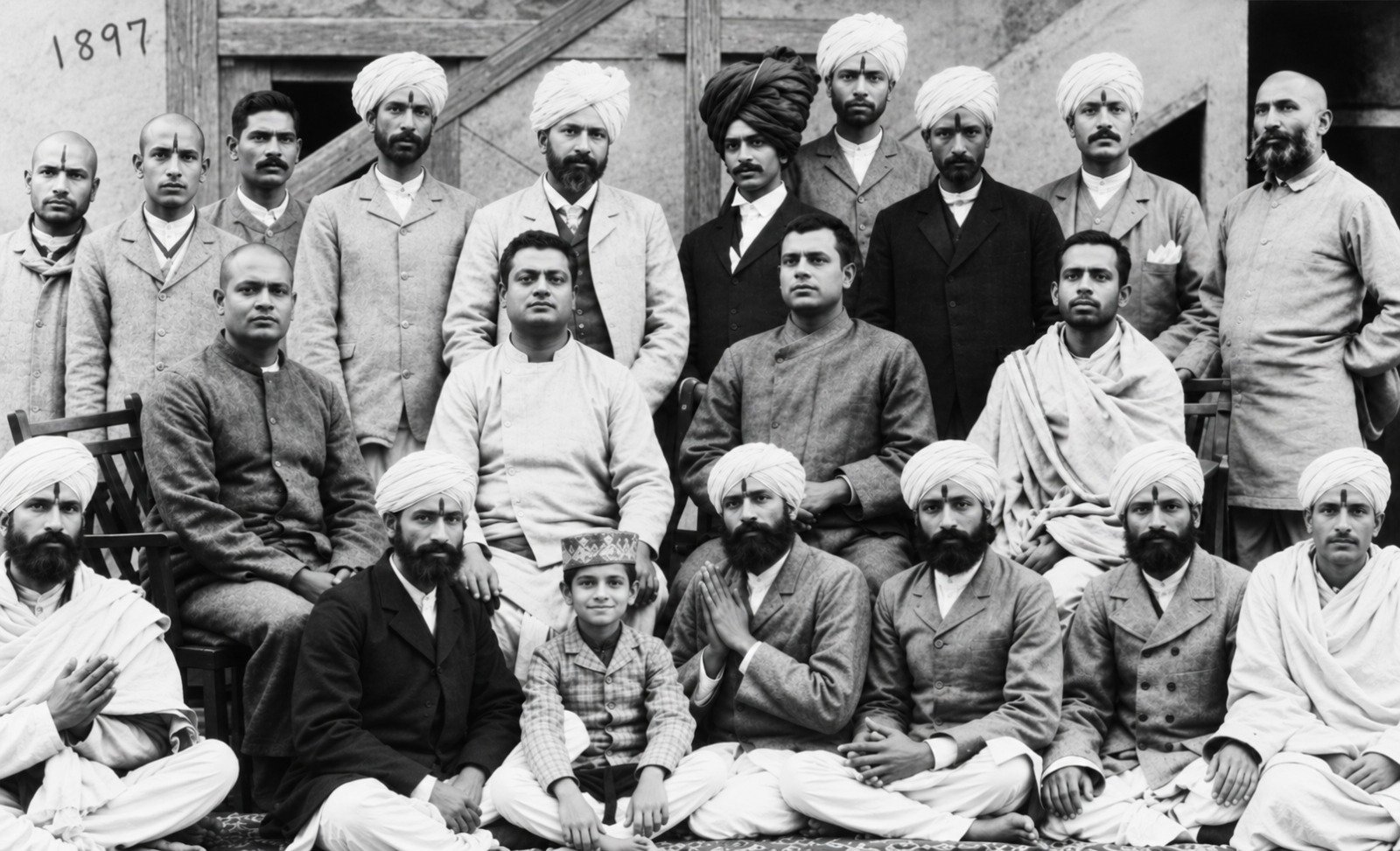
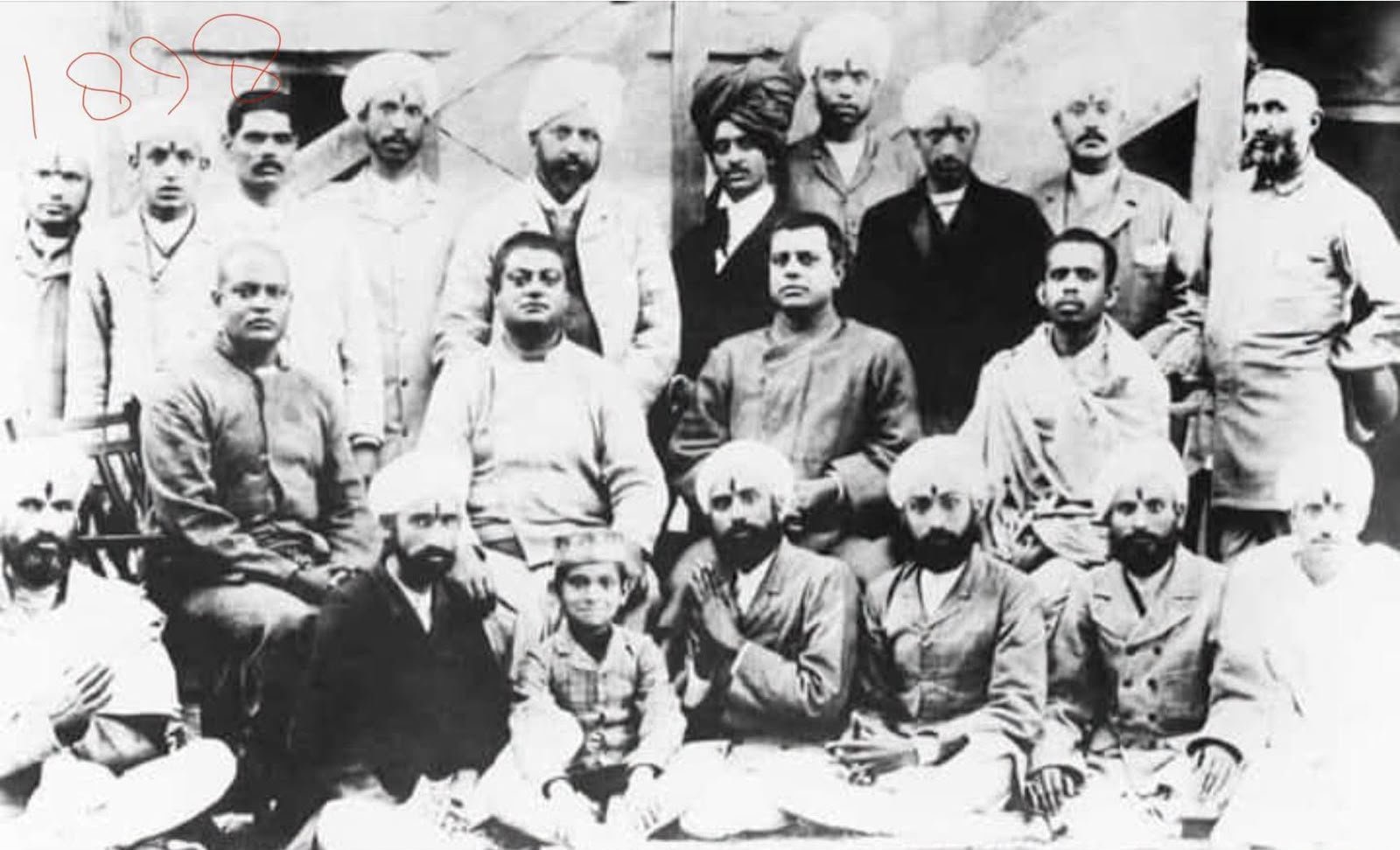
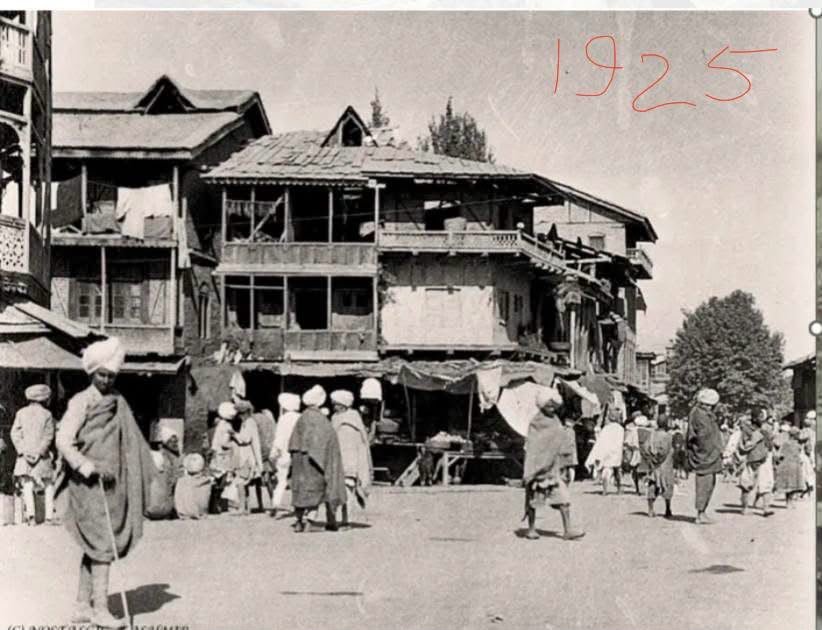
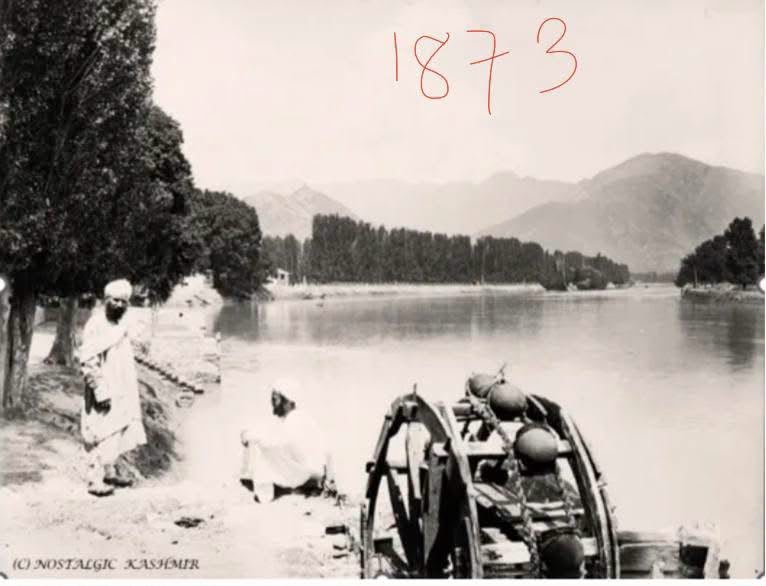
The old photographs being circulated amid the controversy offer an important counterpoint to the political argument.
They show Kashmiris from earlier generations dressed with confidence and dignity. They show a society with its own customs, social structures and cultural life.
Of course, photographs cannot tell the complete story of a society.
A photograph cannot prove that poverty did not exist.
But neither should accounts of poverty be used to erase everything else that existed.
A society can be economically poor and culturally rich at the same time.
It can struggle materially while retaining a powerful sense of dignity.
That is an important part of Kashmir’s story.
The Abdullah Legacy Is Important — But It Is Not the Whole Story
There is no serious reason to erase the contribution of Sheikh Abdullah or the National Conference from Kashmir’s history.
But there is equally little justification for treating everything that came before them as merely a prelude to their political arrival.
That would do a disservice to Kashmir itself.
The Valley’s social and cultural history includes generations of people who never held political office and whose names may never appear in political textbooks.
The farmer.
The schoolteacher.
The artisan.
The trader.
The poet.
The doctor.
The civil servant.
The homemaker.
The student.
Their lives were not footnotes to Kashmir’s political history.
They were the history.
An Elected Representative Carries a Greater Responsibility
Politicians must be free to discuss uncomfortable history.
They should be able to talk about poverty. They should be able to criticise previous governments. They should be able to defend land reforms and other socio-economic changes. They should also be able to question whether those reforms went far enough.
But elected representatives carry another responsibility.
The people they describe are often the same people whose votes put them in office.
That makes political language particularly important.
If a statement is interpreted by sections of society as humiliating or dismissive, the response cannot simply be that people misunderstood.
Intent matters.
But impact matters too.
A politician who recognises that distinction demonstrates confidence and political maturity.
Kashmir’s History Should Be Examined, Not Monopolised
There is a broader problem here.
Political parties everywhere have an incentive to present history in ways that strengthen their own legitimacy.
One party highlights its achievements.
Another emphasises its opponent’s failures.
A political family celebrates its legacy.
Its opponents attempt to dismantle it.
But Kashmir is too complicated to fit neatly into any one political narrative.
Its history contains achievement and failure.
Reform and repression.
Hope and disappointment.
Poverty and prosperity.
Political mobilisation and political disillusionment.
Any honest account must contain all of these.
The Photographs Cannot Settle the Political Argument
The old photographs circulating online are powerful because they remind us of something simple:
People are more than their economic circumstances.
But photographs should also be treated carefully.
A photograph of well-dressed Kashmiris does not prove that poverty did not exist.
Likewise, a historical account of poverty does not prove that Kashmiris lived without dignity.
Both realities can exist simultaneously.
That is precisely why Kashmir’s history requires more serious discussion—and less political simplification.
The Real Question Is Not Who Owns the Past
There is a temptation in Kashmir’s politics to constantly ask:
Who deserves credit?
Who transformed Kashmir?
Who failed Kashmir?
Who represents the real Kashmir?
Perhaps the more useful question is:
What are today’s political leaders doing with the Kashmir they inherited?
Can they create meaningful employment?
Can they improve public healthcare?
Can they strengthen education?
Can they protect the handicraft economy?
Can they support farmers and small businesses?
Can they provide young people with a reason to believe in their future?
Can they create an environment in which women have greater economic independence?
These are the questions that will ultimately determine political legacy.
Not who won an argument about a pair of trousers decades ago.
Kashmiris Do Not Need to Be Ashamed of Their Past
Kashmiris do not need to be embarrassed about their past.
Nor do they need to romanticise it.
They can acknowledge poverty without being ashamed of it.
They can recognise historical injustice without turning history into political mythology.
They can appreciate Sheikh Abdullah’s contribution without believing that Kashmir began with him.
They can recognise the National Conference’s role without accepting that the party owns Kashmir’s identity.
And they can criticise political leaders without denying the importance of their historical contributions.
That is what a mature political culture looks like.
If the Words Caused Hurt, an Apology Would Not Diminish Anyone
If Tanvir Sadiq’s intention was to describe historical poverty rather than demean Kashmiris, that context deserves to be heard.
But if people genuinely felt humiliated by the language used, acknowledging their hurt should not be regarded as a political defeat.
An apology is not necessarily an admission that an entire argument was wrong.
Sometimes it is simply an acknowledgment that the language used did not convey the respect intended.
For a public representative, that can be an act of responsibility.
Kashmir Belongs to Its People
Kashmir is older than the National Conference.
It is older than the Abdullah political legacy.
It is older than every contemporary political party competing for power.
Its culture was not created by a single movement.
Its identity was not handed down by one political family.
And its history cannot be reduced to either the achievements or the failures of one party.
The people of Kashmir have their own memories of hardship and hope.
They remember what their grandparents told them.
They remember the poverty.
They remember the dignity.
They remember the political movements.
They remember the disappointments.
And they remember the people who kept their families and communities alive through difficult decades.
That collective memory deserves respect.
The political class should therefore be careful about one thing:
Kashmiris may disagree about politics, but they should never be made to feel ashamed of being Kashmiris.
The Valley’s past should be studied with honesty.
Its political history should be debated without fear.
Its leaders should be judged fairly.
But the dignity of ordinary people should remain beyond political contest.
Kashmir was not created by the National Conference.
Nor was it created by any other party.
Kashmir was built across generations by its people.
And its future, ultimately, belongs to them.
AALIMI NATION EDITORIAL