JAIPUR, October 26 (Aalimi Nation) – The Rajasthan government has declared 80 tehsils across 14 districts drought-affected after a weak monsoon damaged kharif crops and strained water and fodder supplies, according to a notification issued by the state's Disaster Management and Relief Department.
Of the 80 tehsils, 69 have been classed as severely affected and 11 as moderately affected. The notification, issued on Sunday, keeps the drought-related provisions in force for six months from the date of publication.
Rajasthan drought: districts and tehsils covered
The western part of the state accounts for most of the list. Jodhpur district has the largest number of declared tehsils at 12, followed by Jalore and Barmer with 10 each. Balotra has nine, Pali eight, and Dungarpur, Jaisalmer and the newly formed Phalodi district seven each. The remaining tehsils fall in districts including Banswara, Beawar, Churu, Bikaner, Nagaur and Sirohi.
Officials said the decision followed an assessment of rainfall deficiency, groundwater levels, surface water availability, crop condition and crop losses. A revised list was issued after concerns that some affected areas had been left out of the first order.
What the government has promised
Declaring a drought allows district administrations to start relief work, including arrangements for livestock and for farmers who have lost crops. State government representatives said fodder depots would be opened in the affected areas and that all possible help would be provided to people in difficulty. Jogeshwar Garg, the chief whip of the state government, said the administration had responded to what he described as famine-like conditions in several parts of the state.
Jogaram Patel, the state's Parliamentary Affairs Minister, welcomed the decision, noting that it covers his Luni Assembly constituency and is important for farmers in this Kharif season.
Opposition seeks faster action
Opposition leaders welcomed the expanded list but said relief was already late. Umedaram Beniwal, the Congress Member of Parliament from Barmer-Jaisalmer, said a declaration alone would not help unless support reached people on the ground without delay. He asked for Nokhada tehsil to be added, for cattle relief camps to be set up and for regular supply of water tankers.
Harish Chaudhary, the Congress MLA from Baytoo in Balotra, called the move a gain for the people of the region but said several affected tehsils had been omitted at first. He too urged the government to start fodder camps and tanker services immediately.
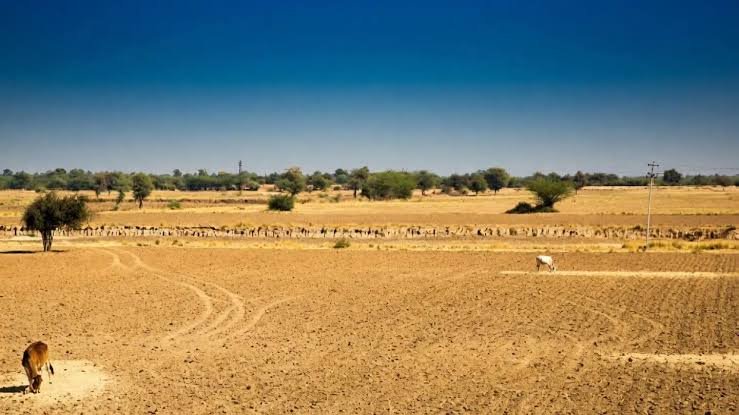
Western Rajasthan depends heavily on the monsoon for drinking water, grazing and the rain-fed kharif harvest, and a poor season quickly affects livestock owners, who often sell animals when fodder runs short. Reports from the affected districts describe withering crops, drying water sources and scarce fodder.
Officials have not yet said when relief operations will begin on the ground, how many fodder depots will be opened or what logistics are planned for water supply. Those details are expected through further directions from the state government, with district administrations responsible for carrying them out according to local conditions.
The scale of assistance to farmers for crop losses has also not been announced.