Yemen’s war is once again becoming much more than an internal conflict. The Red Sea, the Bab el-Mandeb Strait, Saudi Arabia’s oil infrastructure and the United States’ regional strategy are increasingly tied together in a single security crisis.
At the centre of this emerging equation is the growing confrontation between the Iran-aligned Houthi movement and Saudi Arabia.
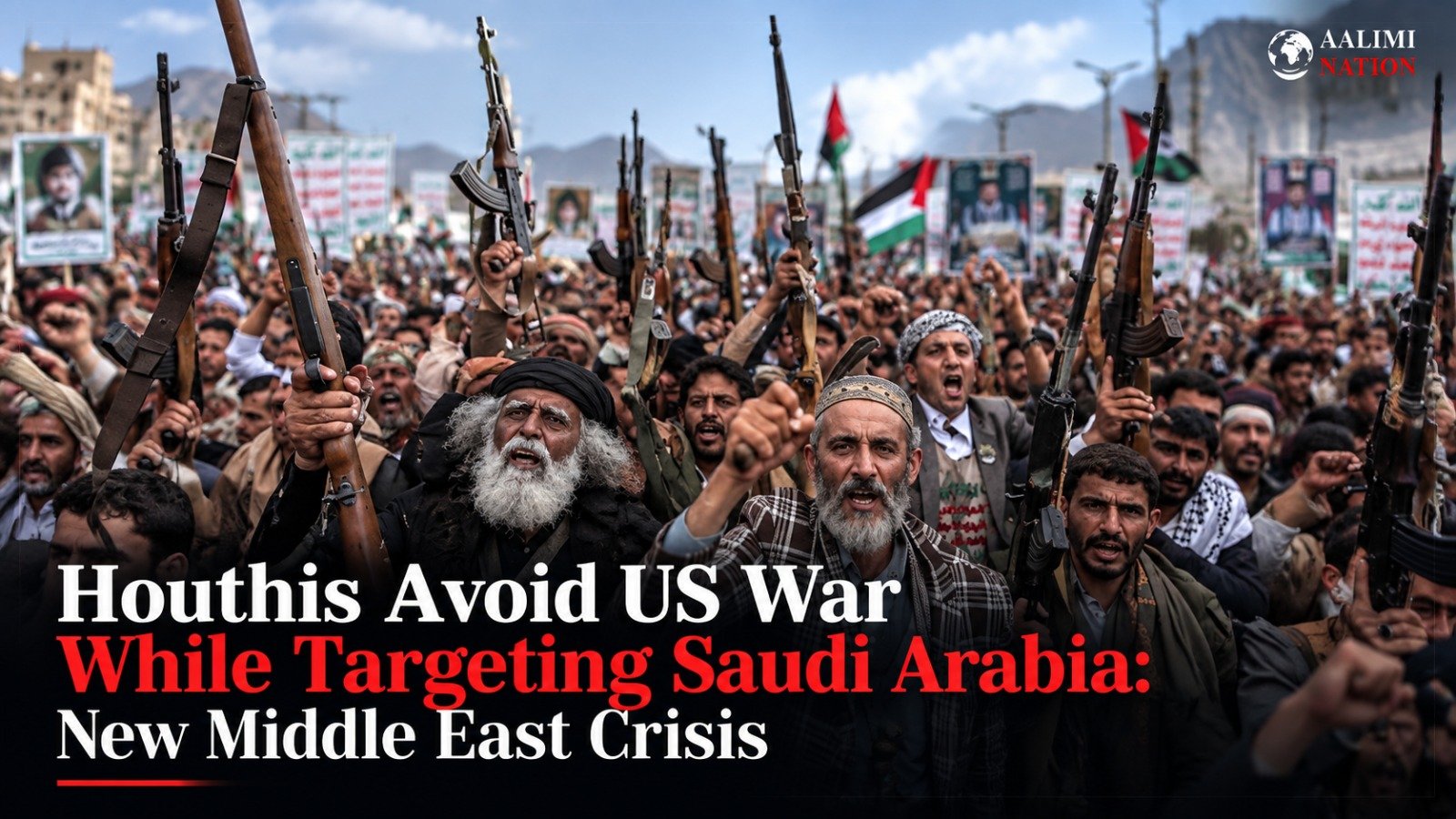
One of the most striking diplomatic developments is the reported message from the Houthis that they do not want a war with the United States.
US President Donald Trump has said that the Houthis contacted his administration and indicated that they did not want to fight the United States. Trump also suggested that the Houthis were allowing many ships to pass through regional waters while maintaining particular hostility toward vessels linked to a specific country.
If accurate, the message is significant.
At the same time that the Houthis appear to be seeking to avoid direct confrontation with Washington, their rhetoric and military activity toward Saudi Arabia have intensified.
That raises a fundamental question: if the Houthis do not want a direct war with the United States, why is Saudi Arabia increasingly becoming their principal target?
Washington is playing a cautious game
Washington has so far avoided abandoning Saudi Arabia.
The United States has reportedly been providing Riyadh with intelligence and targeting assistance, while Trump has not, at least for now, authorised a broad direct US military campaign against the Houthis.
The reported visit of US Central Command chief Admiral Brad Cooper to Saudi Arabia has also underscored the growing level of military coordination between Washington and Riyadh.
On the surface, the policy may appear contradictory.
The United States is helping Saudi Arabia defend itself while simultaneously seeking to avoid becoming the principal combatant in another war in Yemen.
But there is a strategic logic behind this approach.
Washington wants to preserve freedom of navigation in the Red Sea, strengthen the defensive capabilities of its Saudi partner and deter attacks against regional infrastructure — without becoming trapped in another open-ended Middle Eastern war.
That distinction could prove crucial.
The Houthi message: America is not the primary target
The most important feature of the Houthis’ current posture is their apparent effort to distinguish between the United States and Saudi Arabia.
Their message appears to be that their conflict is primarily with Saudi Arabia and its regional allies rather than with every Western power or international shipping operator.
This is both a military calculation and a political message.
The Houthis may believe that direct confrontation with the United States would expose them to overwhelming American air and naval capabilities.
A conflict with Saudi Arabia, by contrast, may be viewed as a more manageable confrontation in which geography, domestic politics and regional alliances provide the Houthis with greater room to manoeuvre.
That does not mean that a permanent alliance between the Houthis and Washington is emerging.
Such a conclusion would be premature.
A more plausible interpretation is that both sides currently have an interest in avoiding a direct US-Houthi war.
That is a very different proposition from cooperation.
Is reported Houthi contact with Trump significant?
Trump’s claim that the Houthis contacted the US administration suggests that channels of communication may remain open behind the scenes.
But such contact should not automatically be interpreted as negotiations, reconciliation or American support for the Houthi movement.
Even adversaries maintain communication during periods of intense conflict, particularly when miscalculation could trigger a much larger confrontation.
For the Houthis, direct war with Washington could carry enormous military consequences.
For the United States, opening another major military front while already dealing with a wider confrontation involving Iran could create serious strategic and political costs.
That shared interest in avoiding escalation may explain why communication remains possible despite profound differences between the two sides.
Saudi Arabia faces the immediate danger
For Saudi Arabia, however, the threat extends well beyond individual missile or drone attacks.
The deeper concern is the strategic geography of western Yemen.
Houthi advances toward the Red Sea coast and areas around the Bab el-Mandeb Strait could give the movement greater leverage over one of the world's most important maritime corridors.
That matters enormously for Riyadh.
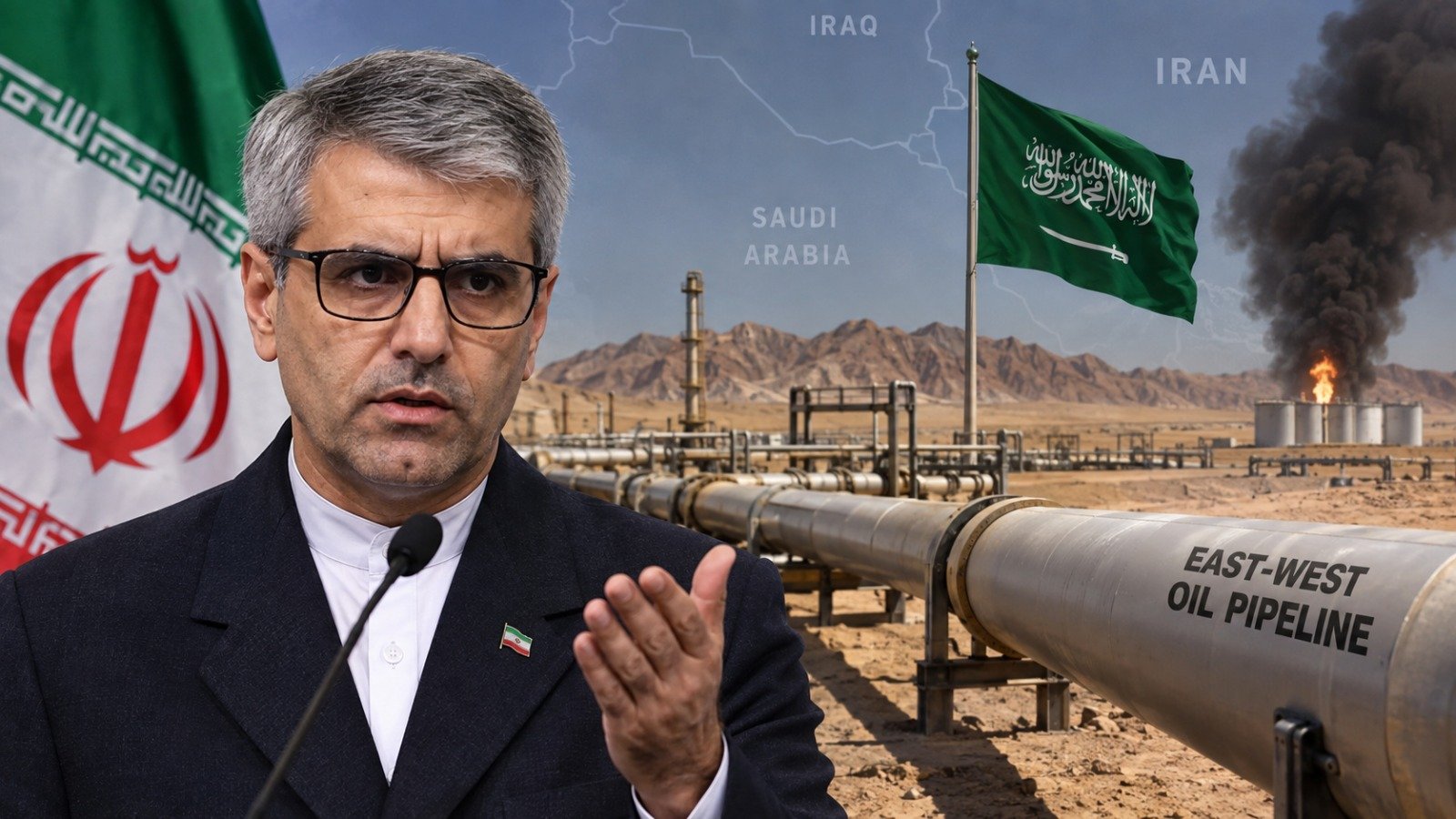
The Bab el-Mandeb has become even more strategically important as instability around the Strait of Hormuz threatens Gulf energy exports.
If shipping through both maritime chokepoints becomes increasingly vulnerable, Saudi Arabia could face a far more complicated energy-security environment.
The country would have to protect not only its territory and oil facilities but also alternative export routes and maritime infrastructure.
The shadow of Iran
Iran remains an essential part of the wider equation.
The Houthis have long received Iranian support, and their military capabilities and regional strategy are frequently viewed through the broader lens of Tehran’s regional influence.
Greater Houthi leverage around Bab el-Mandeb could give Iran-aligned forces influence over another critical maritime corridor, alongside the strategic significance of Hormuz.
For Washington, that creates a difficult calculation.
The United States is already confronting Iran in a broader regional crisis. If the Yemen front develops into a direct US-Houthi conflict, Washington could find itself dealing with several interconnected theatres simultaneously.
That is likely one reason for the current emphasis on supporting Saudi defensive capabilities while avoiding a large-scale American ground or air campaign in Yemen.
Is Washington giving the Houthis a free hand against Saudi Arabia?
It would be dangerously simplistic to describe US policy in those terms.
Washington has clear interests in Saudi security, freedom of navigation and the protection of regional energy infrastructure.
American officials have also maintained a hard line against Houthi attacks.
US Secretary of State Marco Rubio has described the Houthis as Iranian proxies and stressed the importance of the US-Saudi security relationship.
But Washington also understands that responding to every Houthi attack through direct American military action could transform a contained regional confrontation into a much wider war.
The result is an increasingly delicate balancing act: support Saudi Arabia, deter the Houthis, protect maritime commerce — but avoid creating another permanent US war in Yemen.
Saudi Arabia’s difficult choice
Perhaps the most difficult position belongs to Saudi Arabia itself.
Riyadh wants to protect its territory, military installations and oil infrastructure, but it also has strong reasons to avoid becoming trapped in another prolonged and expensive conflict in Yemen.
Over recent years, Saudi Arabia has sought ways to reduce its direct involvement in the Yemeni war and move toward a political settlement.
The renewed Houthi offensive complicates that strategy.
The question confronting Riyadh is no longer simply how to stop the Houthis militarily.
It is whether military pressure can produce a sustainable security arrangement — or whether the conflict will ultimately have to return to negotiations.
The real danger lies beyond Yemen
The greatest danger is a wider regional war.
If the Houthis attempt to effectively close the Bab el-Mandeb, if attacks on Saudi oil infrastructure escalate significantly, or if American personnel become direct targets, Washington may find it increasingly difficult to remain outside the conflict.
At that point, Yemen would no longer represent a conflict primarily between the Houthis and Saudi-backed Yemeni forces.
It could become another theatre in a much larger confrontation involving the United States, Iran, Saudi Arabia and other regional powers.
The first consequences would not necessarily appear on the battlefield.
They would be felt in oil prices, shipping costs, insurance premiums, food prices and the global economy.
Editorial conclusion: The message behind the new alignment
The Houthi position that they do not want war with the United States while continuing to regard Saudi Arabia as an enemy is an important sign of the region’s changing strategic calculations.
It is not evidence of a new US-Houthi partnership.
Rather, it demonstrates that the region’s actors are increasingly defining their enemies and interests separately.
The United States is helping Saudi Arabia while trying to avoid direct war.
Saudi Arabia is attempting to contain Houthi pressure without becoming trapped in another prolonged conflict.
The Houthis appear determined to avoid a direct confrontation with Washington while keeping pressure on Saudi Arabia.
And Iran remains positioned to benefit strategically if its regional allies can increase pressure on US partners and critical maritime routes.
That is what makes the present crisis so dangerous.
When rival powers attempt to keep a conflict within limited boundaries while the battlefield itself continues expanding, a single miscalculation can transform a contained confrontation into a major regional war.
Yemen appears to be approaching precisely that dangerous point.