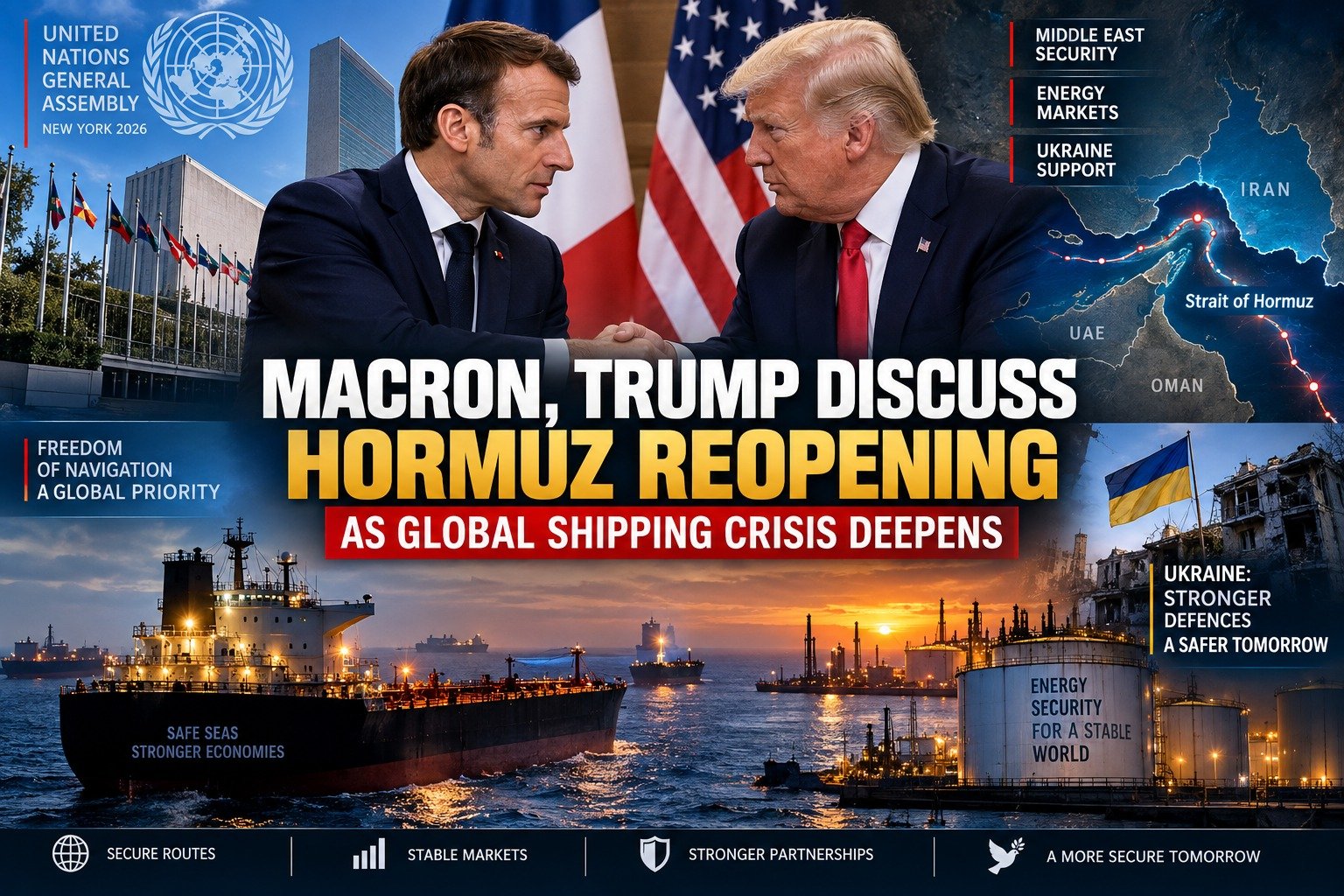
French President Emmanuel Macron said he held a “very good” and “very constructive” meeting with U.S. President Donald Trump in New York, with discussions focusing on the deteriorating security situation in the Middle East, freedom of navigation through the Strait of Hormuz, energy markets and the war in Ukraine.
Macron said France and the United States had agreed to coordinate efforts to protect critical infrastructure in the Middle East and reduce pressure on global energy markets by working toward the restoration of freedom of navigation through the Strait of Hormuz.
In a post on X following the meeting, Macron said the two countries would work together to ease tensions in energy markets, protect critical infrastructure and support freedom of navigation through the strategic waterway.
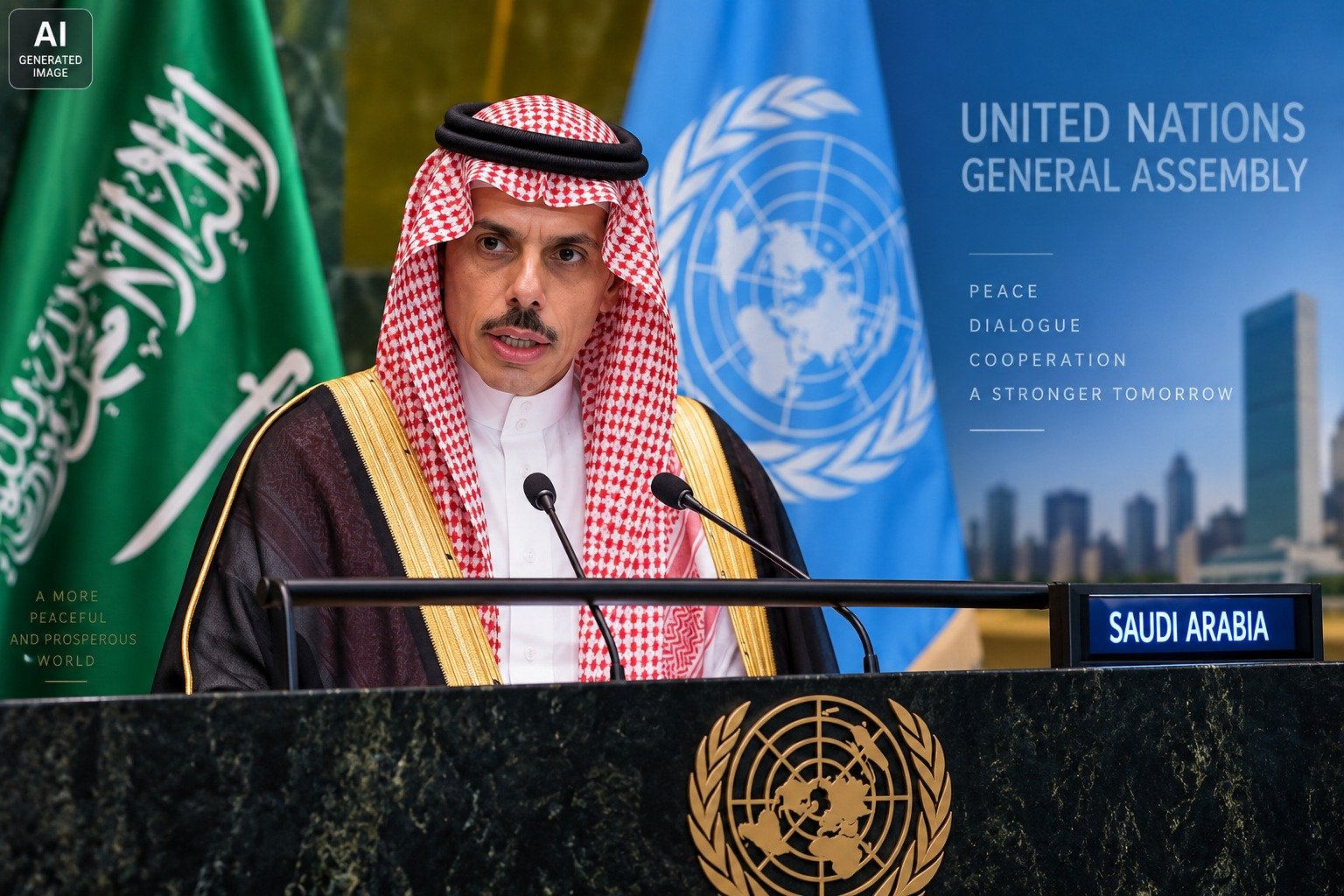
The meeting took place on the sidelines of the 81st United Nations General Assembly in New York, where the Middle East conflict, energy security and the war in Ukraine are among the major issues confronting world leaders.
Hormuz Shipping Disruption Deepens
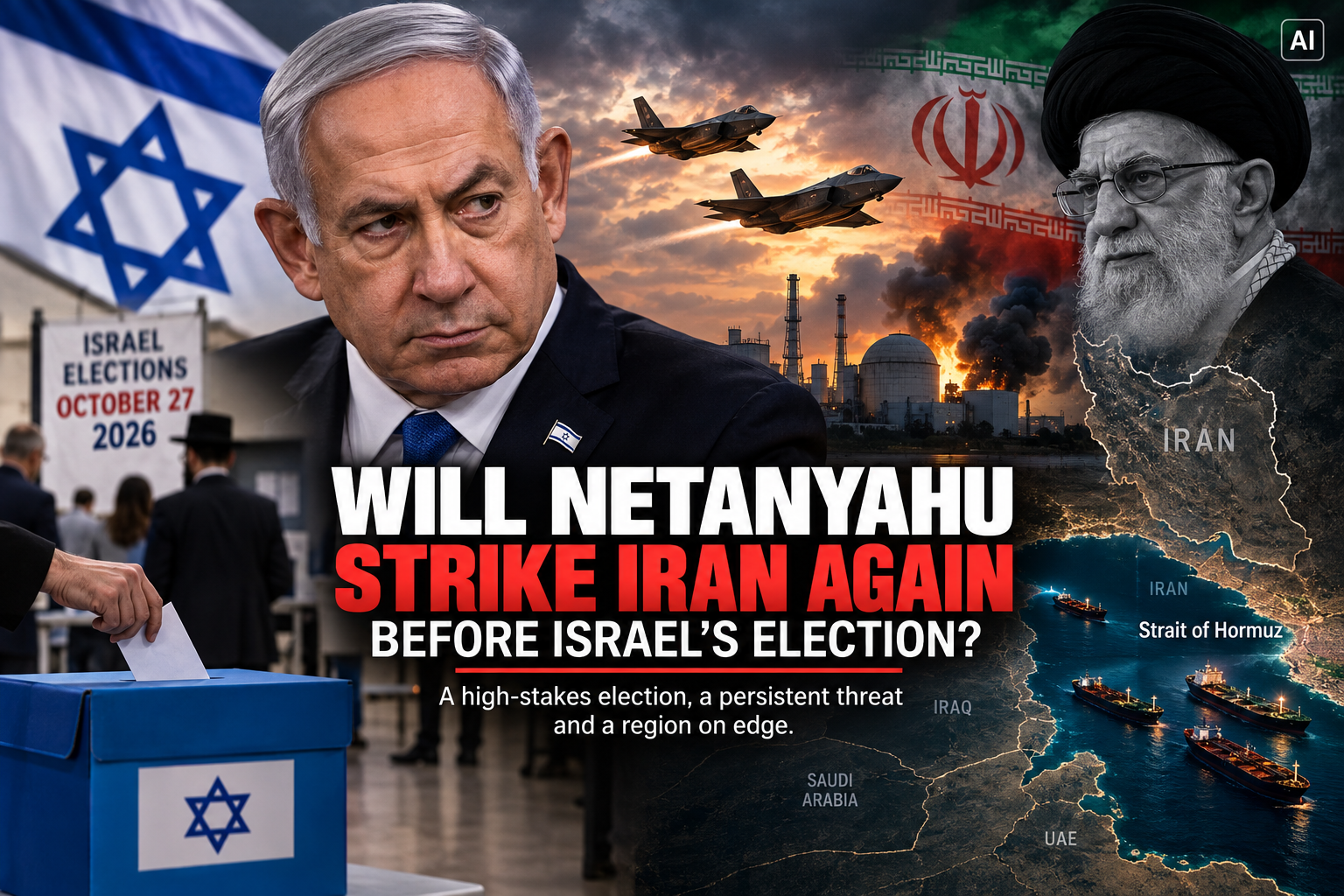
The Strait of Hormuz remains one of the world's most important maritime chokepoints for energy supplies. The continuing conflict and security threats have sharply reduced commercial shipping through the waterway.
According to Reuters, only 17 commodity vessels crossed the Strait of Hormuz over the weekend, down from 37 the previous week and dramatically below the pre-war average of approximately 125 vessels per day. Despite the decline in visible commercial traffic, some oil shipments have continued, including tankers operating with their automatic identification system transponders switched off.
The disruption is also forcing energy producers and traders to adopt unconventional methods to keep supplies moving. Reuters reported that oil companies have increasingly relied on ship-to-ship transfers near Oman, allowing crude to be moved between vessels while reducing dependence on conventional routes through the disrupted maritime corridor.
The shipping slowdown has implications well beyond the Gulf. Hormuz is a crucial route for oil and liquefied natural gas exports, meaning prolonged disruption can affect fuel prices, freight costs, insurance premiums and inflation across major importing economies.
France Continues Push for International Maritime Security
France has been involved for months in diplomatic efforts to restore safe navigation through the Strait.
Earlier this year, France and the United Kingdom convened an international summit involving dozens of countries and called for the unconditional and unrestricted reopening of the waterway. Paris and London also backed plans for a defensive multinational maritime mission designed to protect merchant vessels and support mine-clearance operations once security conditions permit.
France has also previously prepared a draft Security Council resolution concerning safe navigation through Hormuz. A French initiative circulated earlier in the year sought an international mechanism to help restore safe maritime movement, while a separate Bahrain-sponsored Security Council resolution on Hormuz failed to pass in April after receiving 11 votes in favour but negative votes from Russia and China.
The issue remains on the Security Council's agenda. France currently holds the Council presidency for September, and UN officials have warned that the continuing restriction of navigation through Hormuz is having wider economic consequences, including effects on developing countries and global food security.
India Also Drawn Into Maritime Security Discussions
The diplomatic effort is increasingly involving major Asian economies that depend heavily on Gulf energy supplies.
French Foreign Minister Jean-Noël Barrot met India's External Affairs Minister S. Jaishankar on the sidelines of the UN General Assembly and discussed cooperation on maintaining freedom of navigation through both the Strait of Hormuz and the Bab el-Mandeb Strait.
According to the French Foreign Ministry, Barrot proposed greater cooperation with India on the issue, describing the security of the two waterways as important to the stability and prosperity of both Europe and Asia.
This gives the Hormuz crisis a broader international dimension, extending beyond the United States, France, Britain and the Gulf states to major Asian energy consumers.
The shipping disruption continues to reverberate through global oil markets.
Brent crude was trading around $101.48 a barrel on September 22, while U.S. West Texas Intermediate futures were around $96.65, according to Reuters. Prices rose during Tuesday's trading session as markets assessed the possibility of renewed U.S.-Iran diplomacy, although analysts cautioned that the market remained highly sensitive to developments in the conflict.
Oil prices had fallen sharply the previous day on hopes that diplomacy could make progress. Brent settled at around $100.34 a barrel, after falling 3.4%, as investors assessed the possibility of renewed U.S.-Iran talks and a recovery in Saudi exports.
The result is an unusually volatile market in which diplomatic signals can push prices lower while fresh attacks or shipping disruptions can quickly reverse the trend.
Saudi Arabia Shifts More Oil Through Hormuz
Saudi Arabia has also been adapting its export strategy after attacks disrupted parts of its East-West Pipeline, which had been used to transport crude toward the Red Sea.
Reuters reported that Saudi Aramco loaded approximately 14 million barrels of crude onto seven VLCC supertankers at Ras Tanura on September 20. Saudi oil flows through the Strait of Hormuz subsequently rose to an average of around 2.9 million barrels per day, compared with about 700,000 barrels per day in August.
The kingdom has also facilitated large-scale ship-to-ship transfers near Oman's port of Sohar, with around 60 million barrels reportedly moved from Ras Tanura for such transfers.
The strategy highlights the increasingly complicated nature of the regional oil trade: even as the number of vessels physically transiting Hormuz remains far below normal levels, producers are finding alternative ways to maintain exports.
The Hormuz crisis is occurring alongside continued instability around the Red Sea and Bab el-Mandeb, another major maritime corridor.
Reuters reported that weekend traffic through Bab el-Mandeb also declined, with 51 vessels crossing compared with 57 previously. At the same time, Saudi crude loadings from Yanbu on the Red Sea had not been observed since September 16 following disruptions to the kingdom's pipeline network.
This creates a particularly difficult situation for Gulf producers because the two principal maritime pathways — Hormuz and the Red Sea route — are simultaneously exposed to security risks.
Macron and Trump Also Discuss Ukraine
The Macron-Trump meeting was not limited to the Middle East.
Macron said the two presidents discussed the Russia-Ukraine war and efforts to halt attacks against energy infrastructure and civilian targets.
According to Macron, France and the United States want to work toward a moratorium on strikes against energy infrastructure and Ukrainian civilian infrastructure. Macron also stressed the need to strengthen Ukraine's air-defence capabilities, particularly through additional interceptor systems.
Macron said he would continue discussions on the issue with Ukrainian President Volodymyr Zelenskyy during the UN General Assembly.
The discussions come as European governments remain concerned that repeated attacks on Ukraine's energy infrastructure could further complicate the humanitarian and economic situation ahead of the winter period.
The Macron-Trump meeting comes at a critical moment for international diplomacy.
The immediate challenge is restoring safe commercial navigation through Hormuz without triggering a broader escalation. At the same time, governments are attempting to keep oil and gas supplies moving, protect merchant shipping and prevent disruptions from spreading across global supply chains.
For France, the issue also represents an effort to coordinate European and international maritime-security initiatives. Paris has already worked with London and has opened discussions with countries including India over possible contributions to safeguarding maritime routes.
For the United States, the issue is closely tied to the wider confrontation with Iran and the economic consequences of prolonged disruption.
The immediate market reaction remains highly dependent on diplomacy. Brent crude is hovering around the $100-a-barrel threshold, while shipping through Hormuz remains far below normal levels. Any sustained diplomatic agreement that restores predictable navigation could ease pressure on energy markets; renewed attacks or a further deterioration in security could have the opposite effect.
Sources: Reuters, AFP, France Diplomatie, United Nations