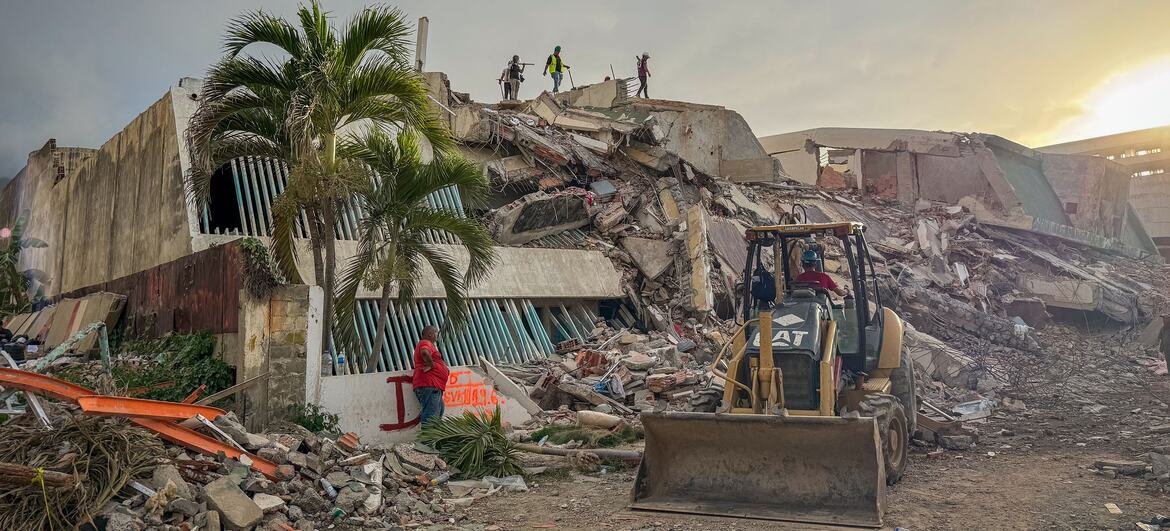
The recovery of hundreds of human remains from beneath destroyed buildings in Gaza has renewed concerns over possible violations of international humanitarian law, with UN High Commissioner for Human Rights Volker Türk calling for international investigators to be granted access to all parts of the Gaza Strip.
GENEVA, September 15, 2026:
The UN human rights chief said the remains being recovered include those of women and children, with some sites containing what appear to be entire families. Türk warned that the bodies recovered so far may represent only a fraction of the people still buried beneath Gaza's vast areas of destruction.
According to the Palestinian Civil Defence, more than 630 bodies and human remains were recovered from beneath destroyed buildings between November 2025 and September 2026. Palestinian authorities estimate that more than 8,000 people may still be missing beneath the rubble.
UN calls for evidence to be preserved
Türk said the recovery of the dead must go beyond burial and identification. He stressed the importance of preserving forensic evidence that could help determine the circumstances surrounding individual deaths.
The UN is calling for human remains to be documented and identified, biological samples to be preserved, burial locations recorded and families informed about the fate of missing relatives.
“Recovering and burying the victims does not substitute for establishing the circumstances in which they were killed,” Türk said, stressing that allegations involving attacks on residential buildings must be properly investigated.
He has urged international investigators to be given access to all areas of Gaza to assist with evidence-gathering in connection with ongoing legal proceedings concerning the conduct of hostilities.
Hundreds of bodies recovered from destroyed buildings
The scale of the recovery operation has emerged gradually as Palestinian Civil Defence teams gain access to areas that were previously inaccessible.
Between June 27 and August 27, Civil Defence reported recovering 233 of 407 bodies believed to have been trapped beneath 20 destroyed buildings, primarily in Gaza City. The 233 recovered included 74 children and 106 women, according to the UN.
Earlier in September, Civil Defence teams reported recovering 96 bodies and human remains from a single site in the Az Zeitoun area, southeast of Gaza City. The site was reportedly struck in November 2023. According to the UN, 58 of the recovered victims were children and 23 were women.
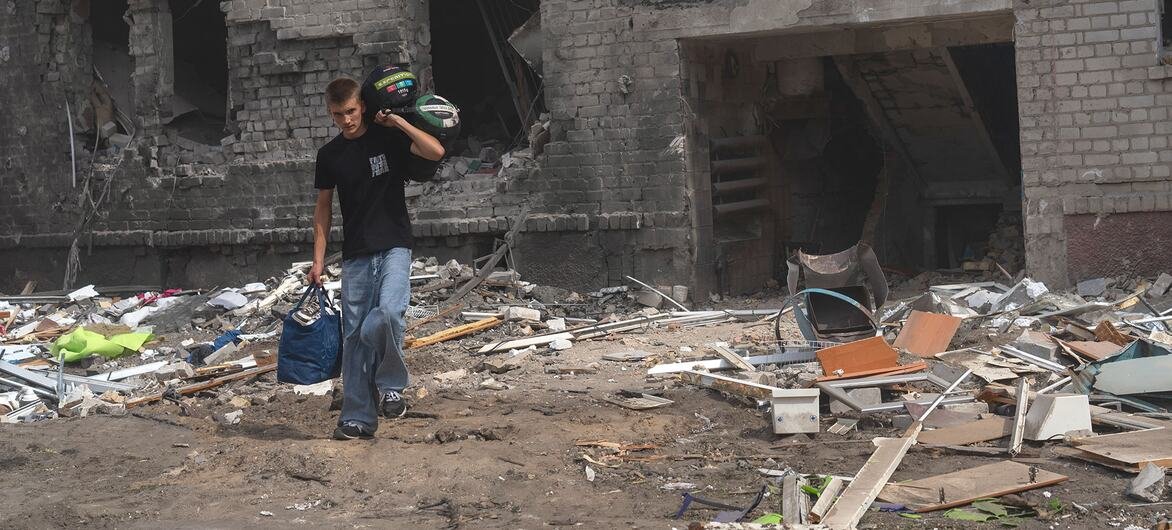
The recovery work has reportedly been conducted under extremely difficult conditions, with workers in some locations using their hands because of shortages of suitable excavation equipment.
Why the rubble could be crucial evidence
The UN says Gaza's rubble may contain more than human remains. It can also contain physical evidence that could help investigators reconstruct individual attacks.
Potential evidence can include weapon fragments, blast patterns, damage to buildings, personal belongings, medical information and biological material. Preserving such evidence is particularly important when investigators are attempting to determine whether an attack complied with the rules governing armed conflict.
The UN Human Rights Office has previously raised concerns over the use of heavy explosive weapons in densely populated areas.
In a 2024 report, the office examined Israeli attacks between October 9 and December 2, 2023, including strikes involving heavy bombs against residential buildings and other civilian locations. The report said some of the attacks examined may have violated fundamental principles of international humanitarian law, including distinction, proportionality and precautions in attack.
That finding does not, by itself, establish criminal responsibility for any particular incident. Determining whether a war crime occurred requires an investigation into the target, the circumstances of the attack, the information available to those carrying it out, the anticipated civilian harm and the military objective involved.
Israel rejects allegations of deliberately targeting civilians
Israel has repeatedly rejected allegations that its military deliberately targets civilians and says its operations are conducted in accordance with international law.
Israeli authorities have also accused Hamas and other Palestinian armed groups of operating from densely populated civilian areas and using civilian infrastructure for military purposes. Hamas has rejected such accusations.
The competing claims make independent investigations and access to physical evidence particularly significant.
The latest UN statement is therefore a call for investigation rather than a judicial determination that every recovered death resulted from a war crime.
A second UN warning over Gaza’s rubble
The latest warning comes days after Francesca Albanese, the UN Special Rapporteur on the situation of human rights in the Palestinian territory occupied since 1967, warned that large-scale removal and crushing of rubble could destroy evidence relevant to investigations into alleged international crimes.
Albanese said rubble in Gaza contains human remains as well as physical evidence potentially relevant to investigations. She called for systematic documentation, recovery and identification of remains, preservation of evidence and an independent chain of custody before large-scale clearance proceeds.
The warning reflects a difficult dilemma facing Gaza: the rubble must be removed to allow people to return, infrastructure to be rebuilt and public-health risks to be addressed, but the same rubble may contain evidence needed to establish what happened during the war.
The wider legal picture
The issue is unfolding against the backdrop of several international legal processes.
The International Criminal Court (ICC) has an investigation into the situation in the State of Palestine, covering alleged crimes within the Court's jurisdiction in Gaza and the West Bank, including East Jerusalem.
Separately, the International Court of Justice (ICJ) is considering a case brought by South Africa against Israel under the Genocide Convention. The ICJ has issued provisional measures in the case, including measures concerning the preservation of evidence relevant to the allegations before the Court.
These proceedings are legally distinct. The ICJ deals with disputes between states, while the ICC investigates individual criminal responsibility for crimes within its jurisdiction.
Families still waiting for answers
For families whose relatives disappeared during the war, identification of remains is only the beginning.
The UN says families have a right not only to recover and bury their relatives but also to know what happened to them and under what circumstances they died.
Türk said the continuing recovery operations are a reminder of the scale of the destruction and of the prolonged uncertainty experienced by families whose relatives remain missing.
The UN's concern is that the longer remains and potential forensic evidence remain buried — or are removed without systematic documentation — the harder it may become to establish an accurate record of individual deaths.
What investigators would need to establish
Independent investigators examining suspected unlawful attacks would generally need to establish:
Who was killed and where?
What caused each death?
What weapons were used?
What was the intended target?
Was there a legitimate military objective?
What civilian presence was known or foreseeable?
What precautions were taken before the attack?
Was the anticipated civilian harm proportionate to the expected military advantage?
Were potentially relevant forensic materials preserved?
Only a detailed investigation can answer those questions for individual incidents.
The central issue: access
For the UN, access to Gaza has become central to both humanitarian recovery and accountability.
Türk's latest appeal is that international investigators be allowed to enter all parts of Gaza, while evidence and human remains are still recoverable.
The UN argues that the recovery of bodies, identification of victims and preservation of forensic evidence should proceed alongside efforts to clear the enormous quantities of rubble and rebuild destroyed communities.
For thousands of families, however, the immediate priority remains more fundamental: finding missing relatives, recovering their remains and learning the truth about how they died.
AALIMI NATION | SPECIAL WORLD REPORT
Gaza’s Buried Dead: The Search for Victims, Evidence and Accountability
This report distinguishes between documented findings, UN allegations and calls for investigation. Allegations of war crimes remain matters for competent judicial and investigative processes to determine.
Sources: UN Human Rights Office / United Nations; Reuters.