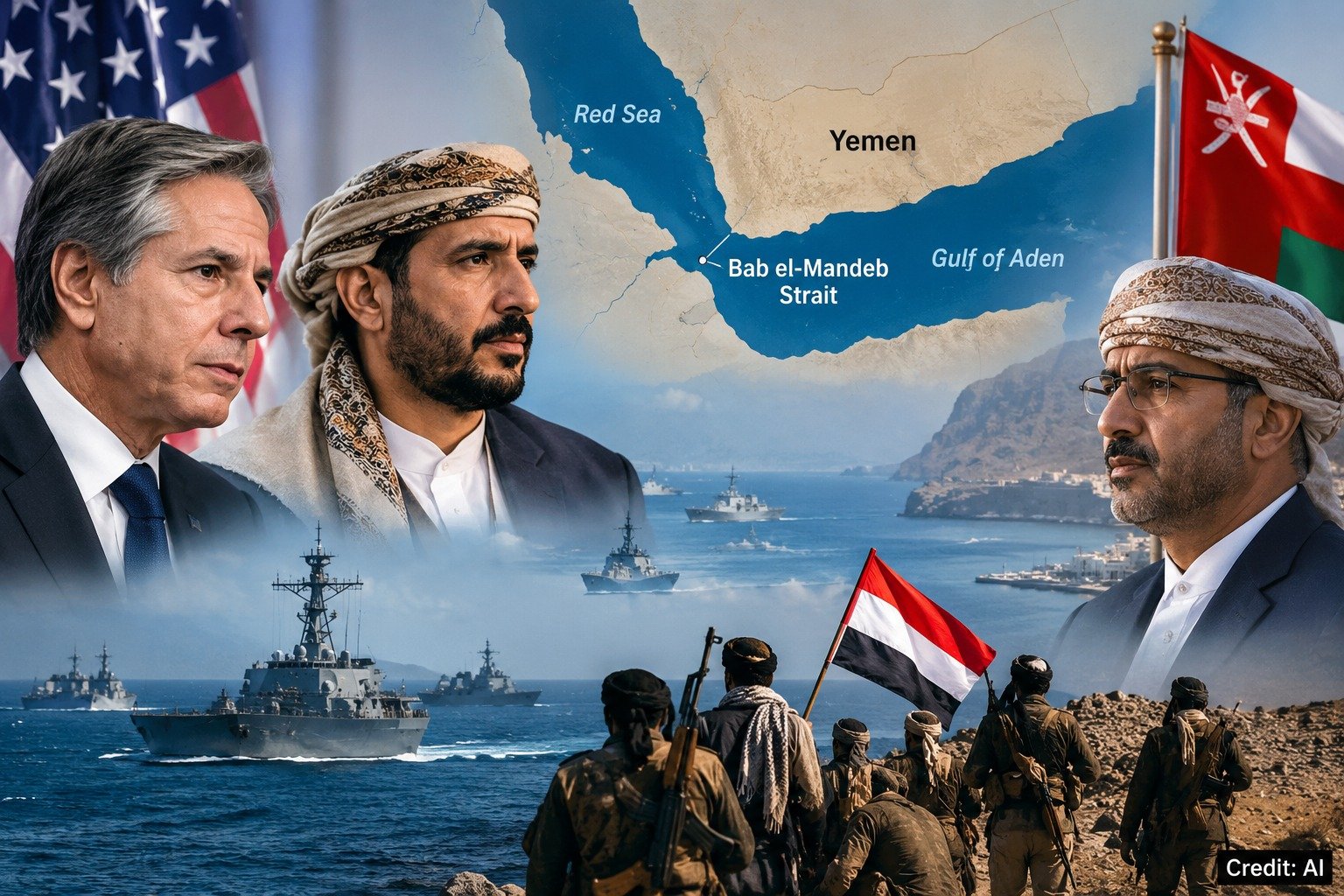
The United States has held a previously undisclosed meeting with senior representatives of Yemen’s Houthi movement in Muscat, Oman, at a time when fighting in Yemen is rapidly intensifying and the Houthis are expanding their control along the country’s strategically important Red Sea coast.
MUSCAT/NEW YORK,
According to five sources familiar with the discussions cited by Reuters, the meeting took place over the weekend at the U.S. Embassy in Muscat and was facilitated by Oman, which has repeatedly acted as an intermediary in negotiations involving the Houthis and other regional actors.
The talks are significant because they come amid a renewed military confrontation between the Houthis and Saudi-backed Yemeni forces and growing international concern over the security of commercial shipping through the Red Sea and Bab el-Mandeb Strait.
According to the Reuters report, the American side was represented by U.S. Embassy personnel in Muscat.
The Houthi delegation reportedly included senior officials Mohammad Abdulsalam and Abdelmalik al-Ajri. Abdulsalam, who is under U.S. sanctions, has previously played a prominent role in Houthi diplomatic contacts.
The meeting was not publicly announced when it took place.
The reported discussions focused on the escalating conflict in Yemen, maritime security and the need to prevent further disruption to international shipping through the Red Sea.
Two sources cited by Reuters said Houthi representatives told U.S. officials that they had no intention of attacking American vessels and remained committed to the ceasefire arrangement reached with Washington in 2025.
One Yemeni source further told Reuters that the Houthis indicated they would not target Israeli or other commercial vessels, with an exception reportedly made for Saudi-linked shipping. These assurances have not been independently verified through a public statement from the Houthi leadership.
The reported assurances are particularly important because the Houthis have previously carried out attacks against commercial shipping in the Red Sea, prompting international military operations and major changes in maritime traffic.
The U.S. State Department did not directly confirm that the meeting took place.
However, a State Department spokesperson said that protecting freedom of navigation in the Red Sea and preventing terrorism from spreading from the Middle East remain core U.S. interests.
The reported talks also follow public statements from President Donald Trump and Vice President JD Vance indicating that Washington has been in direct communication with the Houthis.
Trump said the Houthis had contacted his administration and asked the United States to stay out of the Yemen conflict, while Vance subsequently confirmed that Washington was maintaining direct contact with the group.
The Muscat meeting comes after a major Houthi offensive along Yemen's western coastline.
The Houthis have reportedly seized the strategic port of Mocha as well as Perim Island, located close to the Bab el-Mandeb Strait. Their advances have pushed back Saudi-backed forces and increased concerns over control of one of the world's most important maritime corridors.
The developments have also placed Saudi Arabia under increasing military pressure.
Reuters reported that Saudi Crown Prince Mohammed bin Salman sought U.S. military support as the Houthi offensive accelerated. Washington, however, indicated that it would not directly enter the fighting.
Bab el-Mandeb: the strategic pressure point
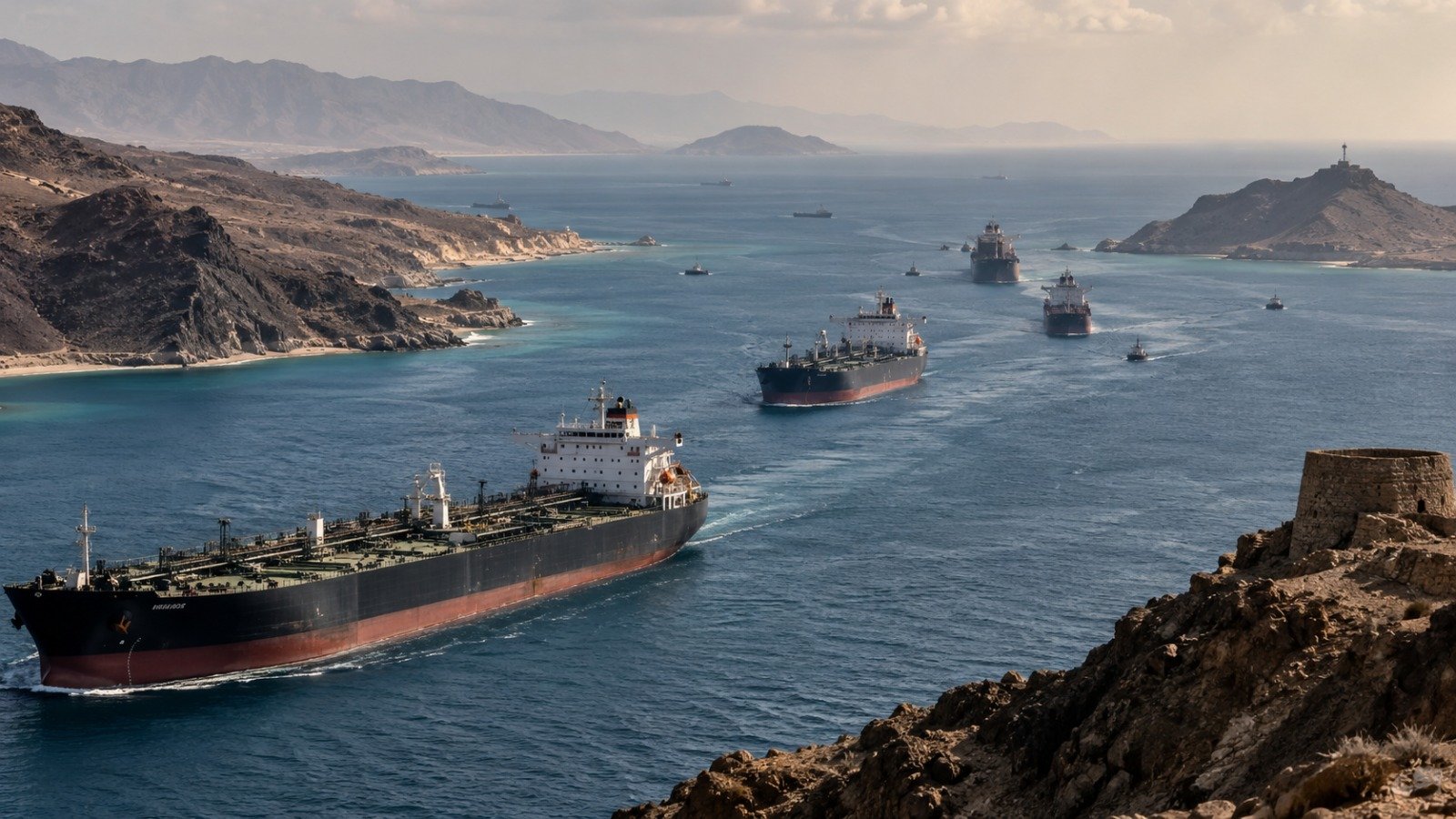
The Bab el-Mandeb Strait connects the Red Sea with the Gulf of Aden and the wider Indian Ocean.
Its importance extends far beyond Yemen. Any prolonged disruption could force commercial vessels to take longer routes around Africa, increasing shipping times, insurance costs and freight expenses while adding pressure to already fragile energy markets.
The latest developments therefore have implications for international trade, not simply the Yemen war.
Reuters reported on September 17 that traffic through the Bab el-Mandeb had already fallen, with 21 vessel crossings recorded compared with 24 the previous day.
No evidence of a U.S.–Houthi alliance
The reported Muscat meeting does not by itself indicate a political or military alliance between Washington and the Houthis.
Rather, the available reporting points to a pragmatic communication channel between two sides that remain deeply divided.
The United States designated the Houthis as a Foreign Terrorist Organization in March 2025, but Washington subsequently negotiated with the movement and reached a ceasefire in May 2025 following U.S. military operations aimed at stopping attacks on Red Sea shipping.
The latest contact appears primarily connected to preventing attacks on U.S. vessels, limiting further escalation and protecting freedom of navigation.
Saudi Arabia faces a difficult security situation
For Riyadh, the Houthi advance presents a particularly sensitive challenge.
The Houthis are simultaneously expanding their position along the Red Sea coast and increasing pressure on Saudi Arabia, while Washington has so far signalled that it does not intend to directly enter the Yemen battlefield.
The situation is further complicated by attacks claimed by the Houthis against Saudi targets. Reuters reported that Houthi military spokesman Yahya Saree later claimed attacks on an airbase in Khamis Mushait and Aramco facilities in Yanbu, although Saudi Arabia had not confirmed those claims. (Iran International | Iran International)
A diplomatic channel amid a widening conflict
The Muscat meeting demonstrates the increasingly complicated diplomacy surrounding Yemen.
While military operations continue on the ground and tensions remain high between the Houthis and Saudi-backed forces, Washington and the Houthi movement appear to have retained a channel through which they can communicate directly.
For Oman, the episode once again highlights its role as a regional mediator.
For the United States, maintaining that channel could help reduce the risk of attacks against American shipping and prevent the Yemen conflict from developing into an even wider threat to international maritime trade.
For Saudi Arabia, however, the Houthi advances along the Red Sea coast represent a growing security challenge at a time when Riyadh is seeking U.S. assistance without triggering a much broader regional confrontation.
The situation remains fluid, and several of the key details of the Muscat discussions remain based on anonymous sources rather than official confirmation. (Reuters)
Source: Reuters; additional reporting cross-checked with AP and other current reports.