
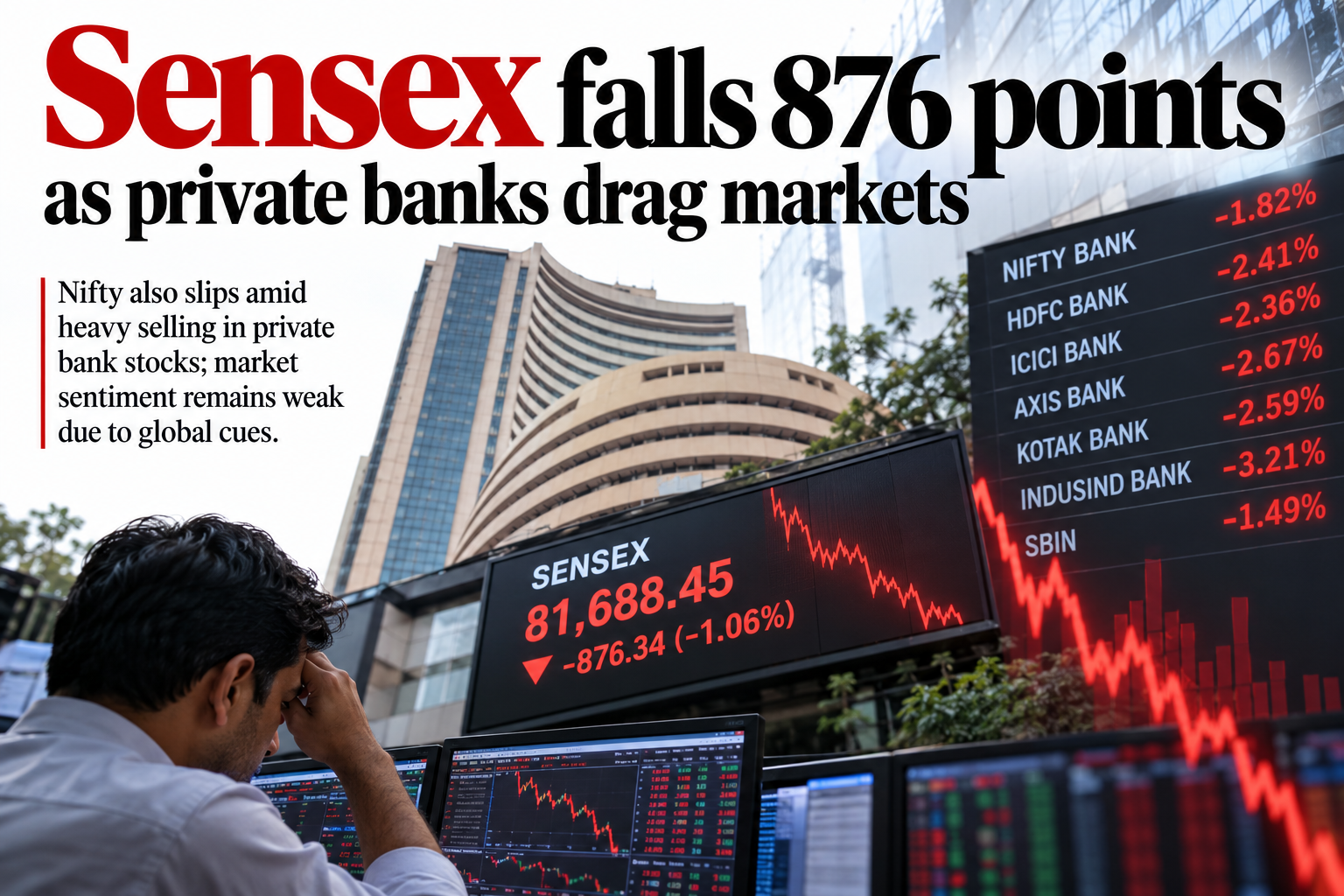
MUMBAI, October 21 (Aalimi Nation) – The Sensex fell 876 points on Monday, October 19, to close at 73,852.90, as selling in private sector banks, high crude oil prices and foreign investor outflows weighed on Indian equities. Markets were shut on Tuesday for Dussehra and reopen today.
The Nifty 50 ended the session at 22,888.95, down 257 points, according to exchange data. The fall, about 1.2 per cent on the Sensex, ended a two-day winning streak.
Sensex fall: banks lead the decline
Market analysts said private lenders accounted for more than half of the Sensex's drop, with HDFC Bank, ICICI Bank and Axis Bank among the biggest drags. Axis Bank shares fell about 4 per cent even after the lender reported a 39.4 per cent rise in profit for the September quarter. Analysts said investors reacted to weaker details beneath the headline numbers rather than to the profit growth itself.
Information technology shares also declined as investors booked profits after leading the previous week's recovery. Midcap and smallcap indices fell by more than 1 per cent, analysts said.
Oil and foreign selling
Crude oil remained a concern. Brent was trading at roughly $107 to $109 a barrel, with market participants citing worries over supply through the Strait of Hormuz. High oil prices matter for India because the country imports most of the crude it consumes, and a costlier barrel can widen the trade deficit and add to inflation.
Foreign portfolio investors have sold about Rs 52,100 crore worth of Indian shares in October, according to market data cited by analysts. Weak global cues added to the mood, with European indices falling by more than 1 per cent amid political unrest in France.
Reports differ on the exact scale of the move. Some market trackers noted that the Sensex dropped by more than 1,000 points at one stage during the day before recovering some ground, while the official close stood at 73,852.90.
Background: a rate-tightening cycle
The sell-off follows a difficult month for Indian markets. At its October policy meeting, the Reserve Bank of India raised the repo rate by 25 basis points to 5.5 per cent and moved to a stance of calibrated tightening, citing price pressure. The Sensex had closed at 72,638.70 on October 7, the day of that decision, after falling 429 points.
The benchmark is down about 12.5 per cent over the past year, according to market data, which leaves it well below the levels seen at the start of the year.
What to watch next
Traders will look to the first session after the holiday for direction. Analysts said attention would stay on the remaining September-quarter earnings, the trend in crude prices and the pace of foreign investor selling. Further bank results are due in the coming days, and any change in oil prices linked to the situation around the Strait of Hormuz could swing sentiment.