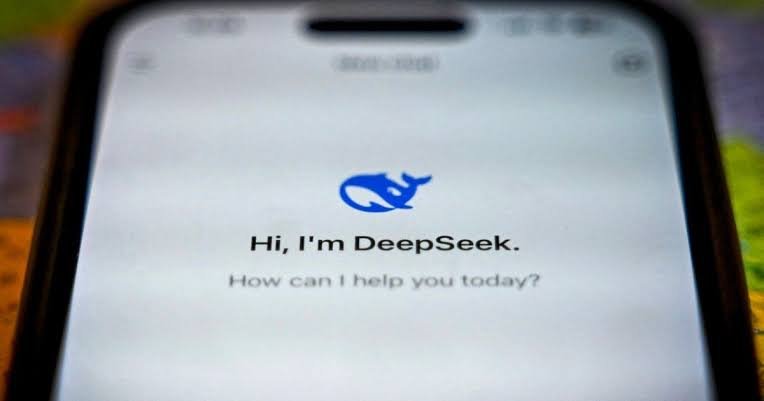
NEW DELHI, October 21 (Aalimi Nation) – The United States has ordered federal civilian agencies to stop buying DeepSeek products and to remove them from government systems, in a directive from the Department of Homeland Security (DHS) that was made public this week.
The order covers information technology products and services from the Chinese AI company and its affiliates. It also reaches third-party products and services built using DeepSeek technology, and applies to both future purchases and systems already in use. The DeepSeek ban follows a notice published in the Federal Register.
What the DeepSeek ban requires
Agencies may ask for exceptions, but requests must be submitted 60 days in advance and must carry a "compelling justification", such as an inability to perform a mission-critical function or other national security considerations. While removal is under way, agencies are encouraged to monitor network traffic, strengthen logging, control data exfiltration and flag anomalous activity.
The order draws on supply chain security law, including the Federal Acquisition Supply Chain Security Act of 2018 and a review by the Federal Acquisition Security Council. It applies to civilian agencies, not to consumers or the wider public, although private vendors that supply AI software to the government may be affected. Reports differ on the date on which the order was signed, and the official notice only became public this month.
The security case
DHS said DeepSeek models present "multiple threat vectors" for civilian networks. The department raised concerns that the company stores data on servers in China, where authorities can compel access, and that sensitive information entered by government users could potentially be reachable by Chinese authorities under Chinese law. It said hosted models also collect personal information and track users' online activity.
The order names DeepSeek as the only Chinese AI developer covered. Earlier restrictions were narrower: a law passed in December 2025 limited its use in intelligence-related national security systems, and before that agencies decided on their own whether to block such models.
China's response
China's Foreign Ministry spokesperson, Mao Ning, said Beijing opposes "overstretching the concept of national security and politicizing technology and trade issues". She added that China "will resolutely safeguard the legitimate rights and interests of Chinese enterprises."
Background
DeepSeek drew global attention in January 2025, when its R1 reasoning model prompted a sharp sell-off in shares of chipmaker Nvidia. More recently, US officials and American AI firms have accused DeepSeek and other Chinese labs of large-scale distillation, in which one model is trained on the outputs of another. A report in September made that claim about DeepSeek and five other Chinese companies. OpenAI has told US lawmakers that it saw suspected distillation attempts by DeepSeek, and Anthropic has said it identified unauthorised attempts by DeepSeek and other Chinese labs to collect its model outputs.
Some analysts have noted that the data-handling concerns could apply to other AI models from both countries, and that other Chinese open-weight models have also drawn scrutiny.
What happens next
Agencies must now audit their systems for DeepSeek software, including tools that embed it. Those that need to keep a product will have to make their case through the exception process, and technology suppliers to the government are likely to review their own use of DeepSeek models. Beijing's response suggests the issue could add to wider tension over technology and trade between the two countries.