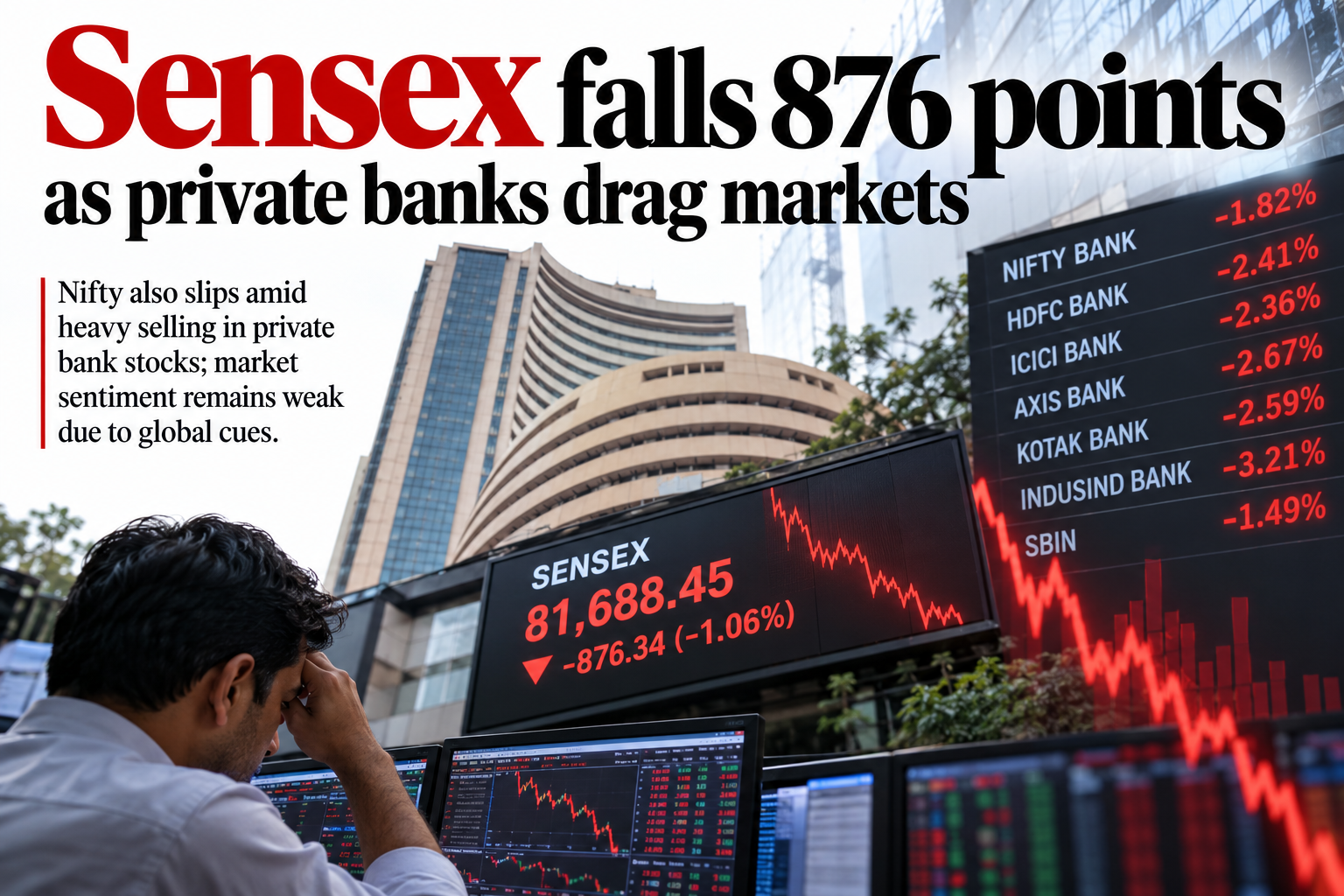
MUMBAI, October 22 (Aalimi Nation) – Indian equity benchmarks fell for a second straight session on Wednesday, as higher crude oil prices and continued foreign investor selling erased early gains that had been supported by optimism over India-US trade negotiations.
The 30-share Sensex ended 143.21 points, or 0.19 per cent, lower at 73,709.69. The Nifty 50 closed 77.60 points, or 0.34 per cent, down at 22,811.35. Bajaj Finance, BSE Limited and Eternal were among the biggest losers on the Nifty.
Brent crude rose 1.31 per cent to $110.15 a barrel, according to market data, reviving concerns about India's import bill, inflation, corporate margins and the rupee. India imports the bulk of the crude oil it consumes, so sustained high prices tend to widen the trade deficit and raise costs for businesses ranging from airlines to paint makers.
Vinod Nair, head of research at Geojit Investments, said high crude prices and persistent selling by foreign institutional investors outweighed the positive news on trade, although improving second-quarter corporate earnings and buying by domestic institutions provided some support. Vikram Kasat of PL Capital said elevated crude prices could keep markets volatile.
The selling was sharper in the broader market. The Nifty Midcap 100 index dropped 1.58 per cent, while the Nifty Smallcap 100 slid 2.37 per cent.
Information technology was the only major sectoral gainer, with the Nifty IT index rising 2.52 per cent. Most other sectors ended lower. The Nifty Auto index fell 1.99 per cent and the Nifty Metal index lost 1.97 per cent. Realty shed 1.57 per cent, media declined 1.24 per cent and the Nifty Private Bank index slipped 1.16 per cent.
In the commodities market, 24-carat gold fell 0.49 per cent to Rs 1,45,803 per 10 grams, while silver declined 1.15 per cent to Rs 2,09,061 per kilogram.
Market analysts said a sustained move above 23,000 on the Nifty would be necessary to improve the short-term technical outlook. They put immediate support at 22,650 to 22,600, followed by 22,300. They added that near-term direction will depend on the breadth of earnings delivery.
Investors are expected to track several factors in the coming sessions: geopolitical tensions that influence oil prices, the progress of India-US trade talks, the pattern of foreign fund flows, and the remaining second-quarter results from listed companies.
Oil above $110 a barrel is a significant test for an economy that relies heavily on imported energy. Higher fuel costs can feed into consumer prices and squeeze company profits, which in turn can limit the room for further gains in equities. At the same time, steady buying by domestic institutions and signs of improving earnings have so far cushioned the market against sharper declines.
Foreign investors have been net sellers in recent sessions, and the pace of that selling remains one of the main variables for the rupee and for equity valuations. A decisive outcome in the trade talks with the United States could improve sentiment, but analysts said crude prices are likely to remain the dominant driver in the near term.