
KINSHASA: The Democratic Republic of Congo is confronting the largest Ebola outbreak ever recorded in the country, as the rare Bundibugyo virus continues to spread across multiple provinces and places an already strained health system under severe pressure.
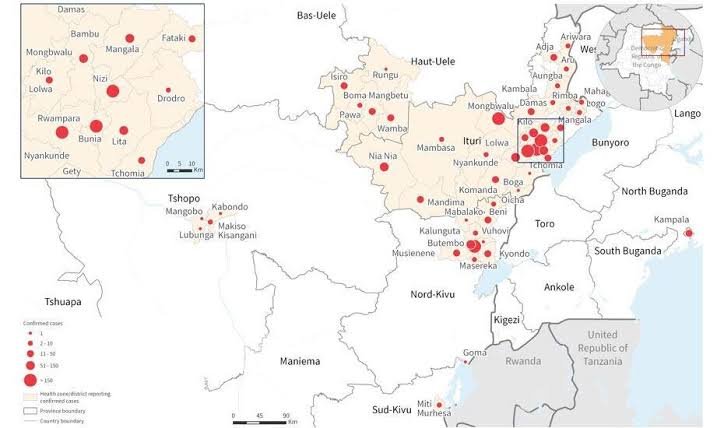
The outbreak has now surpassed the previous record set during Congo's 2018–2020 Ebola epidemic. According to the World Health Organization, 4,665 confirmed cases and 2,184 deaths had been reported in the Democratic Republic of Congo by August 12. Cases had been detected across 54 health zones in six provinces.
The figures have continued to rise. Reuters reported on August 19 that government data showed more than 5,000 confirmed cases and 2,378 deaths, making the outbreak the country's most serious Ebola epidemic to date.
The outbreak has also become the second-deadliest Ebola epidemic ever recorded globally, behind the 2014–2016 West Africa outbreak.
A Different Ebola Virus
The current epidemic is being caused by Bundibugyo virus, a relatively rare species of Ebola first identified in Uganda.
The strain presents a major challenge because there is currently no licensed vaccine or specific approved treatment for Bundibugyo virus. This differs from Ebola virus disease caused by the Zaire species, for which vaccines and other medical tools are available.
WHO says research is continuing to evaluate potential medical interventions while health authorities work to contain transmission.
The Outbreak Is Spreading Across Six Provinces
What began in the Mongbwalu health zone in Ituri Province has expanded considerably.
By August 12, confirmed cases had been reported across six provinces:
Ituri, North Kivu, South Kivu, Haut-Uélé, Tshopo and Bas-Uélé.
Ituri remains the epicentre, accounting for approximately 85% of confirmed cases and 79% of reported deaths in Congo as of August 12.
WHO describes the outbreak as being in a phase of intense transmission, with interconnected transmission clusters and continued geographic expansion.
Why Containment Is So Difficult
The epidemic is unfolding amid a severe humanitarian crisis.
Parts of eastern Congo are affected by armed conflict, displacement and insecurity. Large movements of people for trade, employment and family reasons are making it more difficult for health authorities to identify contacts and interrupt chains of transmission.
WHO has warned that insecurity, population mobility and limited access to healthcare are significantly complicating the response. Attacks on health facilities have also disrupted surveillance and discouraged some patients from seeking treatment.
The problem is particularly serious because many infections are occurring outside previously identified transmission chains.
Reuters reported that 70–80% of new infections had no known link to an existing contact chain, a sign that the virus is spreading undetected in some communities.
Healthcare Workers Are Paying a Heavy Price
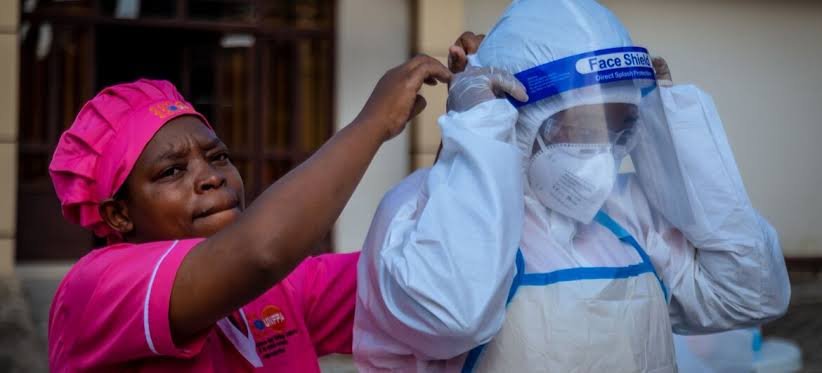
Doctors, nurses, laboratory workers and other frontline personnel are among those most exposed.
WHO reported at least 155 confirmed infections among healthcare workers and 45 deaths as of August 9.
More recent international reporting has put the number of infected healthcare workers at around 160, with 43 deaths reported in one assessment.
The impact extends beyond Ebola treatment.
When healthcare workers become infected, facilities lose experienced staff at precisely the moment when they are most needed. Routine medical services, including maternal care, childhood vaccination and treatment for other diseases, can also suffer.
A Vaccine Has Arrived — But It Is Not an Ebola Cure
The international response has begun to expand.
On August 20, WHO and Africa CDC announced that 70,000 doses of the Ervebo Ebola vaccine had been allocated to Congo from the global stockpile.
However, there is an important qualification: Ervebo is licensed for Ebola virus disease caused by the Zaire species, not Bundibugyo virus.
It is not yet known whether Ervebo protects humans against Bundibugyo virus. WHO and partners are therefore using part of the allocation in a Phase 3 clinical trial to investigate its potential effectiveness. The remaining doses are intended for frontline and healthcare workers under current recommendations.
That makes the vaccine deployment both an emergency response and an important scientific investigation.
Trust May Be as Important as Medicine
Containing Ebola requires more than laboratories, treatment centres and protective equipment.
Communities must trust health workers enough to report suspected cases, allow contact tracing and seek treatment quickly.
Misinformation, fear and distrust have therefore become major obstacles.
WHO has repeatedly stressed that community engagement is central to controlling the outbreak, particularly in areas where insecurity and previous experiences with healthcare institutions have weakened public confidence.
The challenge is straightforward but enormous: if people do not trust the response, infections can remain hidden until transmission has already expanded.
The International Risk
The outbreak has already demonstrated the potential for international spread.
Imported Bundibugyo cases have been reported in Uganda, France and Germany, although WHO says there has been no sustained transmission outside Congo. Uganda remains particularly vulnerable because of its shared border and continuing population movement.
WHO's latest rapid risk assessment classifies the risk as very high within Congo, high for neighbouring countries and low at the regional and global levels.
That distinction is important.
The outbreak is exceptionally serious, but it does not mean that a global pandemic is imminent. Ebola primarily spreads through direct contact with infected bodily fluids or contaminated materials, rather than through routine airborne transmission like influenza or measles.
The Pope Calls for International Cooperation
The worsening crisis has also attracted international attention.
Pope Leo called for urgent international cooperation to help Congo confront the outbreak, as the death toll passed 2,500 and the epidemic continued to expand.
WHO has warned that the response requires substantially greater resources. As of August 18, the organisation said only around 60% of the $115 million required for the response had been raised, highlighting the financial pressure facing the operation.
A Race Against Time
The response now depends on several measures working simultaneously:
Earlier detection of infections.
More effective contact tracing.
Protection of healthcare workers.
Expansion of treatment capacity.
Stronger laboratory and surveillance systems.
Research into vaccines and treatments specifically targeting Bundibugyo virus.
Greater community engagement and action against misinformation.
Improved humanitarian access in conflict-affected areas.
WHO has said the outbreak can still be brought under control within months if sufficient resources are mobilised, but delays could make containment substantially more difficult.
The Bigger Health Lesson
Congo has fought Ebola before and has developed significant experience in responding to the disease. But the current outbreak presents a different combination of challenges: a rare virus, rapid transmission, limited targeted medical tools, conflict, displacement, attacks on healthcare and strained public trust.
The lesson extends beyond Ebola.
An infectious disease becomes far harder to control when science, healthcare infrastructure, security and public confidence fail at the same time.
For Congo, the immediate priority is to stop transmission and save lives.
For the international health community, the challenge is equally urgent: ensure that a rare virus in a fragile health environment does not become an even larger regional catastrophe.
— AALIMI NATION | Health & Science Desk
Source Note
This report has been updated and fact-checked using the latest available information from the World Health Organization, WHO Africa and Reuters. Case and death figures are time-sensitive and may change as surveillance and data reconciliation continue.