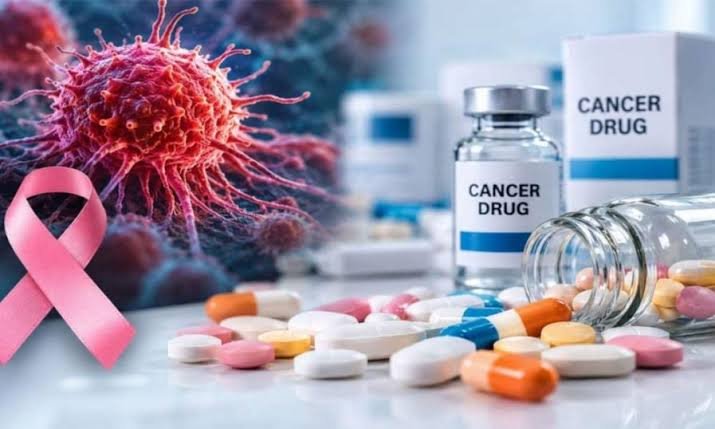
NEW DELHI, October 20 (Aalimi Nation) – The National Pharmaceutical Pricing Authority (NPPA) has capped trade margins at 30 per cent on 137 non-scheduled anti-cancer medicines, a step the government says could cut cancer drug prices by as much as 70 per cent. The order, notified in the Gazette on October 17, takes effect on November 9.
What the cancer drug prices order covers
The order was issued under Paragraph 19 of the Drugs (Prices Control) Order, 2013. It applies to the listed drugs and to formulations containing them, whether sold alone or in combination and irrespective of strength or dosage form. Pembrolizumab, durvalumab and osimertinib are among the named medicines, and the list also includes nivolumab, atezolizumab, bevacizumab, denosumab, pegfilgrastim, olaparib and enzalutamide, according to Medical Dialogues.
NPPA approved the list at a meeting on October 16 and 17, on the recommendation of an expert committee under the Directorate General of Health Services. ThePrint reported that government estimates put annual savings for patients at about Rs 2,500 crore. The cut will differ from drug to drug, so not every medicine will fall by the maximum.
How the new prices will be set
Manufacturers must work out the revised maximum retail price (MRP) from the price to stockist, add a trade margin of no more than 30 per cent, and then add GST. In the notification's example, as reported by Medical Dialogues, a product with an MRP of Rs 300 and a price to stockist of Rs 70 would carry a maximum revised MRP of Rs 100 plus GST.
Companies have seven days from publication to send revised price details to NPPA and the State Drug Controller. They must keep production at existing levels, and firms that fail to comply must repay overcharged amounts with interest.
Court scrutiny and the 2019 precedent
The order follows a Supreme Court hearing on September 29. According to ThePrint, a bench of Justices Vikram Nath and Sandeep Mehta questioned a case in which a drug sold to retailers for Rs 2,700 carried an MRP of Rs 27,000, describing it as "broad daylight dacoity". The court also asked why margin limits should apply only to cancer drugs and not to other essential medicines. The next hearing on wider pharmaceutical pricing is listed for October 27.
The move builds on a 2019 pilot that capped margins at 30 per cent on 42 anti-cancer drugs. The Ministry release cited in the coverage says that exercise reduced the MRPs of 526 brands, by up to 90 per cent in some cases. India's anti-cancer drug market has an annual turnover of about Rs 12,500 crore, ThePrint reported.
Industry reaction
Early industry responses have been measured. Dr MV Narasimham, chief financial officer of Dr Reddy's Laboratories, said, "We are certain that this will lead to an increase in exports of oncological drugs," adding that the company was still studying the regulation.
Rashmi Sancheti, a pharma analyst at Dolat Capital, said the effect on drug makers would be minimal because the cap is calculated from the price to stockist. She expected "stiff margin-sharing renegotiations from hospital pharmacy procurement teams" for at least the next 12 months.