
KINSHASA: The Democratic Republic of Congo is facing its largest Ebola outbreak on record, with the rare Bundibugyo virus spreading rapidly across multiple provinces and placing an already fragile health system under severe pressure.
By:-AALIMI NATION | Health & Science Desk
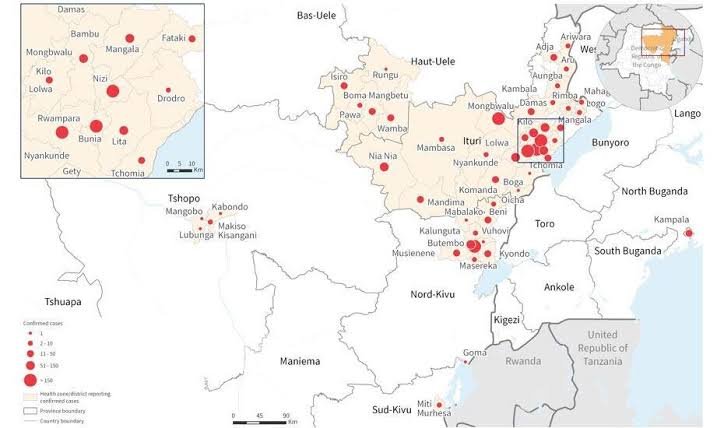
The outbreak began in Ituri Province in May 2026 and has since expanded to six provinces. By August 12, the World Health Organization had recorded 4,665 confirmed cases and 2,184 deaths in the DRC, with a case-fatality ratio of 46.8 per cent.
By August 21, Reuters reported that the death toll had surpassed 2,500, with more than 5,000 confirmed infections, underscoring the speed at which the epidemic is accelerating.
A rare Ebola strain
The current outbreak is being caused by Bundibugyo virus, one of the Ebola species for which there is currently no licensed vaccine or specific approved treatment.
That makes the response particularly difficult.
The widely used Ervebo vaccine targets the Zaire species of Ebola, not Bundibugyo. However, WHO's vaccine experts have recommended that Ervebo be studied in a clinical trial during the current outbreak to determine whether it can provide protection against Bundibugyo virus.
70,000 vaccine doses arrive
There is nevertheless a measure of hope.
The Democratic Republic of Congo is receiving 70,000 doses of Ervebo through the international vaccine coordination system. More than 16,000 doses have already arrived, according to recent reporting.
The vaccine is not specifically licensed for Bundibugyo Ebola, so its use in this outbreak must be understood in the context of ongoing research and public-health recommendations rather than as a proven cure or guaranteed protection.
WHO is also supporting clinical research into potential treatments. A trial known as PARTNERS began enrolling patients in July and is investigating treatments for Bundibugyo virus disease.
Why containment is becoming harder
The medical challenge is being intensified by conditions on the ground.
Several affected areas are experiencing armed conflict, population displacement, high mobility and limited access to healthcare. WHO says insecurity and attacks on health facilities have disrupted surveillance, discouraged people from seeking treatment and made it harder for response teams to reach communities.
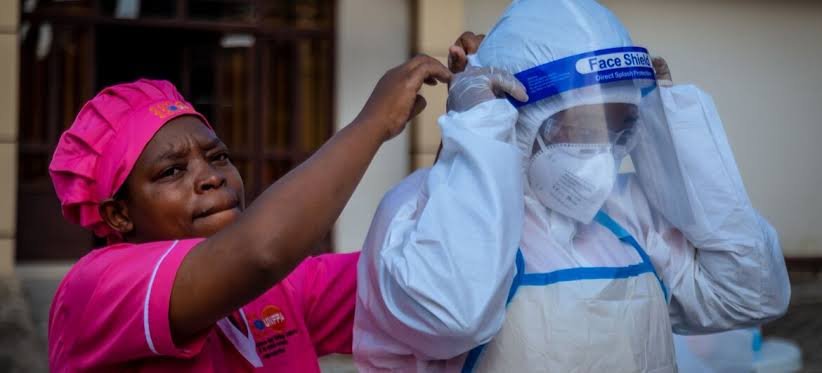
Healthcare workers are also paying a heavy price.
Reuters reported that 160 healthcare workers have been infected and 43 have died, while more than 260 attacks against healthcare workers have reportedly occurred over six months.
Trust is as important as medicine
Ebola control depends on more than vaccines and hospitals.
Patients must be willing to seek treatment. Families must cooperate with contact-tracing teams. Communities must trust health workers.
Misinformation, fear and suspicion can undermine all three.
WHO has repeatedly stressed that community engagement is central to controlling the outbreak, particularly in areas where insecurity and distrust are already limiting access to healthcare.
The danger is a vicious cycle:
Fear → mistrust → delayed treatment → wider transmission → greater fear.
Breaking that cycle may prove as important as developing a vaccine specifically for Bundibugyo virus.
How serious is the international risk?
The outbreak has already crossed national borders.
Uganda recorded cases linked to the DRC outbreak, while a confirmed case was also reported in France in June involving a person connected to the international response. WHO said no secondary transmission was identified from the French case.
However, WHO's August assessment said the risk to the wider African region and globally remained low, while emphasising the need for continued surveillance and cross-border preparedness.
That distinction matters.
The outbreak is internationally significant, but there is currently no evidence that it has become a global transmission event comparable with the COVID-19 pandemic.
The race against time
Health authorities are now working on several fronts simultaneously:
Expanding testing and surveillance
Tracing contacts of infected people
Isolating and treating patients
Protecting healthcare workers
Strengthening infection prevention
Testing Ervebo against Bundibugyo virus
Developing targeted vaccine candidates
Studying potential treatments
Improving community engagement
Strengthening cross-border surveillance
WHO has also supported the development of diagnostic capacity and is working with partners to accelerate research into vaccines and treatments.
The bigger lesson
The Congo outbreak is a reminder that infectious diseases do not wait for ideal circumstances.
A virus can emerge in a remote area, spread through communities facing conflict and displacement, and quickly overwhelm systems already struggling with shortages of staff, money and infrastructure.
The Bundibugyo outbreak also exposes a gap in global preparedness.
The world has developed powerful tools against some Ebola strains. But when a less common species begins spreading rapidly, the medical arsenal becomes much thinner.
That is why the response cannot depend on a vaccine alone.
Science, healthcare infrastructure, community trust and international cooperation must move together.
What happens next?
The next several weeks could determine whether Congo's Ebola epidemic can be brought under control or continues its rapid expansion.
The immediate objective is straightforward: find cases earlier, isolate them faster, protect health workers and prevent transmission.
The longer-term challenge is more complicated—developing vaccines and treatments specifically designed for Bundibugyo virus while rebuilding trust in communities where the health response is already operating under extraordinary pressure.
For Congo, the crisis is already historic.
For the global health community, it is a test of whether the lessons of previous Ebola epidemics have been learned quickly enough.
Source note: AALIMI NATION has independently cross-checked the outbreak figures and response information against WHO, Reuters, AP and UN reporting. Case and death figures are time-sensitive and may change as surveillance and data reconciliation continue.