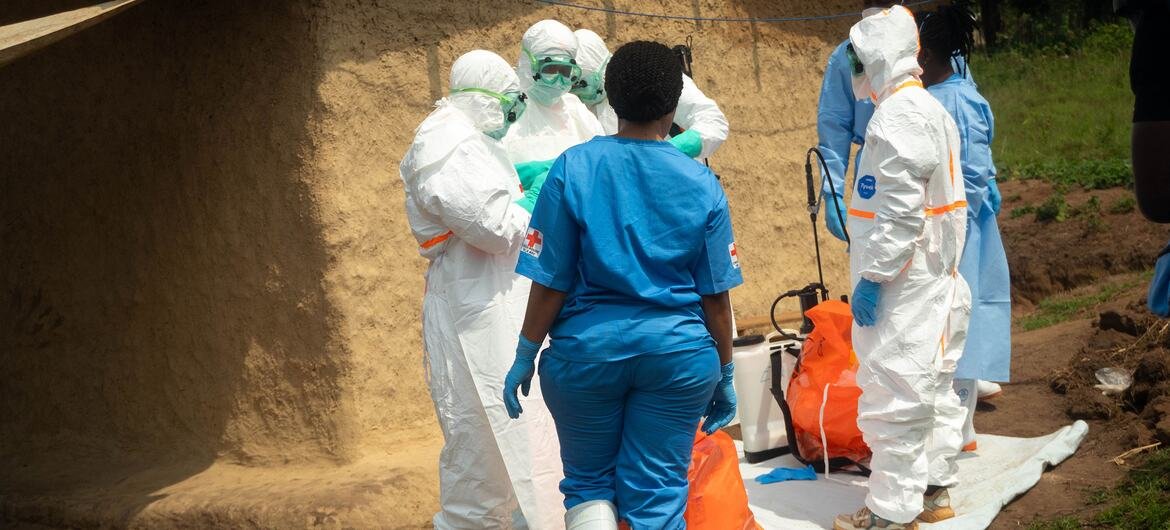
UN Emergency Relief Coordinator Tom Fletcher said that although the Congolese government, the UN and its humanitarian partners have significantly expanded their response, the virus is continuing to spread faster than containment efforts.
A $1.1 billion funding gap remains as authorities confront what the UN describes as the fastest-growing Ebola outbreak on record.
“The response is growing and has been scaled up, but the virus is moving faster,” Fletcher said. “Unless we scale up urgently, more lives will be lost and the threat will grow.”
Thousands of Cases and Deaths Reported
The scale of the current outbreak has alarmed health authorities.
During the first 100 days of the 2014–2016 West Africa Ebola epidemic, the World Health Organization confirmed 635 cases and 399 deaths across Guinea, Liberia and Sierra Leone.
By comparison, during the first 100 days after the current Ebola outbreak in the DRC was declared on 15 May, authorities recorded 5,515 cases and 2,642 deaths.
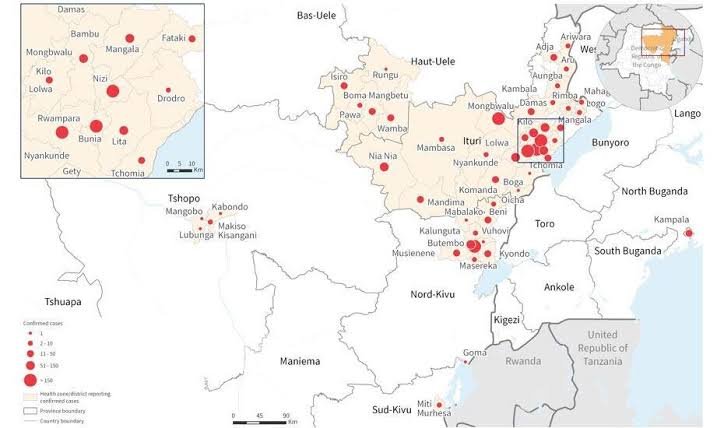
By Monday, local authorities had reported approximately 6,100 confirmed cases and 2,950 deaths, with more than 5,000 cases reported in Ituri Province alone.
The figures underline the extraordinary speed at which the outbreak has expanded and the enormous pressure facing health workers and humanitarian agencies.
Uganda Offers a Cautious Example of Success
Despite the worsening situation in the DRC, the UN says recent experience in neighbouring Uganda demonstrates that Ebola can be contained when governments and international partners act quickly.
The World Health Organization last week declared Uganda’s latest Ebola outbreak over after the country completed the required 42-day period without a new case.
Uganda's response relied on rapid detection and confirmation of suspected cases, contact tracing, isolation and treatment, infection prevention and control, community engagement and strengthened disease surveillance.
UN officials say the experience offers important lessons for the response in the DRC, although the humanitarian and security conditions there are considerably more challenging.
Millions Screened for Ebola
The UN’s International Organization for Migration (IOM) has been working to reduce the risk of cross-border transmission by monitoring population movements.
According to UN spokesperson Stéphane Dujarric, IOM has conducted nearly 23 million health screenings in the DRC and neighbouring countries.
The screenings are intended to identify potential cases, monitor movement across borders and reduce the risk of the virus spreading into other countries.
Fletcher has also allocated more than $57 million from the UN’s Central Emergency Response Fund to support Ebola response and preparedness efforts in the DRC and neighbouring states.
However, UN officials say the available resources remain far below what is required to match the speed and scale of the outbreak.
Ebola Crisis Compounded by Conflict
The health emergency is unfolding against an already devastating humanitarian crisis, particularly in eastern DRC.
Years of conflict, displacement and insecurity have made it significantly harder for humanitarian agencies and medical teams to reach vulnerable communities.
Fighting between government forces and Rwanda-backed M23 rebels has displaced large numbers of people and disrupted access to essential services.
Fletcher stressed that the Ebola crisis cannot be separated from these wider humanitarian challenges.
“It is not simply a health emergency,” he said. “It is also a humanitarian emergency layered onto many existing humanitarian emergencies.”
Population displacement and movement also create additional challenges for disease surveillance and contact tracing, particularly in areas where insecurity limits humanitarian access.
UN Peacekeeping Mission Expands Protection Efforts
The UN peacekeeping mission in the DRC, MONUSCO, has also been responding to insecurity in the east, where the current outbreak is concentrated.
The mission recently responded to clashes involving the Congolese Armed Forces, Ugandan soldiers and suspected members of the Allied Democratic Forces (ADF), an Islamic State-affiliated insurgent group operating in eastern DRC.
MONUSCO is also expanding programmes designed to improve civilian access to essential services.
UN officials said the mission has helped more than 60,000 people safely reach farmland and schools in Djugu territory, while supporting protection efforts and creating conditions that could allow displaced families to return home.
UN Calls for International Response
Fletcher urged governments and international organisations to ensure that humanitarian and medical workers can safely reach communities affected by the outbreak.
He also called for Ebola to remain high on the international agenda, warning that delays in providing funding, personnel and access could allow the virus to spread further.
Closing the funding gap will require sustained political commitment and a coordinated international response, he said.
The UN maintains that the tools needed to control Ebola already exist, but their effectiveness depends on rapid deployment, adequate resources, secure humanitarian access and cooperation from affected communities.
“We have the experience, the tools and extraordinary people risking their lives to stop this epidemic,” Fletcher said. “What we need now is political will, access and resources.”
The current outbreak presents one of the most serious public-health challenges facing the DRC in years. With cases rising rapidly and humanitarian access constrained by conflict, the UN is warning that time is becoming the most critical factor in determining whether the epidemic can be brought under control.