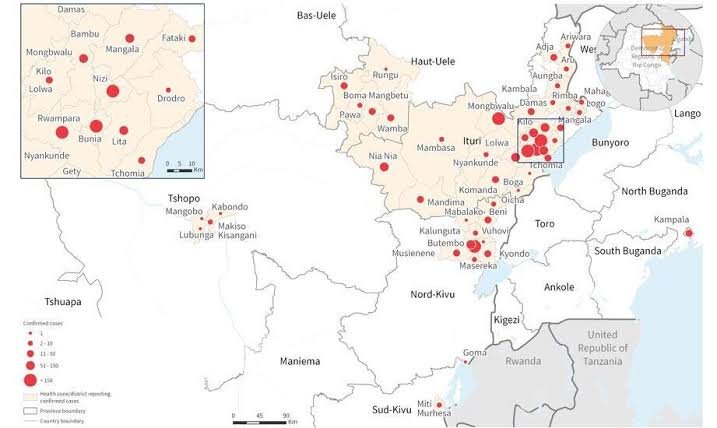
GENEVA, November 4 (Aalimi Nation) – The World Health Organization said on Wednesday that its expert groups have recommended adding two more candidate vaccines to a clinical trial under way in the Democratic Republic of the Congo, in a bid to bring the Bundibugyo Ebola outbreak under control.
The WHO said its independent Technical Advisory Group on Candidate Vaccine Prioritization backed both candidates this week on the strength of laboratory and early clinical evidence. The developers were notified on Monday. The first is ChAdOx1, developed by the University of Oxford with the Serum Institute of India. The second is mRNA-1469, made by Moderna.
The agency said this is the first time vaccines designed specifically against Bundibugyo virus will be tested during an outbreak of that virus. Existing licensed Ebola vaccines target a different species, Zaire ebolavirus, and no licensed vaccine or treatment is available for Bundibugyo.
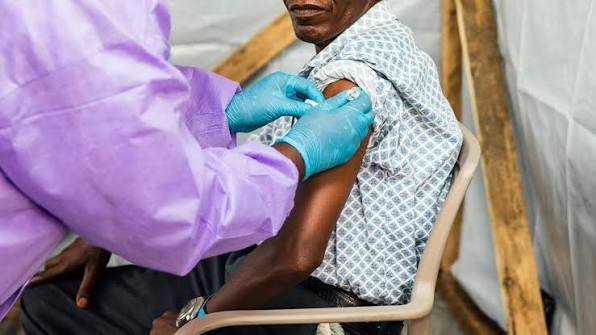
The vaccines will go into a trial called Tumaini, which uses ring vaccination: people who have been in contact with a confirmed patient, and contacts of those contacts, are enrolled together. The WHO said the design builds on a trial in Guinea during the West Africa Ebola epidemic, which showed that the Ervebo vaccine worked against Zaire ebolavirus. Ervebo is already being tested in Tumaini for efficacy against Bundibugyo virus. Four vaccination rings are in place, with more being prepared.
The Institut National de Recherche Biomedicale is leading the trial, supported by the University of Antwerp, the WHO, Epicentre, Medecins Sans Frontieres, the Institute of Tropical Medicine in Antwerp and Africa CDC. The Coalition for Epidemic Preparedness Innovations is funding the rapid development of the vaccines. The new candidates will join only after national approvals are granted.
WHO Director-General Dr Tedros Adhanom Ghebreyesus said: "Vaccines alone will not end this outbreak, but they could become a powerful new tool for bringing it under control."
The agency also described progress on treatments. A WHO-sponsored trial called PARTNERS, launched in July, is testing whether the monoclonal antibody MBP134, the antiviral remdesivir, or a combination of the two improves survival among confirmed patients. Maftivimab is due to be added soon. A separate study is examining whether an investigational antiviral can prevent illness in people exposed to the virus.
Background and what comes next
The WHO's Director-General declared the Ebola outbreak in the Democratic Republic of the Congo and Uganda a public health emergency of international concern on May 17, 2026. That designation signals that the event requires coordinated international action.
The two candidates have been moving through early testing in parallel. Moderna said its first-in-human trial of mRNA-1469 began in August in Canada, with funding of up to 50 million dollars from the Coalition for Epidemic Preparedness Innovations.
On timing, the WHO said initial findings from the treatment trials are expected in the coming months, while results from the vaccine trial are expected in early 2027. Until then, the agency said, case-finding, contact tracing and care for patients remain the main tools of the response.