Nepal’s GLOF tragedy should be a wake-up call for Kashmir
Jammu and kashmir
Recent disasters across the Himalayas are highlighting growing risks from unstable glacial lakes. In Kashmir, scientists have identified several lakes with high susceptibility to GLOF events, raising questions about how prepared the region is for a potential disaster.
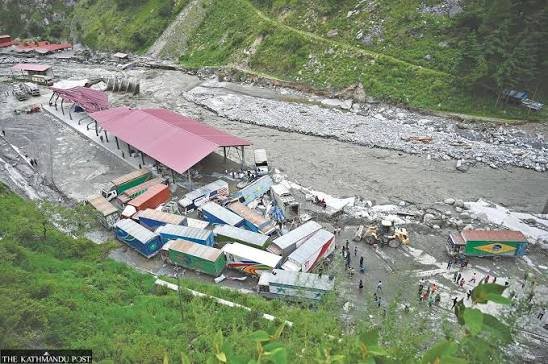
The recent Glacial Lake Outburst Flood (GLOF) disaster in Nepal has once again drawn attention to the growing environmental risks facing communities across the Himalayan region.
For Kashmir, the concern is particularly significant.
Scientists have identified five glacial lakes in the Kashmir Himalayas — Bramsar, Chirsar, Nundkol, Gangabal and Bhagsar — as having a very high susceptibility to Glacial Lake Outburst Floods.
A GLOF occurs when water stored in a glacial lake is suddenly released, potentially sending large volumes of water, debris and sediment downstream.
Studies suggest that such an event in Kashmir could threaten settlements, roads, bridges and other critical infrastructure.
The question facing authorities is not necessarily whether a disaster is imminent, but whether the region is adequately prepared if one occurs.
The Himalayas are among the regions most vulnerable to the effects of climate change.
Rising temperatures are contributing to glacier retreat and the formation or expansion of glacial lakes. At the same time, extreme rainfall, landslides and changing weather patterns can increase pressure on already fragile mountain environments.
Recent disasters in Nepal, India and other Himalayan regions have demonstrated how quickly conditions can change.
In October 2023, a GLOF involving South Lhonak Lake in Sikkim triggered devastating flooding downstream, causing widespread damage to infrastructure and communities.
The disaster led to increased attention on early-warning systems and monitoring technology in the Himalayan state.
Other mountain regions have also developed systems aimed at reducing the impact of glacial hazards.
In Iceland, scientists monitor glaciers and volcanic activity using sensors and satellite technology. Switzerland has invested in monitoring unstable mountain slopes and glaciers, while Peru has developed engineering and monitoring measures for communities living below potentially dangerous glacial lakes.
The approaches vary, but they are based on a common principle: identifying risks before they become disasters.
Research by scientists at the University of Kashmir has highlighted the potential risks posed by several glacial lakes in the region.
The lakes identified as highly susceptible to GLOF events are located in different parts of the Kashmir Himalayas.
According to the research, a possible GLOF event could affect thousands of buildings, major bridges, roads and hydropower infrastructure in districts including Ganderbal, Shopian and Kulgam.
Experts stress that identifying a lake as vulnerable does not necessarily mean that it is about to burst.
However, susceptibility assessments are intended to help authorities understand where monitoring and preparedness should be prioritised.
Some lakes require particular attention because of their location, connection with glaciers and surrounding terrain.
Gangabal Lake, for example, has been identified as an area where changing glacial conditions and the steep Himalayan landscape could increase future risks.
The gap between research and preparedness
Kashmir has a growing body of scientific research on glaciers, climate change and environmental risks.
Researchers have mapped glacial lakes, studied changing glaciers and identified areas vulnerable to floods and other natural hazards.
However, experts say scientific knowledge must be translated into practical preparedness.
This includes installing monitoring equipment, conducting regular field assessments and developing systems capable of warning communities downstream.
The Jammu and Kashmir government has previously outlined plans involving remote sensing, field monitoring, early-warning systems and bathymetric surveys.
But significant gaps remain between proposed measures and their implementation.
Unlike some other Himalayan states, Jammu and Kashmir currently has limited real-time monitoring infrastructure specifically designed for glacial lake risks.
Why early warnings matter
For communities living downstream of potentially dangerous glacial lakes, early warning can be critical.
A functioning warning system could provide authorities and residents with valuable time to respond.
It could allow roads and bridges to be closed, emergency services to be deployed and vulnerable communities to move to safer locations.
Such systems generally combine different sources of information, including satellite observations, water-level sensors, weather stations and field monitoring.
Scientists at the University of Kashmir are already working on mountain-specific early-warning models that could combine these technologies.
However, experts say such systems need to move beyond research and pilot projects to become operational networks.
A changing climate, a changing risk
Climate change is altering the Himalayan environment in ways that are still being studied.
As glaciers retreat, new lakes can form and existing lakes can expand. Heavy rainfall and sudden weather events can further increase the risk of flooding and landslides.
At the same time, rapid construction and development in vulnerable mountain areas can increase the potential impact of natural disasters.
Experts increasingly argue that disaster management cannot focus only on responding after an event.
Risk assessment needs to be integrated into infrastructure planning, urban development and environmental policy.
This is particularly important in mountain regions where communities often live close to rivers and streams fed by glaciers.
Experts say reducing GLOF risks requires a long-term approach.
Potential measures include real-time monitoring of high-risk lakes, installation of water-level and weather sensors, regular surveys of lake depth and volume, and the development of effective early-warning systems.
Communities in vulnerable areas also need clear evacuation plans and regular disaster preparedness training.
Coordination between scientific institutions, government departments and disaster management agencies is another key requirement.
The challenge is significant. The Himalayas contain thousands of glacial lakes, making comprehensive monitoring a complex and expensive task.
But scientists argue that identifying high-risk locations can help authorities prioritise resources.
The Nepal disaster has reinforced a wider lesson for Himalayan communities.
Natural hazards cannot always be prevented. But better scientific monitoring, planning and early warning can reduce their impact.
For Kashmir, the scientific evidence on glacial risks is already growing.
The challenge now is to ensure that research is converted into practical action.
As climate change continues to reshape the Himalayas, preparedness may become as important as disaster response.
The question is no longer simply whether Kashmir faces environmental risks.
It is whether the region is ready when those risks become reality.
AALIMI NATION