
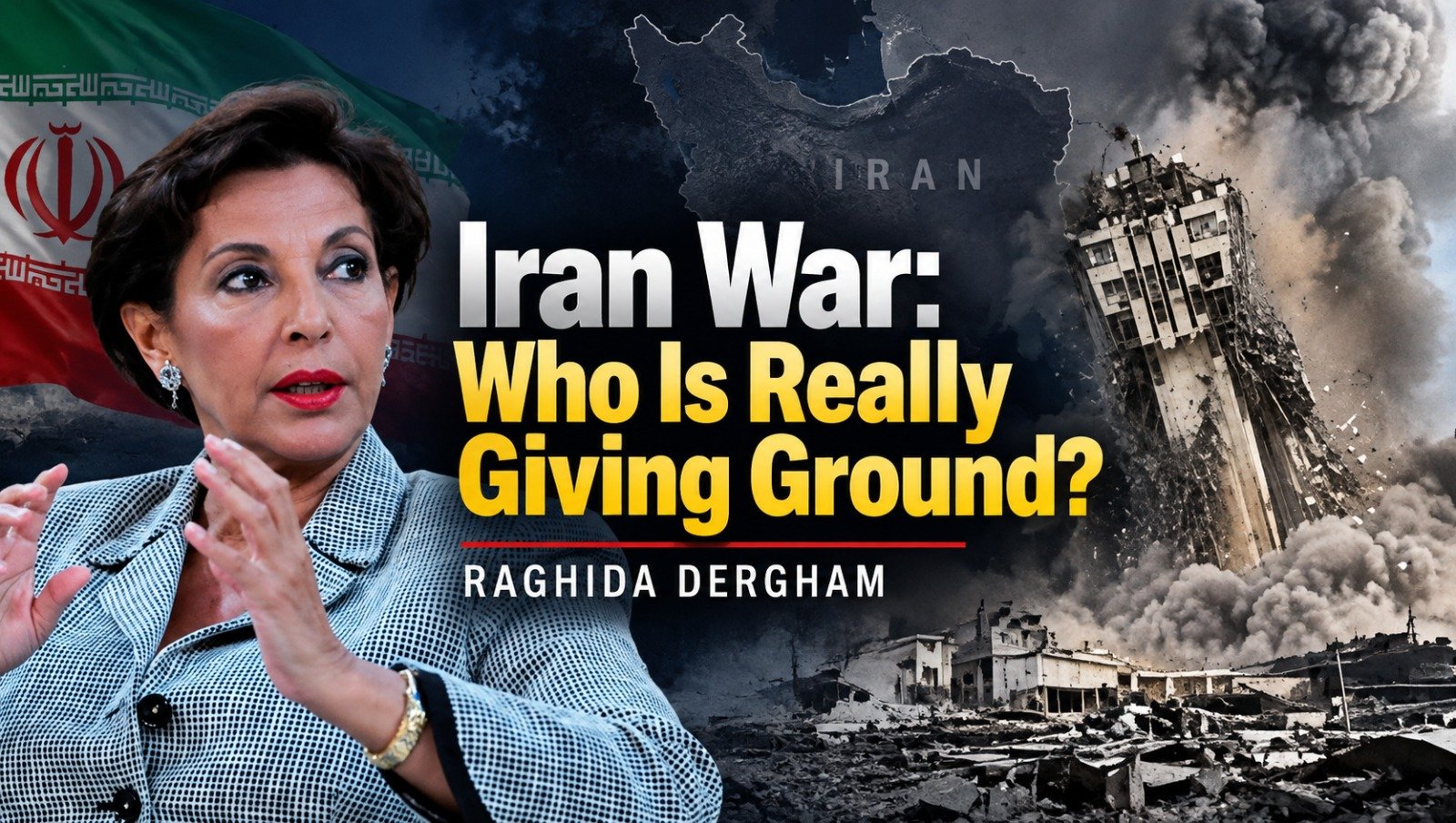
The debate over how the United States should end its confrontation with Iran is increasingly exposing a deeper strategic divide inside the Trump administration — one that goes beyond personalities, political rivalries and the question of who may eventually lead the Republican Party.
By:-Raghida Dergham
At the centre of that debate is a fundamental question: Should Washington seek a temporary accommodation with Tehran, or maintain military and economic pressure until Iran makes substantive concessions on its nuclear, missile and regional activities?
The answer could have consequences far beyond the battlefield.
One emerging approach, associated in the supplied analysis with Vice President JD Vance, special envoy Steve Witkoff and Jared Kushner, favours setting aside some of the most difficult issues for the moment and pursuing an interim arrangement, particularly concerning the strategically vital Strait of Hormuz.
The alternative approach, associated with Secretary of State Marco Rubio, Defence Secretary Pete Hegseth and elements of the US military establishment, favours maintaining pressure until Washington believes the objectives of the conflict have been achieved.
The difference is not simply tactical. It reflects competing visions of what America's long-term relationship with Iran should look like.
The Hormuz Question
The most consequential element of a possible interim arrangement could be the future management of the Strait of Hormuz.
Iran cannot unilaterally control the entire waterway, but Tehran could potentially seek a significant role in its management, including issues related to maritime security, tanker traffic and possibly political or financial arrangements.
Critics of such an arrangement would argue that granting Tehran an enhanced role after a costly confrontation could transform Iran's wartime losses into strategic and economic advantages.
The central question, therefore, becomes: Who is actually giving ground?
The supplied analysis argues that an agreement leaving Iran's missile programme, drone capabilities, regional proxy network and nuclear activities unresolved could produce an outcome very different from the original objectives of the conflict.
Rather than fundamentally changing Tehran's strategic behaviour, such an arrangement could provide Iran with time to rebuild and consolidate its position.
Two Competing Strategies in Washington
Within the Trump administration, the disagreement appears to centre on whether pressure should continue or whether a temporary deal should be pursued.
One camp argues that the United States should avoid allowing the conflict to continue indefinitely and instead secure an interim understanding that could prevent further escalation.
The other camp believes that stopping before the stated objectives are achieved could allow Iran to recover from the damage inflicted during the conflict.
The divide also carries a domestic political dimension.
The future direction of the Republican Party is increasingly linked to the debate over Iran policy, with JD Vance and Marco Rubio both regarded as important figures in discussions about the party's future leadership.
That makes Iran not only a foreign-policy challenge but also a test of competing political visions inside Washington.
The Gulf States Face the Cost
For the Gulf Arab states, the consequences of any US-Iran agreement could be particularly significant.
Saudi Arabia, the United Arab Emirates and other Gulf countries have already invested heavily in air-defence systems, interceptors and counter-drone capabilities to protect their territory and critical infrastructure.
A prolonged confrontation can impose substantial financial costs on these states, particularly if expensive defensive systems are repeatedly used against comparatively inexpensive drones and missiles.
The supplied analysis argues that Gulf governments could face billions of dollars in additional expenditure to replenish defensive inventories and strengthen their military capabilities. Such spending could also compete with funds earmarked for economic diversification, infrastructure and major national development programmes.
For countries pursuing ambitious economic transformation programmes, the diversion of resources towards defence could become a significant strategic concern.
The Red Sea and Bab el-Mandeb
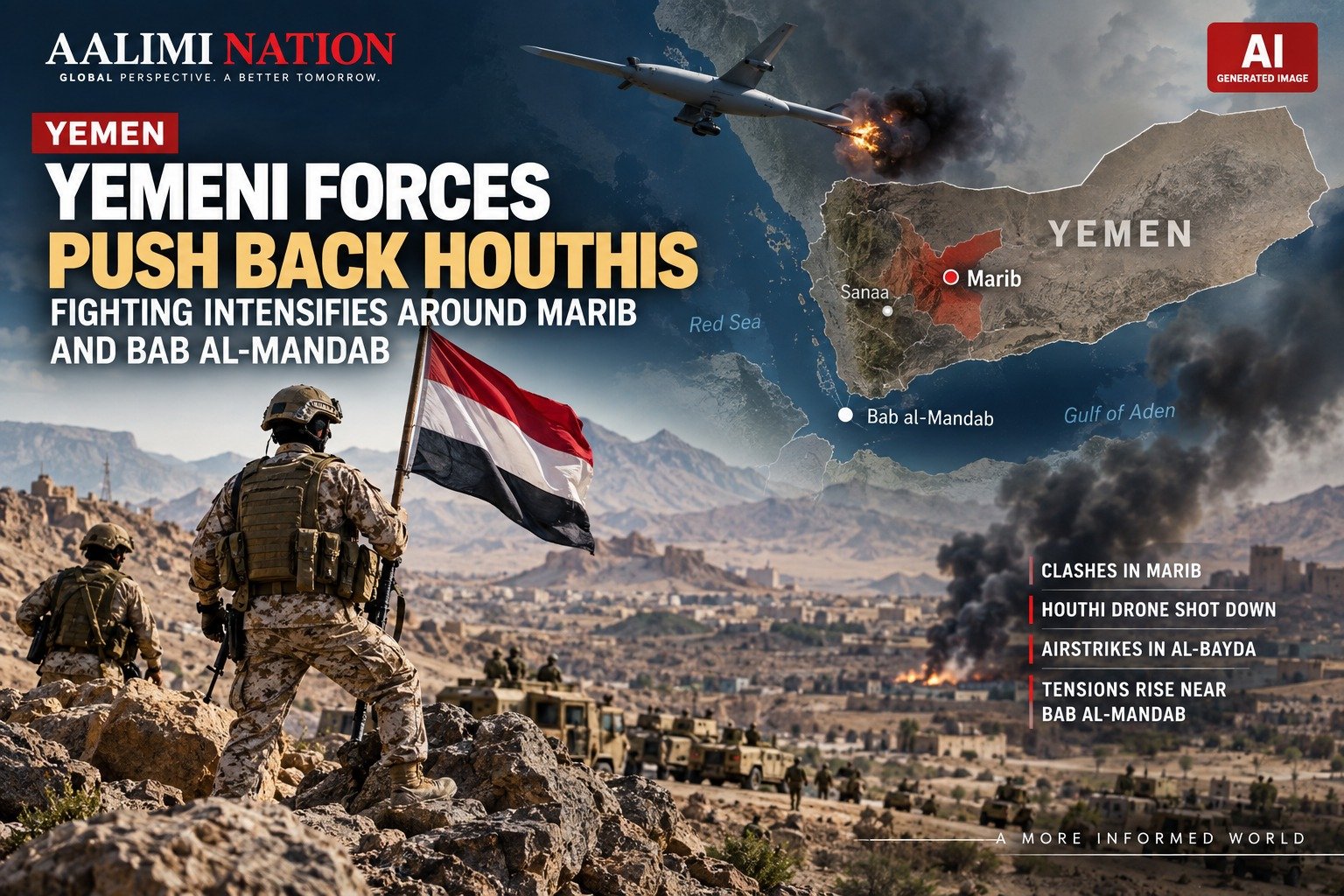
The strategic picture becomes even more complicated when the Strait of Hormuz is considered alongside the Red Sea and Bab el-Mandeb.
The supplied analysis argues that Iran's regional influence through allied armed groups, particularly the Houthis in Yemen, could give Tehran indirect leverage over another important maritime gateway.
That would create a situation in which Iran could potentially gain greater influence over one of the world's most important energy and shipping corridors through Hormuz, while the Houthis retain the ability to exert pressure around Bab el-Mandeb.
Such a combination would have implications not only for Gulf security but also for international energy supplies and global maritime trade.
The strategic significance of these waterways is difficult to overstate. Disruption in either corridor can affect shipping routes, insurance costs, energy markets and the movement of goods between Asia, the Middle East and Europe.
Iran's Regional Network
A central argument in the analysis is that Tehran has given no clear indication that it intends to abandon the regional strategy it has pursued for decades.
Iran has developed a network of relationships with armed groups across the Middle East, allowing it to project influence beyond its borders without relying exclusively on conventional military forces.
The analysis identifies Iraq and the Houthis in Yemen as important elements of this broader regional network, arguing that the latter's ability to threaten the Bab el-Mandeb could become particularly significant for Gulf states and energy routes.
From this perspective, an agreement that leaves Iran's regional strategy untouched could amount to a pause rather than a fundamental change.
Gulf States and the Search for Strategic Balance
The Gulf monarchies are simultaneously pursuing economic modernisation and stronger national security capabilities.
Saudi Arabia, the UAE and other Gulf states have invested heavily in diversification, technology, infrastructure, tourism and social reforms. Their strategic vision increasingly depends on stable regional conditions and secure trade and energy routes.
The supplied analysis contrasts this model with Iran's revolutionary political identity and its reliance on regional military networks.
It argues that the economic success of the Gulf states presents a political and ideological challenge to Iran, while Iran's military and regional capabilities remain a direct security challenge to its neighbours.
This creates an unusual strategic equation: the Gulf states need the United States for security, but they also have an interest in reducing the risks associated with excessive dependence on any single external power.
Can China Replace the United States?
A complete shift from Washington to Beijing is unlikely to provide an immediate solution.
China is already an important economic, financial and technological partner for Gulf states, but the supplied analysis argues that Beijing cannot yet be considered a comprehensive military substitute for the United States.
Instead, Gulf governments may seek a more diversified security architecture: maintaining strategic ties with Washington while strengthening regional defence cooperation and expanding relationships with other major powers.
The objective would not necessarily be to abandon the US security partnership, but to reduce the strategic and economic costs of excessive dependence on it.
The Decision Ahead
The direction ultimately chosen by President Trump could determine whether the confrontation with Iran produces a lasting strategic shift or merely a temporary pause.
If Washington maintains military and economic pressure until Tehran makes meaningful concessions on the issues that helped trigger the confrontation, the US campaign could continue to reshape Iran's strategic calculations.
But if Washington instead reaches a limited agreement while leaving major disputes unresolved, critics could argue that Tehran would gain valuable time to rebuild its military and regional capabilities.
That is why the most important question may not be whether the war ends, but what comes after it.
A ceasefire or agreement can stop fighting without resolving the underlying strategic conflict.
For Washington, the challenge is to determine whether diplomacy can secure durable restrictions on Iran's nuclear, missile and regional activities — or whether a temporary settlement would simply postpone the next confrontation.
For the Gulf states, the priority will be protecting energy infrastructure, securing maritime routes and maintaining economic transformation despite a volatile regional environment.
And for Iran, the central calculation will be whether it can convert survival under pressure into a stronger long-term regional position.
The answer to the question of who is really giving ground may therefore depend less on the battlefield than on the terms of whatever political settlement eventually emerges.
Raghida Dergham
Raghida Dergham is the founder and Executive Chairperson of the Beirut Institute. She also advises the Saudi Arabia-based pan-Arab channels Al Arabiya and Al Hadath on U.S. and international affairs. A member of the Council on Foreign Relations (CFR), Dergham is also a prominent columnist whose writings on geopolitics regularly appear in international media.