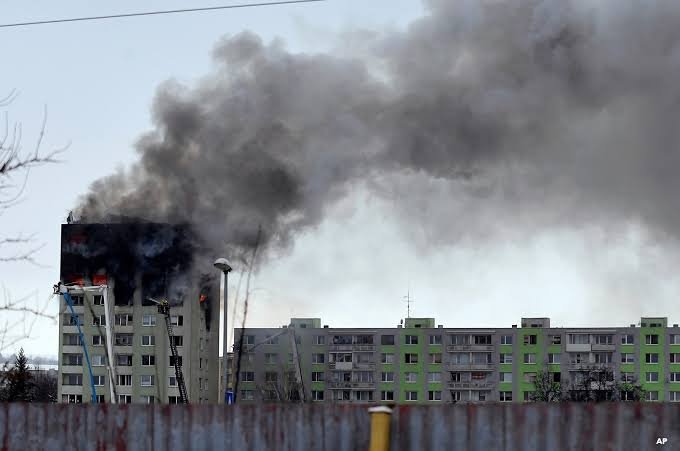
TBILISI, November 20 (Aalimi Nation) – Six people, including a young child, were killed on Thursday when a suspected natural gas explosion partly collapsed a five-storey apartment building in Georgia's capital, officials said. A three-year-old girl was pulled alive from the rubble after several hours of rescue work, and investigators have opened a criminal case.
Casualties and rescue
Interior Minister Sulkhan Tamazashvili said rescuers recovered six bodies from the building in the suburban Ponichala district of Tbilisi, one of them a young child's. An 11-year-old boy was in intensive care and was described as relatively stable. Other people were taken to hospital.
The three-year-old girl was freed from the debris after a rescue that lasted several hours, and onlookers applauded as she was brought out. Doctors at Ingorokva University Clinic said she was stable and that scans showed no serious traumatic injuries. Teimuraz Mgebrishvili, who heads the Emergency Management Service, said one of the women found dead is believed to be the girl's mother.
What officials say caused the blast
Mr Tamazashvili said preliminary findings suggest the explosion happened in an apartment on the fifth floor as a resident tried to switch on a gas heater. He described the finding as preliminary.
The gas supplier, Tbilisi Energy, offered a detail that complicates that account. It said the apartment believed to be the source of the blast was registered as unoccupied and had shown no gas consumption in the past year. The company said it had not yet inspected the property. Officials have not explained how that record fits with the heater explanation, and the cause remains under investigation.
Investigation and displaced residents
Prosecutor Levan Vepkhvadze said a criminal investigation has been opened into possible violations of safety regulations.
Structural engineers checked the damaged block after the collapse. Tbilisi Mayor Kakha Kaladze said two sections of the building were found to be unsafe and that 28 families, more than 100 residents, would be moved temporarily to hotels while the situation is assessed. Mr Tamazashvili has also warned that the damaged structure remained at risk of further collapse.
Background
Gas explosions in residential buildings are a recurring danger in countries that rely on ageing apartment blocks and older internal gas networks, particularly in the colder months when heaters are switched on after long periods of disuse.
Early reports of the Tbilisi blast gave a lower death toll, and the figure of six is the latest given by the interior minister. The numbers could change if further casualties are found or if any of the injured die.
The investigation will focus on whether the explosion began in the apartment named by officials and, if so, how gas reached it when the supplier's records show no consumption. Officials have not yet said when the displaced families will be able to return home or whether the damaged sections will be demolished.