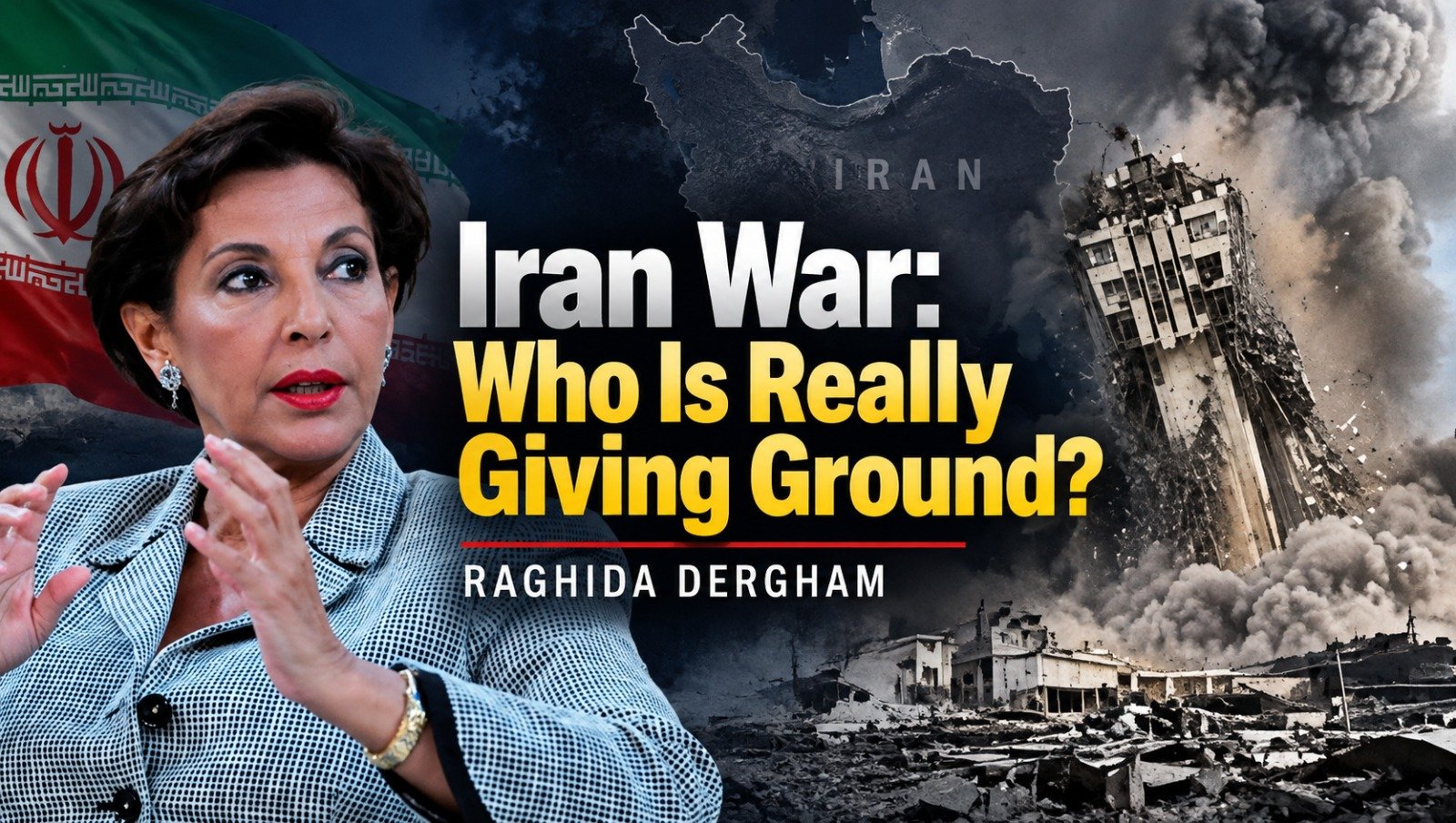


President Donald Trump has instructed his negotiating team to suspend talks with Iran for the time being, US officials told CNN, despite the same officials having described recent contacts with Tehran in positive terms only days earlier.
According to those officials, the President remains unconvinced by Iran's refusal to meet his demands and wants fresh evidence that the Iranian leadership is willing to conclude an agreement before negotiations resume. In the meantime, Washington is turning to economic pressure. The prevailing view inside the administration is that tighter sanctions and deeper isolation will eventually leave Tehran with no option but to accept American terms.
Trump had already made the position public. In a post on Truth Social on Tuesday he wrote that there were "no talks or conversations going on, or scheduled" with Iran, adding that the naval blockade of Iranian ports remained in full force and would continue at full intensity.
The statement contradicted his own claim a day earlier, made to Fox News, that backchannel contacts were under way between American officials and members of Iran's Islamic Revolutionary Guard Corps. The IRGC denied that any such channel existed.
Two versions of the same waterway
On the Strait of Hormuz, Trump maintained that the passage is open and operating normally, and that every naval mine has been removed or detonated.
Tehran describes a different waterway altogether. Iran's parliament speaker and lead negotiator, Mohammad Baqer Qalibaf, told state television that the strait would not be reopened until the United States implements the commitments set out in the interim memorandum of understanding signed in June. He listed those obligations as lifting the naval blockade, releasing Iran's frozen assets abroad, removing sanctions on oil and gas sales, and ending threats and military operations on all fronts.
Qalibaf followed the address with a post on X arguing that intensifying pressure on Tehran cannot extract concessions that were never part of the agreement in the first place.
The shipping data sits closer to the Iranian account than the American one. Six commodity vessels crossed the strait on Monday, below a ten-day average of eleven, according to preliminary Kpler figures cited by Reuters. Before the war began in late February, the waterway carried roughly a quarter of the world's seaborne oil trade and a fifth of its liquefied natural gas, with traffic running at levels many times what is now recorded. Some tankers are believed to be transiting with their transponders switched off, which means the true figure is unknowable, but nothing in the tracking data resembles a strait operating normally.
On Tuesday, the United Kingdom Maritime Trade Operations reported that a vessel outbound through the strait had been struck by an unidentified projectile, damaging its engine room and causing a crew casualty. The remaining crew were assisted by the Omani coastguard.
A deadline that passed without agreement
The current impasse has a documented origin. When Washington and Tehran signed their memorandum of understanding in June, the two sides gave themselves sixty days to reach a broader settlement covering the hardest questions between them, foremost among these Iran's nuclear programme and the management of the Strait of Hormuz.
Those negotiations stalled on 7 July, before they had properly begun. The sixty-day window closed on Monday with no progress to show, and the intervening weeks have been filled by an escalating exchange of statements between the two capitals.
Trump added to that exchange on Tuesday by posting a graphic on Truth Social labelling the Strait of Hormuz as new American territory, an assertion Iranian officials have rejected in categorical terms, insisting the strait opens and closes on Iran's command alone.
The wider board
The diplomatic freeze has not held the military situation in place.
The United Arab Emirates said its air defences detected two ballistic missiles launched from Iran towards the country on Tuesday, according to its defence ministry. One fell outside Emirati territorial waters, the second within them. A senior Iranian official told Reuters that Tehran was moving to a fully offensive military posture in response to the diplomatic stalemate, though neither side reported fresh strikes on Tuesday.
The consequences are being paid well beyond the Gulf. Oil prices rose again on Tuesday as the prospect of a deal receded, equity markets weakened, and borrowing costs for several major economies, the United States among them, touched levels not seen in decades, on concerns about the inflationary and fiscal weight of a conflict now approaching its sixth month.
For the states of the region, and for the shipping industry that moves their exports, the practical question is no longer who is winning the argument over whether the strait is open. It is how long an economy the size of Iran's can absorb a blockade, and how much longer the world's energy trade can absorb a chokepoint that functions at a fraction of its capacity.
Neither side has offered a date for the resumption of talks.
Sources for the desk: Al Arabiya (originating report), CNN, Reuters, CBS News, CNBC, UK Maritime Trade Operations, Kpler shipping data, UAE Ministry of Defence.