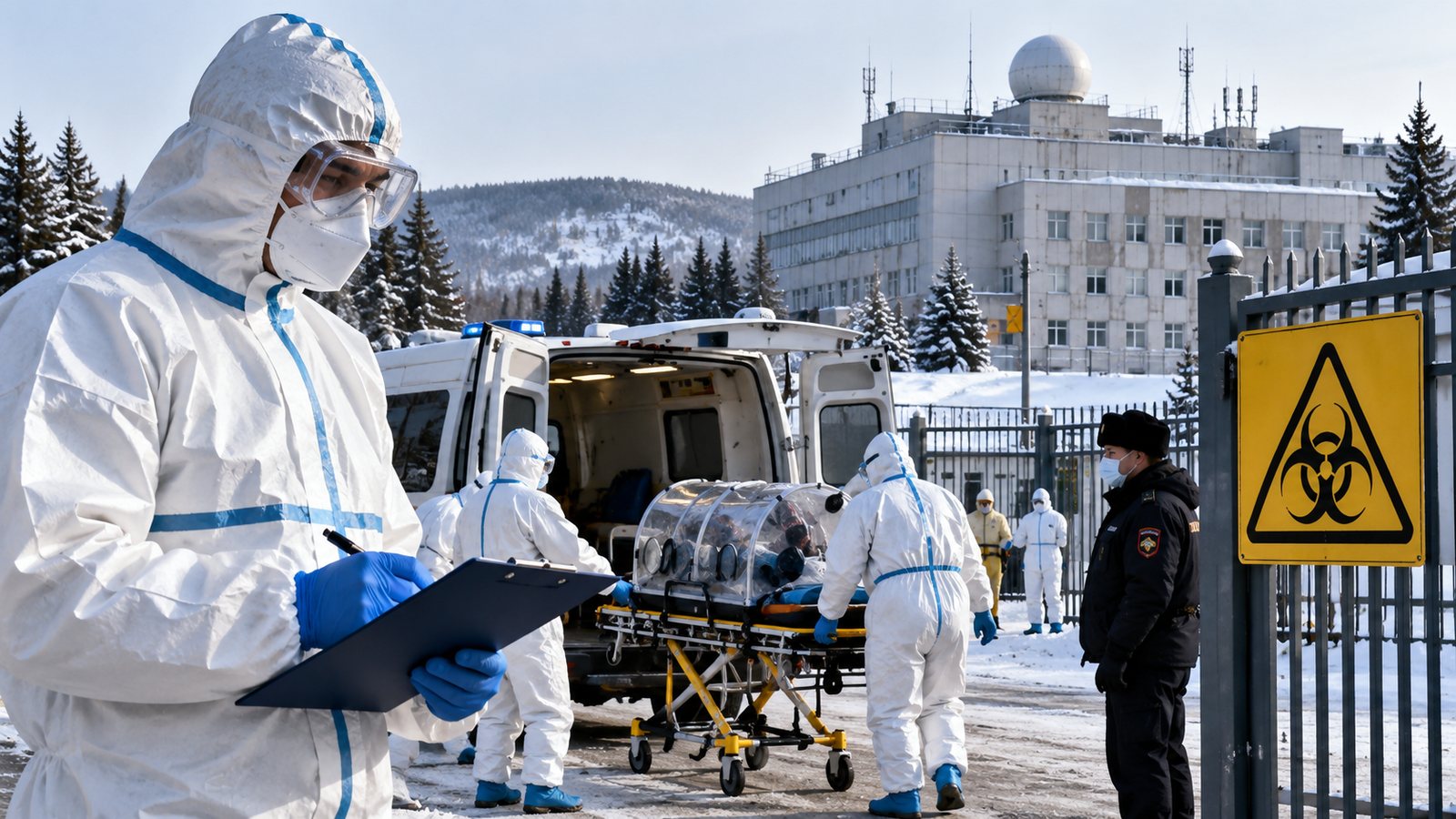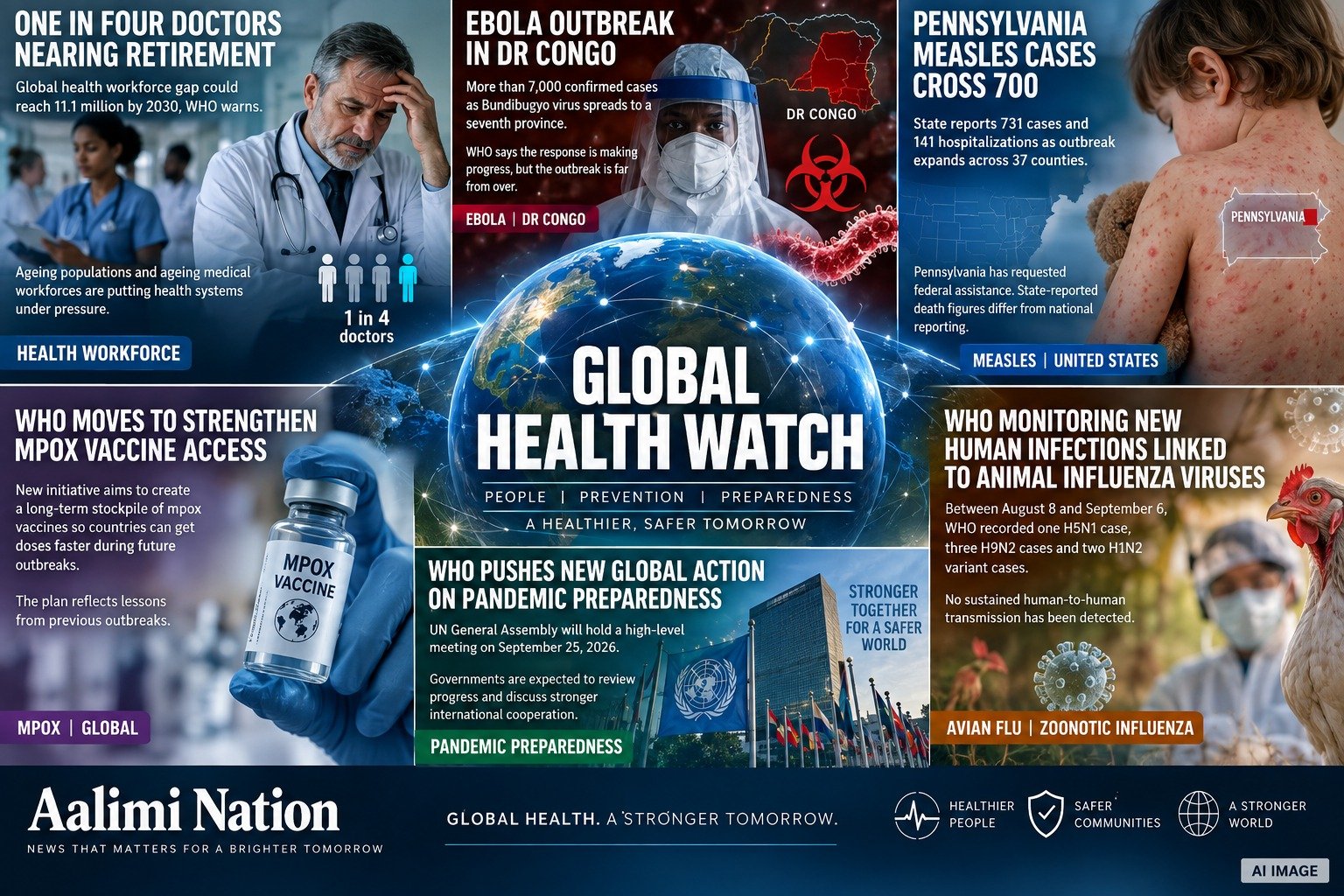
GENEVA / NAIROBI — The world’s health agencies have rarely faced so many alarms at once. In one week Ebola crossed into Kenya’s capital, a young researcher died near Irkutsk amid suspicions of pneumonic plague, and the World Health Organization published new data on how humanity lives and dies. Taken together, these developments reveal a global health system still fighting old enemies while confronting new ones.
Ebola: from the Congo basin to Nairobi
The epidemic in the Democratic Republic of the Congo is now one of the largest on record. At his October 7 media briefing, WHO Director-General Dr Tedros Adhanom Ghebreyesus reported 8,665 confirmed cases and 4,178 confirmed deaths. Transmission is slowing in some areas and rising in others. New hotspots are appearing, including near the border with South Sudan.
The response has made real progress. Health workers now receive about 2,000 alerts a day, community engagement has reached about 5 million people, and more than 600 patients are enrolled in therapeutic trials. A vaccine trial is expected to begin later this month. Yet Tedros warned that most deaths still happen in communities rather than treatment centres, which means many patients die unseen and unreported. Contact tracing also remains below the level needed, in a region already enduring a prolonged humanitarian crisis.
On October 6 the virus reached Nairobi. Kenya confirmed its first case, a Kenyan citizen who fell ill in the DRC and travelled through Kampala before landing in Nairobi. Health Cabinet Secretary Aden Duale announced the case, identified as the Bundibugyo strain of Ebola. The patient died at Nairobi Hospital and was buried the following day.
Kenyan officials moved quickly to contain public alarm. Public Health Principal Secretary Mary Muthoni described the situation as “an imported case under management,” not an outbreak. By October 7 authorities had traced 57 contacts, including flight passengers and crew, and placed 10 in quarantine. Surveillance has been stepped up at 15 points of entry, and 23 isolation and treatment centres have been designated. These include Kenyatta National Hospital and a US-funded quarantine facility at Laikipia Air Base. The government has set aside a preliminary emergency fund of Ksh 2.6 billion and is mobilising far more from international partners.
The WHO praised Nairobi’s speed and openness. Tedros cautioned other governments against blanket travel or trade bans, arguing that screening and contact tracing work better. “Transparency should be rewarded, not punished,” he said. The remark was aimed at countries that might be tempted to isolate Kenya for reporting honestly.
Siberia’s silent emergency
A very different story is unfolding in Russia. On October 2, media reported that a laboratory worker at the Irkutsk Anti-Plague Research Institute had died of severe pneumonia. Pneumonic plague was suspected. The institute was founded about a century ago to study plague, which still circulates naturally among wild animals in Siberia.
The Russian outlet Lyudi Baikala identified the worker as Darya Shipilova, a 28-year-old researcher. She was hospitalised on September 29 with cold-like symptoms and died three days later. Authorities quarantined a hospital in the nearby town of Shelekhov and placed about 200 contacts under observation.
Russia’s public health watchdog, Rospotrebnadzor, has not mentioned plague. It attributes the death to pneumonia of unknown cause and describes the situation as calm. The WHO formally requested information on October 4. Moscow replied that no recent plague cases had been recorded in the Irkutsk region. The WHO says it still lacks laboratory details and is checking reports that a second employee has fallen ill with pneumonia. Until it gets those answers, it cannot complete a full risk assessment.
The uncertainty has frustrated experts. “We don’t understand how she was infected,” said Maria Van Kerkhove, the WHO’s Director of Epidemic and Pandemic Management. Judy Twigg of Virginia Commonwealth University criticised what she called Russia’s lack of candour and warned that public distrust carries real dangers. Even Russian health economist Vasily Vlassov, who judged the containment measures sensible, argued that misleading the public always backfires.
Pneumonic plague is caused by Yersinia pestis, the bacterium behind the medieval Black Death. It infects the lungs and can spread from person to person, though not easily, and it can be treated with antibiotics if caught early. The US Centers for Disease Control and Prevention has described the risk to Americans as extremely low.
The bigger picture: living longer, but not always healthier
While the outbreaks dominated headlines, the WHO released its Global Health Estimates for 2000 to 2023 on October 2. The data show that global life expectancy reached 73.3 years in 2023, almost back to its 2019 level of 73.4. Healthy life expectancy, however, still lags slightly behind its pre-pandemic peak, at 62.8 years.
The most significant shift is in what kills people. Noncommunicable diseases now cause 74 per cent of all deaths worldwide, up from 58 per cent in 2000. For the first time, infectious diseases caused fewer than half of deaths even in low-income countries. Heart disease remains the leading killer, causing about 9.5 million deaths from ischaemic heart disease alone. Dementia has risen from the 19th to the fifth most common cause of death, and deaths from it have tripled since 2000. South-East Asia, including India, has seen a sharp rise in the risk of dying from diabetes.
Mental ill-health has grown too. Between 2019 and 2023, the burden of depressive disorders rose by about 20 per cent and anxiety disorders by nearly 45 per cent. Together they cost the world an estimated 110 million years of healthy life in 2023.
“Living longer is one of the great achievements of public health,” said Dr Alain Labrique, who leads the WHO’s data and digital health work. The next challenge, he added, is to make sure those extra years are lived in good health.
New rules for children, mothers and mental health
The WHO also issued its first guidelines on obesity in children and adolescents. Prevalence has quadrupled over 35 years, from 2 per cent to 8 per cent, and more than 170 million young people now live with the condition. The guidelines strongly recommend structured changes to diet, behaviour and physical activity. They also address medication, surgery and weight-loss devices, while stressing that care should improve overall health and wellbeing rather than simply reduce weight.
Separately, the WHO and its partners launched a global roadmap on hypertensive disorders of pregnancy, including pre-eclampsia. These conditions cause about 16 per cent of maternal deaths worldwide, roughly 42,000 women a year, along with more than half a million stillbirths and newborn deaths. Many women still lack basic blood-pressure checks and essential medicines.
Today, October 10, is World Mental Health Day. This year’s theme centres on the experience of people who have received institutional psychiatric care, some of whom have been held involuntarily for years or even decades. The WHO is releasing a practical guide to help countries move toward community-based care that respects patients’ rights and choices.
What comes next
Global health leaders gather in Berlin from October 11 to 13 for the World Health Summit, where these crises will dominate the agenda. Three questions hang over the meeting. Can the Ebola response close its gaps before the virus spreads further? Will Moscow share what it knows about the Irkutsk case? And can health systems built to fight infections adapt to a world where chronic disease is now the main cause of death?
— Aalimi Nation Health Desk